The Nokia Booklet 3G – Sexy and well connected – the Gadling review

Yes – Gadling may be a little late to the party (Engadget reviewed this machine last year), but the Nokia Booklet is still important enough to warrant its own review here on Gadling.

For those that missed all the other reviews – the Nokia Booklet 3G is the first netbook designed by Nokia – the world’s largest producer of mobile phones. Needless to say, when a company like Nokia sits down to develop a netbook, the end result has to be pretty damn good.

On paper, the Nokia Booklet 3G is like most machines on the market – a 1.6GHz Intel Atom processor, 1GB of memory, a 120GB hard drive and a 10″ screen. Thankfully, that is where the similarities with other machines ends. The Booklet 3G has a glass frame high-definition screen (running at 1280×768, unlike the weak 1024×600 pixels on most other machines), GPS, Bluetooth, worldwide 3G support and a battery capable of keeping the machine running for up to 12 hours.
Design

The design is also unlike any other netbook on the market – forget cheap flimsy plastic, the Booklet 3G is designed around a single aluminum frame, and the end result is quite simply stunning. The one poor design choice is in the lid – instead of making that in the same finish as the rest, Nokia picked a glossy plastic cover – making the machine one big fingerprint magnet. I tried keeping it clean for the first couple of days, then just gave up.

Performance

This one is simple – the Booklet 3G performs like any other Atom powered netbook. Don’t purchase one of these if you plan to do any heavy lifting in your applications.

The combination of the slow processor, 1GB of memory and a sluggish 4200RPM hard drive makes the machine feel a bit underpowered. Web and email work won’t scare it, but you won’t be watching any HD videos on the Booklet 3G.

Thankfully, gaming and videos are not something its target audience wants anyway – the Booklet 3G is the perfect business machine. All work and no play. But thankfully, the work portion is something it excels at.

Keyboard / trackpad

I could keep this portion really short – the keyboard and trackpad are just right. Normally, most computers I review have something I hate. But Nokia got this just right.

The Booklet 3G keyboard is “chiclet style”, with a bit of spacing between the keys. Typing is a pleasure on it, obviously helped by its bright hi-res screen. The trackpad is just the right size, and its buttons are easy to press, unlike some others on the market.

Connectivity

The real “unique selling point” of the Booklet 3G is of course the “3G” part of its name. Inside the Booklet 3G is a 3G HSDPA modem capable of working on 850/1900/2100 bands. This makes it compatible with AT&T in the US, and most foreign operators.

The lack of AWS/1700MHz support rules out using it on the T-Mobile 3G network, and in my tests, I could not get it to find the T-Mobile EDGE network. This is either because the machine is SIM-locked to AT&T, or because the EDGE frequencies are locked out of the modem.

Other connectivity options inside the machine include Bluetooth, 802.11a/b/n Wi-Fi and GPS.

Connectivity through ports is somewhat limited – you get an SD memory card slot, 3 USB ports, HDMI and a combined audio in/out jack. Hidden behind the SD card panel is the SIM card slot. Above the screen is a bog standard 1.3 megapixel webcam.

The lack of Ethernet is a tricky one – not everyone will still need Ethernet, but some hotels insist on offering their Internet service wired only, so you may need to invest in a small USB to Ethernet adapter. Slightly trickier is the choice to offer an HDMI port. Even though HDMI is becoming more popular, picking HDMI instead of VGA means you may need to invest in another adapter if you plan to use the Booklet 3G on a projector.

Thankfully, the Nokia assortment of accessories for their Booklet 3G includes a USB Ethernet adapter and an HDMI to DVI plug (though no HDMI to VGA).

Included software

The Booklet 3G comes with Windows 7 starter, a much better choice than the old XP installations on most netbooks. Windows 7 feels at home on the Nokia, and things run quit smooth (unless you open too many applications).

Nokia also pre-installs applications from their Ovi suite – including Ovi maps and a social networking application that supports Twitter. The desktop software also lets you send and receive text messages, but you’ll need to be sure that text messaging is bundled in your plan, or these messages could cost a fortune.

To make using the Booklet 3G easier with a Nokia smartphone, the box also includes a special dual USB charge/sync cable (because Nokia still doesn’t believe in charging over USB).

Purchase options

The Nokia Booklet 3G is only available from Nokia.com or your local Best Buy retail store. Out the door from Nokia, you’ll pay $599.99 for the Booklet – which is about $200 more than a similarly spec’d machine from other brands. Thankfully, a cheaper option is to order one combined with a 2 year AT&T wireless mobile broadband subscription.

This 2 year contract drops the price of the machine down to a more manageable $199.99. $149.99. Service is $59.99/month, so you’ll need to do some math to determine whether this makes sense for your specific connectivity needs.

Update: I noticed that Best Buy is now selling these for $149.99 when purchased on a two year AT&T plan.

The Nokia Booklet 3G for travelers

On paper, the Nokia Booklet 3G looks like the perfect netbook for travelers – you get fantastic battery life, a hi-res screen, decent keyboard and mouse, 3G, Bluetooth and GPS all in a gorgeous machine that weighs a little over 2 lbs, 10 ounces.

And to be honest, it really is the perfect machine for the roadwarrior – the only downside to the Booklet 3G is its price – unless you already have a need for an AT&T mobile data subscription, that $600 price tag is going to hurt a lot. Especially when a more powerful machine can be found for at least $100 less.

That said – there is something awesome about a machine this well built. I hate to draw comparisons with Apple, but if you don’t mind paying a premium for a machine that isn’t carved out of 20 pieces of plastic, you will love the Nokia Booklet 3G.

Final thoughts

Pricing aside, the Nokia Booklet 3G is a brilliant little machine – though a lot of that brilliance is in its design, the connectivity options, great display and long battery life do help complete the package.

PROS: design, connectivity, long battery life, great screen

CONS: price, slow hard drive, non-upgradeable memory

It is hard for me to tell someone that this is a “must buy”, because that price tag is a tough one – but if you are already budgeting for 3G access, then the investment in the Booklet 3G suddenly becomes much easier to justify.

$200 for a netbook is a no-brainer when you already need 3G access. Best of all, you are not stuck with the 3G inside the Booklet 3G – you could always buy a (used) AT&T 3G modem, and swap the sim around when you need it, especially if you need your mobile broadband on more than one computer.

The Nokia Booklet 3G is available directly from Nokia, or from your local Best Buy. Call your store for availability, only Best Buy stores with an in-store Mobile department stock the Booklet 3G.

Top ten historic hotels from around the world

Hotel price comparison site www.trivago.co.uk has put together a list of ten historic international hotels and the famous individuals that stayed in them.

The lineup includes some of the most beautiful hotels from around the world and was compiled using reviews submitted to Trivago, booking.com, hotel.info and others.

The top ten lineup is:

1. Palace Beau Rivage, Lausanne, Switzerland

2. Hotel Copernicus, Krakow, Poland

3. Las Casas De La Juderia, Seville, Spain

4. The Willard, Washington DC, USA

5. Reid’s Palace, Funchal, Portugal

6. Steigenberger Grandhotel Petersberg, Bonn, Germany

7. Le Plaza, Brussels, Belgium

8. Grand Hotel Rimini, Rimini, Italy

9. The Cadogan, London, United Kingdom

10. Grand Hotel de Cabourg, Cabourg, France

%Gallery-88723%

The Museum of the Funeral Service Institute of Vienna


The Funeral Service Institute of Vienna is responsible for most of the city’s undertaking. They will cremate you, find you your ideal coffin or even have you turned into a diamond. Whatever your needs after death may be, they can probably accommodate you.

They also happen to have a museum, which is open to the public but viewable by appointment only. I would highly recommend making an appointment, as you’ll get a €4.50 personal tour (€2.50 for larger groups) from the museum’s delightfully enthusiastic curator, Dr. Wittigo Keller. The exhibit is truly fascinating. From their funeral customs to their beliefs about death, the Viennese have an intriguing cultural perspective on the big sleep.

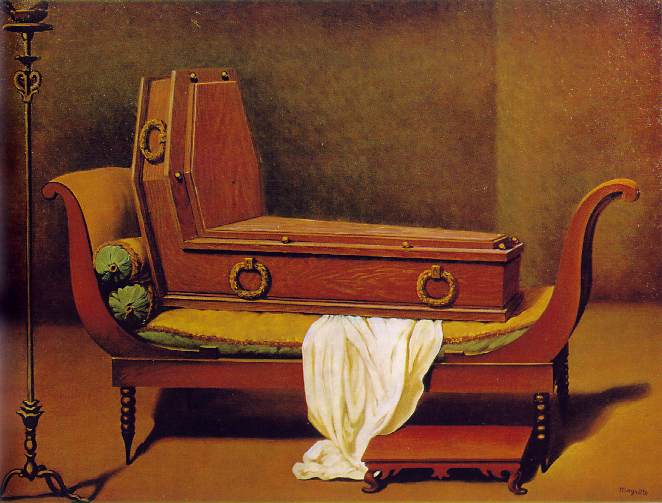
There is currently very little English-language information available about the Museum of the Funeral Service Institute of Vienna, so I’m delighted to be the first to take you on a virtual tour. Let’s start with the sitting-up coffin above.

%Gallery-88625%The Sitting-Up Coffin

Jacques-Louis David famously painted this portrait of Madame Récamier, then this coffin to go around her. Keller, the curator of The Museum of the Funeral Service Institute of Vienna (FSIV), created this coffin for a European funeral fair (which happens every three years). “It’s not practical,” he noted. Bodies must legally be buried six feet underground (below the freezing line), so one would have to dig several feet deeper to bury this coffin. Still, for the right price, he could says they could make it work.

The sitting-up coffin was one of the first things we saw at the museum, and it set the stage for an intellectual and curious look into death, rather than one filled with dread. The initial willies were shaken off, and we began discussing the new trend of creating diamonds out of the deceased’s ashes.

Diamonds Made of Dead People

You may have heard of LifeGem or another company which does this. People have been making diamonds synthetically for years (all you need is carbon, heat and pressure), and making a diamond from someone’s ashes, to some, is a beautiful way to give them metaphorical “eternal life.” Most diamonds created from human ashes are light blue, due to the chemicals in our bodies, but in the cases of people who’ve been through extensive medical treatments, the color can be different. Some companies will add chemicals post-mortum and allow you to make the diamond any color you like, but the FSIV doesn’t do that. Keller reports that it takes about 8 months to turn human ashes into a diamond, and the price for a quarter carat is about €4,680 (€14,440 for a full carat). It’s something to think about, because unless you put your desire to become a diamond in your will, your loved ones probably won’t come up with the idea.

Wearing Grandma’s ashes in a diamond necklace isn’t really any stranger than keeping her on the mantle.

Funeral Fashion

Next, we headed into a room filled with black outfits for all the various officiants in historical Viennese funerals. In addition to black, funerals in Vienna could feature red paraphernalia for military men, and for children, youths and anyone unmarried, much of the black regalia would be light blue. Keller joked that a light blue funeral meant that you were “a complete loser in this life and the next,” and added that if you’re not married, you’d best not die in Vienna.

From about 1850 to about 1930, what mourning women wore to funerals in Vienna was an extremely important matter. Every October, newspapers would publish what the proper style for funerals would be that year, and if women were spotted in last year’s style, it reflected very poorly on them and their families. Naturally, it became possible to rent the appropriate dress to wear to a funeral — in fact, this is still practiced in Vienna. Just as you might rent a gown for a ball, you can rent a mourning dress for an important funeral. Jewelry was also regulated by the annual October announcement, and Keller says that this was actually the origin of costume jewelry.

After Death Certification

Next, we headed into a room of what Keller called “rescue alarm clocks.” Production of these began around 1854 when there was mass hype about the possibility that you could seem dead and be buried, and then suddenly wake up — buried alive. There were many, many different contraptions you could purchase to prevent this horrifying fate. For example: the double-sided knife, which specially licensed doctors would stab into your heart to ensure that you were dead (you can still request this, and he says old ladies in particular sometimes do, €300), known as “after death certification.” Another rescue alarm clock was quite literally an alarm, which he demonstrated for us:

That rope would have led from a coffin directly into the dining room of the cemetery-keeper. That’s a dinner party foul.

Cultural Differences

Next, we looked at some antique children’s funeral toys, which really confused me at first. Basically, Keller explained, a funeral is viewed like a wedding, or any other important passage, and children must be taught how to behave before they can attend. So, from a very young age, children would be given funeral toys to play with so that they could learn the proper procedures and not be afraid.

On the whole, death in Vienna is regarded as a far less scary affair. Perhaps it’s because of the toys, or perhaps it’s because Austrians save money — some their whole lives — for their funerals. Farmers would buy their coffins during a good year when they had the cash and paint it to match their furniture, then use it as a bookshelf or wardrobe until they, you know, needed it. Having a savings account for your funeral or a coffin in your living room probably helps you get used to the idea of dying. “Old Viennese folk songs are all about wine and death,” said Keller. “Death goes with you to the wine tavern and follows you home at night; it’s your best friend.”

The funeral is regarded as a festival, a goodbye party. People save their whole lives to throw a good one, so that they will be remembered for that last great party they gave. “You should tell people they can learn to die in Vienna,” said Keller with a cheeky smile.

Final Details

As I mentioned, you can only visit the Museum of the FSIV by appointment, so to make one, call 501-95-4227 (country code 43) or ask your concierge. If your German’s pretty good, you can get more information here on the website. Alternatively, if you should happen to be in Vienna on the Long Night of the Museums (the first Saturday in October, when museums stay open late), you can test out the coffins. Literally. They’ll put you in a coffin, close it, and leave you there until you knock. According to Keller, last year, 1,500 people did just that. The oldest was an 88-year-old woman. “The girls are much braver than the boys,” he noted cheerfully.

My visit to Vienna was sponsored by the Vienna Tourist Board and Cool Capitals, but the opinions expressed in the article are 100% my own.

Getting high on Hong Kong

Everything about visiting Hong Kong is vertical. From the towering skyscrapers of Victoria Harbor to the city’s jaw-dropping views and rooftop secrets, it’s a destination best experienced from up above. But it’s not just height that makes Hong Kong a great city for travelers. It’s the mind-boggling density that comes with it: the high rises clinging to the slopes of mountains, the daily blitzkrieg of billboards and light and the hidden retreats tucked on high that taken as a whole have the power to awe and delight.

During Gadling’s visit to Hong Kong last month, we had a chance to investigate some of the numerous high places that give this metropolis its unique air. From vertigo-inducing cocktail lounges to modern architectural masterpieces to heart-stopping city views, we looked low (and high) for Hong Kong’s best spots. Wondering what we found? Get ready to get high on Hong Kong. Keep reading below for more…Drinking in the sights
The street level signage for Hong Kong steakhouse Wooloomooloo is unassuming and forgettable. But visitors who take the elevator to the 31st floor of the restaurant’s Wan Chai location will discover some truly unforgettable city views. Hidden high above this busy downtown district is low-lit oasis of romance and luxury, with floor to ceiling windows and million-dollar views of Hong Kong’s skyscrapers, Victoria Harbor, and the Happy Valley racetrack.

Wooloomooloo’s main attraction is the restaurant’s open air roof deck, where visitors can sip a few cocktails or a glass of wine, bathed in the glow of Hong Kong’s 24-hour light show below.

A vertical masterpiece

If you’ve ever seen a photo of Hong Kong, you probably already know the iconic Bank of China Tower, designed by architect I.M. Pei. The beveled edges of this sky-high building make it one of the city’s most famous tall landmarks – and also among its most controversial. This towering structure has been criticized for its poor feng shui, a Chinese philosophy that advocates proper “energy flow” in design. Love or hate it, did you know the Bank of China Tower has a viewing deck open to the public? Take the elevator to the 43rd Floor for a peek inside this architectural wonder and some imposing views of the city below.

The ultimate Hong Kong view
Hong Kong has some downright impressive heights, whether you’re drinking at a swanky rooftop restaurant or checking out the view from one of its most famous buildings. But the most amazing way to see Hong Kong from up high is the panorama from The Peak. Located on the highest mountain on Hong Kong Island, “The Peak” offers visitors a literal bird’s eye look at this remarkable city.

Half the fun of getting to The Peak is riding on the historic Peak Tram cable car, which drags passengers up the mountain’s perilously steep hillside. Once you arrive at the top, you’ll be treated one of the world’s most unique city views, looking down from on high at Hong Kong’s impressive skyline below. Though many will opt to pay for the Sky Terrace viewing deck, don’t feel obligated. Instead, walk out the doors of the Peak Tower to find several free spots with equally amazing views.

Hong Kong isn’t just a metropolis that “stands tall” on the world stage. It is tall – from the restaurants to the architecture to the stunning views. Stay long enough, and you might never want to come down.