The top 50 cities for quality of life

If you don’t live in Vienna, you might consider moving there.

A new survey lists the top 50 cities for quality of life and Vienna comes out as number one. The survey, conducted by Mercer, a human resources consultancy firm, looked at criteria such as infrastructure, economy, housing, recreation, personal and press freedom, and education. Vienna certainly scores high in all that, plus it has historic neighborhoods and cool clocks. It’s just a shame the Toilet Bar had to change its decor.

The top ten cities are:

Vienna
Zurich
Geneva
Vancouver
Auckland
Dusseldorf
Frankfurt
Munich
Bern
Sydney

European cities dominate the top fifty. No U.S. city shows up until number 31 (Honolulu) followed by San Francisco (32), Boston (37), Chicago and Washington (tied at 45), New York City (49) and Seattle coming in surprisingly low at 50. Canada did much better with Vancouver at number 4, Ottawa at 14, Toronto at 16, Montreal at 21, and Calgary at 28.

Mercer actually surveyed 221 cities, with Baghdad scoring dead last. Go figure. They also listed the most eco-friendly cities, with Calgary taking the top spot.

Image of Cafe Central, Vienna courtesy Andreas Praefcke via Wikimedia Commons.

Rick Steves’ New Travel Mag

Just in time for you to change your summer travel plans, the Smithsonian and Rick Steves just launched their special summer edition magazine, Smithsonian Presents “TRAVELS with Rick Steves”. (In case you forgot, a magazine is a bundle of glossy paper printed with pretty colored pictures and some words, then bound with staples and placed within arm’s reach of the toilet in case you lose your iPad and need something to read.)

Just like Rick Steves the person, Rick Steves the magazine is dedicated to traveling in Europe. The 104-page Eurofest breaks down into 24 articles that describe Europe’s “Top 20 Destinations” which mixes up the obvious (Florence, Prague, Rome, Paris, and Venice) with the obscure (Denmark’s Aero Island, Bosnia’s Mostar, and the tiny Austrian village of Hallstatt). As an unapologetic advertorial, the magazines flips between a few scant full-page ads for Smithsonian Journeys and Rick Steves Tours. For a mere five bucks, you can buy a still-warm copy from the 100,000-strong print run at a newsstand near you.

Now honestly, I know nothing about Rick Steves other than he’s quite famous for helping regular Americans take tours of Europe. Also, many travelers who I respect swear by his travel guides, and once upon a time, a bunch of his fans mistook me for his assistant at a book signing. After reading his entire magazine cover to cover, I made the amazing discovery that the masthead lists only one writer. Yes, Rick Steves wrote the entire magazine all by himself, so… respect. The guy works hard and is way gutsy… gutsy enough to publish a print travel magazine in 2010.Love him or hate him, Rick Steves is a brand that’s infected America in much the same way as Target, Wranglers, and hip hop music sung by Caucasians. He’s everywhere and we all end up liking him, just like a lot of Americans enjoyed the movie “Chocolat” and a lot of Americans dream of carrying a baguette under one arm in France or clinking beer steins in Germany or sipping ouzo shots in Greece. This magazine is for them. For us pickier travel snobs, the gorgeous photo spreads and classy Smithsonian layout gives Rick the royal treatment and makes us all want to book a trip to Europe with our new best friend Rick.

Nevertheless, for someone whose entire identity involves leading America by the hand through Europe’s backdoor, it’s hard not to ignore Rick’s hearty embrace of cliché. His magazine’s titles highlight “Storybook” England, “Sound of Music” Austria, and “Heidi’s Switzerland” before trailing off into a slew of earth-shattering travel tips such as “David is a must-see visit in Florence”.

Now, if I wrote travel copy like that, my editors would shove it through a shredder. Twice. All you would have is a bunch of little squares of paper-like confetti thrown at a quaint Italian wedding that I just happened to run into as I was strolling down a cobblestone street under a buttery Tuscan sunset.

I much preferred Rick’s more honest and authentic articles like the “Best Little Street in Paris”–a candid Polaroid narrative about Rue Cler in the 7th Arrondissement–and his heartfelt discovery of Danish island life. I was also happy to see some of the Rick Steve love shine down on Blackpool–a northern British seaside resort that very few Americans ever visit.

If Rick Steves and Smithsonian want to feed our dreams of Europe, then mission accomplished. I want to go to all the places listed and now that I’ve read this sunny version of their Top 20 list, I’m so there. My only conjecture is that the “quaint folksiness” Rick so adamantly warns travelers against might also be the very product that he’s selling.

Trade Mocked

You were a cheerleader, you dated a cheerleader, or you hated the cheerleaders. As I recall, that’s how high school worked.

Thanks to travel PR, that same primeval paradigm lives on long after graduation. That miniskirts-shouting-slogans thing still works, whether you’re a used car salesman, Miley Cyrus on VH1 or the tourist board of a small Balkan nation. When it comes to selling your destination in today’s busy world of busy people, a country’s name just isn’t enough–just like school spirit, you need colors, a pep band, a mascot, a brand and most important–a cheer.

It’s tragic but true: tourist boards don’t trust their country’s name to inspire appropriate thoughts in your brain. Toponyms are too open-ended and too untrustworthy–also, way too obvious. For example, what’s the first thing that pops into your head when I say . . . Monte Carlo? How about Australia? The Bahamas? Kuwait? The Gambia?

Whatever you’re thinking, it’s not enough. Tourist boards want you to choose their destination over all others, then allocate all of your vacation days to them and then come spend your money on very specific things–like miniature golf by the sea or hot air balloon rides across the prairie. In short, they want your school spirit so much they’re churning out cheers to fill up all the Swiss cheese holes in your mental map of the world.

Like a good cheer, a good destination slogan is simple and so memorable it sticks in your head like two-sided tape. Sex sells, but then so does love: “Virginia is for Lovers”, Hungary offers visitors “A Love for Life”, Albania promises “A New Mediterranean Love”, while the highlighted “I feel Slovenia” spells out sweetly “I Feel Love”. Meanwhile, Bosnia & Herzegovina call themselves “the Heart Shaped Land” and Denmark’s logo is a red heart with a white cross. Colombia and Dubai have red hearts in their logo. Everybody else uses sunshine.
There is a direct correlation between sunshine deprivation and travelers with disposable income–sunny places sell, which is why Maldives is “the Sunny Side of Life”, Sicily says “Everything else is in the shade”, Ethiopia quizzically boasts “13 Months of Sunshine”, Portugal is “Europe’s West Coast”, and Spain used to be “Everything Under the Sun”. Spain was also the first country ever to have a logo-the splashy red sun painted by Joan Miró in 1983. Some destination logos work–like the black and red “I LOVE NY” design of Milton Glaser that’s been around ever since the 70s. Others fail to grasp the spirit of a place (cough, Italia). Reducing one’s country to a crazy font and some cheesy clip art often detracts from that country’s best assets. Like nature.

When chasing the crunchy yuppie granola suburbanite dollar on vacation, you’ve gotta roll out Nature and promise them the kind of purity that lacks from their daily life. British Virgin Islands claims “Nature’s Little Secrets” while Belize counterclaims with “Mother Nature’s Best Kept Secret”. Switzerland urges us to “Get Natural”, Poland is “The Natural Choice”, Iceland is “Pure, Natural, Unspoiled”, Ecuador is Life in a Pure State, “Pure Michigan” is just as pure, Costa Rica is “No Artificial Ingredients”, and like a clothing tag that makes you feel good, New Zealand is simply “100% Pure”. New Zealand also wants us to believe that they’re the “youngest country on earth” but that’s pushing it. The youngest country on earth is actually Kosovo (Born February 2008)–so young they’re still working on their slogan.

And there’s a tough one–how do you sell a country that’s just poking its head out from under the covers of war and bloodshed? Kosovo’s big bad next-door neighbor Serbia asks us frankly to “Take a New Look at Your Old Neighbor”; “It’s Beautiful–It’s Pakistan” steers clear of the conflict, Colombia owns up to its knack for kidnapping by insisting, “The Only Risk is Wanting to Stay”, and Vietnam nudges our memories away from the past and towards “The Hidden Charm” of today.

Our nostalgia for simpler, better, pre-tourist times invokes our most romantic notions about travel: Croatia is “The Mediterranean as it Once Was”, Tahiti consists of “Islands the Way they Used to Be”, and Bangladesh employs a kind of reverse psychology to insist we “Come to Bangladesh, Before the Tourists.” Such slogans of unaffectedness mirror the push for national validation by tourism, where actual authenticity is second to perceived authenticity, hence Malaysia is “Truly Asia”, Zambia is “The Real Africa”, and the Rocky Mountain States make up “The Real America”. Greece is “The True Experience” and Morocco is “Travel For Real”. Everybody wants to be legit.

Countries without the certified organic label try merely to stupefy us: Israel “Wonders”, Germany is “Simply Inspiring”, Chile is “Always Surprising”, Estonia is “Positively Surprising”, “Amazing Thailand” amazes, and Dominica claims to “Defy the Everyday”. To that same surprising end, Latin America loves trademarking their exclamation points (see ¡Viva Cuba!, Brazil’s one-word essay “Sensational!” and El Salvador’s “Impressive!”)

Where punctuated enthusiasm falls short, countries might confront the traveler with a challenge or a dare. Jamaica projects the burden of proof on its tourists by claiming “Once You Go You Know”, Peru asks that we “Live the Legend”, Canada insists we “Keep Exploring”, South Africa answers your every question with a smiley “It’s Possible”. Meanwhile, Greenland sets an impossibly high bar with “The Greatest Experience”.

Working the totality of a country’s experience into a good slogan is a challenge that often leads to open-ended grandstanding: “It’s Got to be Austria” might be the answer to any question (and sounds better when spoken with an Austrian accent). Next-door Slovakia is the “Little Big Country”, insisting that size is second to experience. Philippines offers “More than the Usual” and small, self-deprecating Andorra confesses, “There’s Just So Much More” (I think what they meant to say is, “come back please”). Really big numbers carries the thought even further: Papua New Guinea is made up of “A Million Different Journeys”; Ireland brightens with “100,000 Welcomes”.

When all else fails, aim for easy alliteration, as in “Enjoy England“, “Incredible India“, “Mystical Myanmar”, and the “Breathtaking Beauty” of Montenegro. (For more on the correlation between simplistic phrases and high mental retention, See Black Eyed Peas-Lyrics).

The point of all this is that today, the internet is our atlas and Google is our guidebook. It’s how we travel, how we think about travel and how we plan our travel. Punch in a country like Tunisia and you’re greeted with a dreamy curly-cue phrase like “Jewel of the Mediterranean”–Type in next-door neighbor Algeria and you get a glaring State Department warning saying “Keep Away.” In a scramble for those top ten search results, destinations compete with a sea of digital ideas that pre-define their tourist appeal. It’s why we’ll never find that page proclaiming Iran “The Land of Civilized and Friendly People” but why a simple “Dubai” turns up Dubai Tourism in first place, along with their moniker “Nowhere Like Dubai” (which should win some kind of truth in advertising prize.)

That aggressive, American-style marketing has taken over the billion-dollar travel industry is obvious. Nobody’s crying over the fact that we sell destinations like breakfast cereal–that countries need a bigger and brighter box with a promised prize inside in order to lull unassuming tourist shoppers into stopping, pulling it off the shelf, reading the back and eventually sticking it in their cart. I guess the sad part is how the whole gregarious exercise limits travel and the very meaning of travel. By boiling down a country into some bland reduction sauce of a slogan, we cancel out the diversity of experience and place, trade wanderlust for jingoism, and turn our hopeful worldview into a kind of commercial ADHD in which we suddenly crave the Jersey Shore like a kid craves a Happy Meal.

Nobody’s ever asked me to join their tourist board focus group, but that doesn’t mean I don’t have my own opinions and tastes. For instance, my daily reality is a stereo cityscape of car alarms and jackhammers. Any country that simply placed the word “Quiet” or “Peaceful” in lower-case Times New Roman, 24-point font white type in the upper right hand corner of a double-truncated landscape spread–well, I’d be there in a heartbeat. Better yet–how about a one-minute TV commercial of total silence. (“Oh, wow honey, look!–that’s where I wanna go.”)

This is probably why I’ve never been in a focus group. For all the focus on authenticity and reality, I find most tourism slogans lacking in both. For the most part, they are limiting and unoriginal, easily dropped into any of the above categories. Even worse, today’s slogans challenge actual truths gained through travel experience. One day spent in any place offers a lifetime of material for long-lasting personal travel slogans. My own favorites include Russia (“Still Cold”), Turkey (“Not Really Europe At All”), England (“Drizzles Often”), Orlando (“Cheesy as Hell”), and Ireland (“Freakin’ Expensive”).

As a writer, I must argue against the cheerleaders and in favor of words–the more words we attach to a destination the better the sell. I think it’s safe to assume that Bruce Chatwin’s In Patagonia has done more for Argentina tourism than any of their own slogans. Similarly, Jack London gives props to Alaska, Mark Twain mystifies us with the Mississippi, and Rudyard Kipling keeps sending people to India. All four authors wrote about love, nature, and sunshine. They wrote long books filled with enthusiasm and punctuated with exclamation marks. They made us fall in love and yearn for places we never saw or knew.

No matter how many millions get spent on tourist slogans, today’s trademarked PR phraseology has generally failed to hit the mark. Perhaps they’ll make us rethink a place–reconsider a country we’d somehow looked over, but can a two or three word slogan ever touch us in that tender way, make us save up all our money, pack our bags and run away?

I don’t think so.

Daily Pampering: Executive Club Lounge at the Four Seasons Sydney

There’s something spectacular on Level 32 at the Four Seasons Sydney, and it’s not just the view. Think: warm cookies, homemade desserts and a nightcap.

For a small fee, the Executive Club plays host to pre-evening activities and first-thing-in-the-morning necessities. Treat yourself to hot and cold buffets for breakfast including an omelet station and mounds of fresh fruit, or indulge at dusk with cocktails and canapés. In addition to the food and beverages offered, guests with Executive Club privileges can take advantage of club services including free Internet, car services, spa reservations, tour bookings and tickets to the theater or opera.

The lounge was the perfect place to start the night with a glass of Shiraz or bubbly from the self-service bar. After a night on the town, it’s a great comfort to know there’s a hot breakfast waiting on floor 32. Take it from one who knows – the mini-chocolate berry mouse is not to be missed!


Want more? Get your daily dose of pampering right here.

The Museum of the Funeral Service Institute of Vienna


The Funeral Service Institute of Vienna is responsible for most of the city’s undertaking. They will cremate you, find you your ideal coffin or even have you turned into a diamond. Whatever your needs after death may be, they can probably accommodate you.

They also happen to have a museum, which is open to the public but viewable by appointment only. I would highly recommend making an appointment, as you’ll get a €4.50 personal tour (€2.50 for larger groups) from the museum’s delightfully enthusiastic curator, Dr. Wittigo Keller. The exhibit is truly fascinating. From their funeral customs to their beliefs about death, the Viennese have an intriguing cultural perspective on the big sleep.

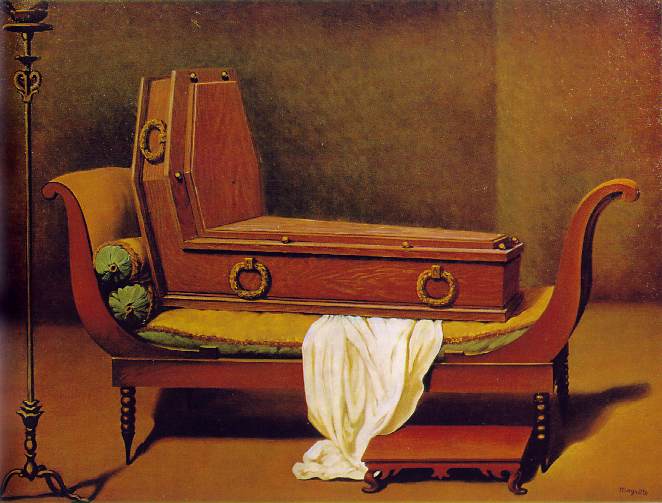
There is currently very little English-language information available about the Museum of the Funeral Service Institute of Vienna, so I’m delighted to be the first to take you on a virtual tour. Let’s start with the sitting-up coffin above.

%Gallery-88625%The Sitting-Up Coffin

Jacques-Louis David famously painted this portrait of Madame Récamier, then this coffin to go around her. Keller, the curator of The Museum of the Funeral Service Institute of Vienna (FSIV), created this coffin for a European funeral fair (which happens every three years). “It’s not practical,” he noted. Bodies must legally be buried six feet underground (below the freezing line), so one would have to dig several feet deeper to bury this coffin. Still, for the right price, he could says they could make it work.

The sitting-up coffin was one of the first things we saw at the museum, and it set the stage for an intellectual and curious look into death, rather than one filled with dread. The initial willies were shaken off, and we began discussing the new trend of creating diamonds out of the deceased’s ashes.

Diamonds Made of Dead People

You may have heard of LifeGem or another company which does this. People have been making diamonds synthetically for years (all you need is carbon, heat and pressure), and making a diamond from someone’s ashes, to some, is a beautiful way to give them metaphorical “eternal life.” Most diamonds created from human ashes are light blue, due to the chemicals in our bodies, but in the cases of people who’ve been through extensive medical treatments, the color can be different. Some companies will add chemicals post-mortum and allow you to make the diamond any color you like, but the FSIV doesn’t do that. Keller reports that it takes about 8 months to turn human ashes into a diamond, and the price for a quarter carat is about €4,680 (€14,440 for a full carat). It’s something to think about, because unless you put your desire to become a diamond in your will, your loved ones probably won’t come up with the idea.

Wearing Grandma’s ashes in a diamond necklace isn’t really any stranger than keeping her on the mantle.

Funeral Fashion

Next, we headed into a room filled with black outfits for all the various officiants in historical Viennese funerals. In addition to black, funerals in Vienna could feature red paraphernalia for military men, and for children, youths and anyone unmarried, much of the black regalia would be light blue. Keller joked that a light blue funeral meant that you were “a complete loser in this life and the next,” and added that if you’re not married, you’d best not die in Vienna.

From about 1850 to about 1930, what mourning women wore to funerals in Vienna was an extremely important matter. Every October, newspapers would publish what the proper style for funerals would be that year, and if women were spotted in last year’s style, it reflected very poorly on them and their families. Naturally, it became possible to rent the appropriate dress to wear to a funeral — in fact, this is still practiced in Vienna. Just as you might rent a gown for a ball, you can rent a mourning dress for an important funeral. Jewelry was also regulated by the annual October announcement, and Keller says that this was actually the origin of costume jewelry.

After Death Certification

Next, we headed into a room of what Keller called “rescue alarm clocks.” Production of these began around 1854 when there was mass hype about the possibility that you could seem dead and be buried, and then suddenly wake up — buried alive. There were many, many different contraptions you could purchase to prevent this horrifying fate. For example: the double-sided knife, which specially licensed doctors would stab into your heart to ensure that you were dead (you can still request this, and he says old ladies in particular sometimes do, €300), known as “after death certification.” Another rescue alarm clock was quite literally an alarm, which he demonstrated for us:

That rope would have led from a coffin directly into the dining room of the cemetery-keeper. That’s a dinner party foul.

Cultural Differences

Next, we looked at some antique children’s funeral toys, which really confused me at first. Basically, Keller explained, a funeral is viewed like a wedding, or any other important passage, and children must be taught how to behave before they can attend. So, from a very young age, children would be given funeral toys to play with so that they could learn the proper procedures and not be afraid.

On the whole, death in Vienna is regarded as a far less scary affair. Perhaps it’s because of the toys, or perhaps it’s because Austrians save money — some their whole lives — for their funerals. Farmers would buy their coffins during a good year when they had the cash and paint it to match their furniture, then use it as a bookshelf or wardrobe until they, you know, needed it. Having a savings account for your funeral or a coffin in your living room probably helps you get used to the idea of dying. “Old Viennese folk songs are all about wine and death,” said Keller. “Death goes with you to the wine tavern and follows you home at night; it’s your best friend.”

The funeral is regarded as a festival, a goodbye party. People save their whole lives to throw a good one, so that they will be remembered for that last great party they gave. “You should tell people they can learn to die in Vienna,” said Keller with a cheeky smile.

Final Details

As I mentioned, you can only visit the Museum of the FSIV by appointment, so to make one, call 501-95-4227 (country code 43) or ask your concierge. If your German’s pretty good, you can get more information here on the website. Alternatively, if you should happen to be in Vienna on the Long Night of the Museums (the first Saturday in October, when museums stay open late), you can test out the coffins. Literally. They’ll put you in a coffin, close it, and leave you there until you knock. According to Keller, last year, 1,500 people did just that. The oldest was an 88-year-old woman. “The girls are much braver than the boys,” he noted cheerfully.

My visit to Vienna was sponsored by the Vienna Tourist Board and Cool Capitals, but the opinions expressed in the article are 100% my own.