Top ten most crowded islands in the world

From an island microslum in Colombia to a haute enclave in central Paris, the ten most crowded islands in the world bear scant similarities in class or culture. In fact, every entry in the top ten comes from a different country. But being islands, each shares the common thread of scarcity – whether it be land, resources, or housing. In general, these islands are prophetical microcosms for an overcrowded earth – finite spaces where self sufficiency governs and demand pierces supply.

With the world’s population racing higher and higher, and the “megacities club” accepting new members yearly, some day the earth could bear the traits of one of these densely packed islands.

%Gallery-127866%

10. Vasilyevsky Island
Location: St. Petersburg, Russian Federation
Population: 202,650
People per square kilometer: 18,592
Size: 10.9 square kilometers
Story: This island located in St. Pete is a collection of 18th and 19th century buildings with some Soviet built apartment blocks lining the Gulf of Finland on the western shore. The communist housing ethos of the twentieth century called for rows and rows of tight apartments, and this historic island in Russia’s second city was not immune to the sprawl. This created the compact quarters of Vasilyevsky island. Famous for its old school stock exchange and giant Rostral columns, the island is popular with tourists.

9. Lilla Essingen
Location: Stockholm, Sweden
Population: 4,647
People per square kilometer: 20,204
Size: .23 square kilometers
Story: This small island in central Stockholm once served as a hub of industry for Stockholm’s industrial operations. The easy boat access allowed for ease of shipping by boat, and the island factories manufactured an array of goods, from massive lamps for lighthouses to vacuum cleaners. Eventually, as the industrial applications became outmoded, the island became home to several apartment towers. Today, the island is crammed full of smiling Swedes living in apartments with (presumably) tasteful modern furniture.

8. Île Saint-Louis
Location: Paris, France
Population: 2,465
People per square kilometer: 22,409
Size: .11 square kilometers
Story: Perhaps the most stylish island in the world, Île Saint-Louis is a marvel of 17th century urban architecture and planning. Narrow roads and some of the priciest real estate in the world have allowed the island to remain relatively calm, despite its location in central Paris. While Île Saint-Louis is off of the tourist radar for most, this island in the Seine River embodies the classic Parisian spirit, worthy of an afternoon stroll with a perfect sorbet from Berthillon. The island is named for France’s canonized King, Louis IX.

7. Manhattan
Location: New York, New York
Population: 1,585,873
People per square kilometer: 26,879
Size: 59.47 square kilometers
Story: In 1626, the Lenape Indians sold Manhattan island to the Dutch for a bag of axes, hoes, iron kettles, duffel cloths and other 17th century garb worth about $24 (roughly $1000 in modern value). It is safe to day the island has grown ambitiously from this humble transaction. The center of the financial universe is now home to many – truly a place where the world lives. The island once known as New Amsterdam, and briefly, New Orange, shadows America’s story, both tragic and triumphant.

6. Salsette Island
Location: Mumbai, India
Population: 13,175,000
People per square kilometer: 30,217
Size: 436 square kilometers
Story: Salsette, an island off the western coast of India, is home to Mumbai and its sprawling suburbs. As a poster boy for “New India,” Mumbai is as dichotomous as it gets, at once the wealthiest city in south Asia and also home to one of the world’s largest slums – the notorious Dharavi. Dharavi is an island within an island, a super-slum with roughly one million people spread out over an area less than a square mile. At the other end of the spectrum, Salsette Island is also home to extreme wealth. The house known as Antilla is a 400,000 square foot giant that towers with some of Mumbai’s tallest buildings. Truly a contrast from the squalor in Dharavi, the private residence houses six people, can accommodate 168 cars, has 9 elevators, and an ice room with snow flurries.


5. Ebeye Island
Location: Marshall Islands
Population: 15,000
People per square kilometer: 41,667
Size: .36 square kilometers
Story: When the United States decided to test nuclear weapons in the South Pacific, they chose to do so amongst the atolls of the Marshall Islands. U.S. officials uprooted many residents from Bikini Atoll and Enewetak Atoll to insure that the testing did not directly harm human life. The relocated Marshallese had to move somewhere, and most moved to Ebeye under the assistance of the United States. This forced relocation caused a huge mess, including a severe housing shortage and land owner legality issues that persist today. The combination of factors created an environment of hostility and squalor, creating the slum of the South Pacific.


4. Malé
Location: The Maldives
Population: 103,693
People per square kilometer: 53,121
Size: 1.952 square kilometers
Story: The Maldives is one of Asia’s top tourist destinations, with 26 atolls and 1,192 islands offering beach perfection. At its center is the capital city – Male. Male is a humbly sized island of just a couple square miles. It is stuffed full of people, hotels, mosques, and office towers that efficiently utilize the scare land resources. While landfills have reclaimed some land from the sea, most progress is made vertically rather than horizontally. The modern downtown island in the middle of the Indian Ocean is a stark aberration from the deserted islands that dot most of the Maldives.

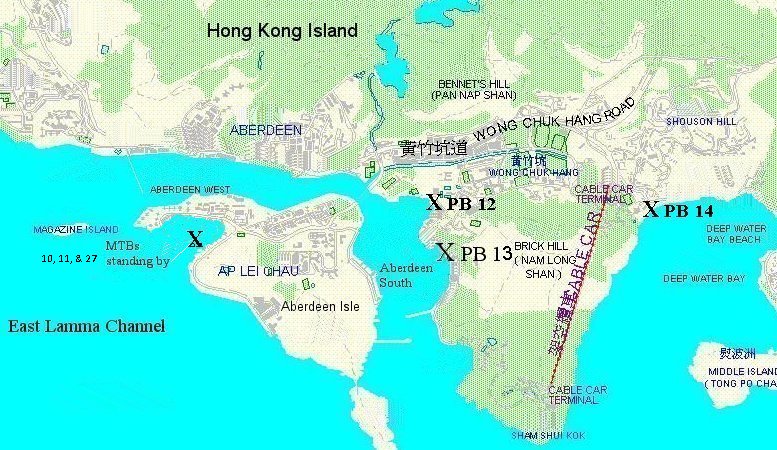
3. Ap Lei Chau
Location: Hong Kong
Population: 86,782
People per square kilometer: 66,755
Size: 1.32 square kilometers
Story: Hong Kong is the land of a thousand towers, clustered most densely on the island of Ap Lei Chau just southwest of Hong Kong Island. Ap Lei Chau served as the settlement for Hong Kong Village, theorized to be the etymological source for the famous larger territory of Hong Kong. Strangely, Ap Lei Chau translates to Duck Tongue Island, said to be named for the island’s shape. It is filled with high rise residences and even a winery.
2. Migingo Island
Location: Kenya, though Uganda disputes this
Population: 400
People per square kilometer: 100,000
Size: .004 square kilometers
Story: This bantomslum in the middle of Lake Victoria is a fishing village perched precariously on half a sphere of rock. The residents take in large hauls of the Nile Perch – a poster boy for River Monsters that can grow to a comedically large size. Migingo is famous for a decades-old dispute between Kenya and Uganda over the sovereignty of the small island. There is even a facebook page where individuals can “like” declaring the island Kenyan. (The page has twice as many followers as there are residents on Migingo.) Uganda agrees with this claim, most of the time, though the tiny rock island is not the issue – the fishing rights are.

1. Santa Cruz del Islote
Location: Colombia
Population: 1,247
People per square kilometer: 124,700
Size: .01 square kilometers
Story: The most densely populated island in the world is a microslum off the coast of Colombia. This tropical island is located in the emerald waters of the idyllic Caribbean, though is packed so tight that most activities are done off island. Schooling, football, graveyards, and work all take place away from Santa Cruz del Islote. The island park is the size of a small tennis court, and fresh water must be shipped in by Colombian Navy ships. Santa Cruz del Islote also does not have electricity. What the island favela does have is people, lots of them. To visit the world’s most packed island, hop on a ferry from Tolu, Colombia. The nearby hotel of Punta Faro can arrange tours of the island.

All unattributed images from wikimedia commons

Thai country music at Bangkok market


Have I ever been to Thailand? Nope. Would I drop everything to go tomorrow if I could? Yep. In fact, maybe I’ll head there tomorrow. Thailand’s culture has always fascinated me and photos of the country have always drawn me in. But it appears as though the United States‘ culture might have perhaps magnetized some Thai residents.

Check out this video, taken at the Chatuchak Market in Bangkok, Thailand. At around :47 seconds in the the video, the camera man stumbles onto some Thai dancers and a musician who are playing what sounds to me like Luk thung music–sometimes referred to as Thai’s country music. Luk thung is often compared to country music found in the United States. But considering the American Flag in focus, it’s hard to tell where Luk thung music ends and American country/bluegrass music begins. Do you have an opinion on what these Thai market-goers are actually playing? Let us know in the comments if so.

Either way, the banjo player is good.

Exploring the world’s tallest structure – the Burj Khalifa

The tallest building in the world does not appear made for this earth. By day it looks photoshopped into its downtown Dubai surroundings, and by night, the hulking spire looks like a rocket bound for the furthest reaches of our galaxy. And like a giant middle finger to its predecessors in the tallest building club, the structure is a testament to the audacity of Dubai – an idea that, what they build is what they are, and they are going to try and build the best.

While the world economic markets receded, Dubai kept building the beast called Khalifa. At a cost of $1.5 billion and a height of 2,717 feet, it humbles the surrounding skyscrapers in downtown Dubai. It possesses at least fifteen world records. It has the highest restaurant, the most floors, and is also the tallest structure ever built. The Middle East has not been home to the world’s tallest structure since 700 years ago, when the Great Pyramid of Giza was eclipsed by Lincoln Cathedral in England.

%Gallery-127770%

While said to be inspired by Frank Lloyd Wright’s plans to build a mythical mile-high tower called “The Illinois” in the fifties, the Burj Khalifa is very real, and very original. The foundation for the building is based on the petals of the Hymenocallis flower, and it took 10,000 people from virtually every country in the world to complete the construction project. Named after the president of the United Arab Emirates, Khalifa bin Zayed Al Nahyan, the engineering marvel took over 5 years to build, opening in 2010.

The Burj Khalifa is a mixed use tower with offices, residences, the Armani Hotel, and a restaurant called At.mosphere.

At the Top
The official visitor attraction for the Burj Khalifa is called “At the Top” and begins in Dubai Mall, next to the tower. The experience leads visitors through various multimedia presentations that trace the building of Khalifa. A travelator also cruises through a history of Dubai presentation in much appreciated air conditioning. After passing through some general Burj propaganda that includes the superimposing of the Burj Khalifa in a variety of cities, such as New York, one finally arrives at the elevators that ascend to the observation deck.

The observation deck is on the 124th floor, and reaching it by elevator takes roughly one minute. At a rate of 59 feet per second, it is the fastest elevator in the world. From the 124th floor the view reaches for miles and miles. All of Dubai looks like some sort of Lego set made by giants, unfinished and reaching for open space. The streets head in no particular direction and other skyscrapers appear tame and arbitrary.

A 360 degree panorama is provided from the observation deck, providing epic views of the city, sea, and desert. On clear days, one can glimpse man-made islands floating in the Arabian gulf. If, by chance, a visitor finds himself aching to buy some gold at this height, thankfully an ATM that distributes gold bars is available. File that under Only in Dubai.

The cost of admission varies. Since this is Dubai, there is an expensive option in addition to regular admission. The “immediate entry” choice costs four times regular admission, but one will be able to skip the line. This option is 400 AED ($108), and regular admission is 100 AED ($27). If time is greater than money, then the “immediate entry” preference is for you. Hours of operation are 10:00am to 12:00am daily. Booking in advance on the Burj Khalifa website is extremely wise.

The Armani Hotel
The Armani Hotel offers hotel rooms and residences in the Burj Khalifa. The first hotel named after fashion magnate Giorgio Armani minimizes all unnecessary aspects of hotel operations, delivering a sleek experience from end to end. The check in desk has been abolished, instead light conversation guides the process along. The desk in a “Classic” guestroom is a cube that one must slowly unfold, opening up an expanse in which to write love letters to minimalist designers. While Giorgio may or may not be a fan of desks, the point is minimalization, and it works wonderfully.

The colors are neutral, the lines are clean, and everything feels easy. This easiness translates to a feeling of being at home – even in bustling downtown Dubai with the pretension of a designer hotel in the world’s tallest building. To cut through that thick ostentation and provide comfort first is a noteworthy accomplishment. (Also of note, free pencil sharpeners and erasers, festooned with “Armani Hotel Dubai,” are there for those that open the guestroom desk.)

The beds in a hotel named for a fashion designer known for his legendary hand in selecting fabrics better be exceptional. And they are. They may be the most comfortable hotel beds in Dubai, perhaps Asia even. Surely, many morning meetings are missed due to the excessive coziness provided by the floppy soft comforter and cushiony mattress. Long after checking out, two memories linger in the mind of the traveler – the bed and the view. The view is exceptional, especially on the fountain-side. It is definitely worth splurging for a fountain-side room and watching the nightly Dubai Fountain show erupt beneath.

Pricing for rooms starts at around $450 (after taxes) if booked through an aggregator site like Kayak. The top-end Dubai Suite costs thousands more. The hotel boasts 5 stars, and has an Armani branded on premise spa as well as dining.

At.mosphere
The tallest restaurant in the world is located on the 122nd floor of the Burj Khalifa. This den of gastronomical excellence known as At.mosphere is helmed by Chef Dwayne Cheer. Due to safety issues with cooking at such a height, no gas can be used in the kitchen. Instead, a binchōtan charcoal oven is used. The oven is utilized expertly in preparing amazing dishes such as pan fried fois gras with espresso reduction and amaretto foam as well as seared diver scallops with cauliflower puree and grapefruit grenobloise. At.mosphere was profiled last week here at Gadling.

The Dubai Fountain
The brilliant designers behind the Bellagio fountain in Las Vegas lent their extraordinary talents to a fountain complex directly beneath the Burj Khalifa’s menacing spire. Considered the largest dancing fountain display in the world, the Dubai Fountain covers a distance of 900 feet and shoots water up to 500 feet in the sky. Nightly shows occur every 30 minutes from 6:00pm to 10:00pm on weekdays and until 11:00pm on weekends. The accompanying light show is so bright it can be seen from space. The elaborate fountain cost over $200 million to build.

All photography by Justin Delaney

Support for this program was partially provided by DTCM, with no limits on editorial or photographic content.

Billions of dollars worth of treasure discovered in ancient temple in India

More than $22 billion in gold, gems, statues, and other treasure has been discovered in an ancient temple in southern India, prompting heated debate over what to do with the trove. Meanwhile, authorities scramble to secure the items in the short term, even as more riches are uncovered.

The artifacts were found inside the Sree Padmanabhaswamy Temple, a popular Hindu shrine that was built in the 16th century and is maintained by the Travancore Royal Family. For hundreds of years pilgrims donated valuable items to the temple, most of which were secured away in vaults beneath the structure. Over the centuries, those vaults remained sealed, and an inventory of the items within was lost or forgotten. It is estimated that it has been more than 150 years since the vaults were last opened.

Recently, allegations of lax security at the temple prompted India’s Supreme Court to order an inspection of the vaults, resulting in the massive find. So far, five of the six vaults have been opened and inventoried, revealing chests of rare gold coins, statues of Hindu gods and goddesses, many encrusted in jewels, and other art work dating back as much as 500 years.

The discovery has made the temple one of the wealthiest in the world but has sparked a public debate over what to do with the treasure. The Travancore family insists that the treasure trove remain in their vaults, but there are many who think that the items should be shared with the world by putting them on permanent display in museums.

As tales of the incredible wealth located inside the Sree Padmanabhaswamy Temple spread, authorities were forced to increase the security detail at the site. Most believe that the $22 billion estimate is on the conservative end of the spectrum, and with one more vault yet to be opened, they don’t want to take any chances with thieves. The temple even installed metal detectors in the past few days to prevent anyone from slipping out with any of the riches.

No matter what is decided, it is likely to be some time before any of the treasures go on display. It will likely take weeks, or even months, to catalog and categorize all the items found in the vault and prepare them for display. Still, it sounds as if this is one very impressive find.

Photo of the Day – Hong Kong Junk

I don’t know that any city in the world can match the sheer “wow” factor of Hong Kong’s harbor. The city’s massive skyscrapers sit precariously perched on the lips of mountainous islands, always looking as if they’re about to fall into the sea. There’s probably no better way to take in the incredible view of this marvelous city than from the confines of a boat, particularly aboard a line like the Star Ferry. Flickr user wesleyrosenblum provides us with a fine example what the view from a Hong Kong boat ride might look like. In front of you is ancient Chinese Junk, its bright red mast floating in the breeze. Behind, Hong Kong Island aglow at twilight, a shimmering sea below and a sky of dusty orange and soft blue above. Perfect.

Taken any great travel photos of your own? Why not add them to our Gadling group on Flickr? We might just pick one of yours as our Photo of the Day.