South by Southeast: Avoiding the hordes

I had high hopes for my arrival in Hoi An. This historic city, set along Vietnam’s Central Coast, has all the ingredients to be the perfect destination: a charming downtown lined with ancient Chinese buildings, a picturesque waterfront setting and a unique culinary history. So it was a shock when I stepped off my bus to find the city the epitome of a tourist trap, stuffed to the gills with tour groups, souvenir hawkers and pushy tailor shops. Hoi An, in my eyes, sucked. What happens then when travelers come to Southeast Asia with visions of the exotic and come away with a bad taste in their mouth? And how can we manage our expectations to best experience this fascinating destination?

As it turns out, increasingly we have to share the deserted beaches and charming historic quarters of our dreams with other visitors – and there are a lot of us these days. According to Vietnam’s Tourist board, the country received 3.7 million foreign visitors in 2009. Thailand is even higher, welcoming almost 14 million tourists. These travelers have left an unmistakable footprint, altering the places we love, the food we eat and the way we’re seen by locals. This influx of visitors (and their resulting impact) will only increase in the years ahead.

Yet despite the rise in tourists, Southeast Asia can be and still is the exotic destination of our dreams. You just need to come armed with a few simple strategies to maximize your enjoyment. Keep reading below to see how.Leave your expectations at home
Our idea of places we’ve never visited rarely matches with what we find when we get there. For Southeast Asia in particular, a steady diet of movies, books and glossy travel magazines have conditioned us to hold unreasonably high expectations. We come in thinking we’ll walk out the airport doors in Bangkok and plant ourselves on the beach beside a row of postcard-worthy palm trees. Instead we find superhighways and rows of 7-11’s.

Remember that people live in our fantasy destinations and they have everyday lives just like you and me. Revise your idea of what is and is not worth seeing. Sometimes watching Thais hang out at the mall can be just as interesting as a Buddhist temple.

Reconsider the “must-sees”
Hoi An is truly one of Southeast Asia’s most unique, one-of-a-kind destinations. But with that “wow factor” comes huge crowds and overwhelming popularity. To beat the tour buses you need to be flexible. Can you schedule your trip during an off-peak time of the year? Maybe you could get up early in the morning before the tourist hordes have descended? You can even consider alternate destinations that provide a similar atmosphere but with less fuss. Don’t be the guy that’s “too cool” to see Angkor Wat, but a little creative planning will make your visit far more enjoyable.

Get out of your guidebook
Guidebooks rule. I love the background information, the helpful maps and the suggested sleeping, eating and activities sections. But when you follow Lonely Planet to the letter, you’re following a well worn trail. It’s not a bad trail, mind you, it’s simply a path followed by thousands of other travelers each year. The prices you pay will be higher, there will be more travelers around you, and merchants will often view you as just another backpack with a giant dollar sign on it.

Don’t be afraid to skip the guidebook suggestions and follow your own instincts. You’ll often find some of the best adventures (and lower prices) off on your own. Not to mention less tourists.

Gadling writer Jeremy Kressmann is spending the next few months in Southeast Asia. You can read other posts on his adventures “South by Southeast” HERE.
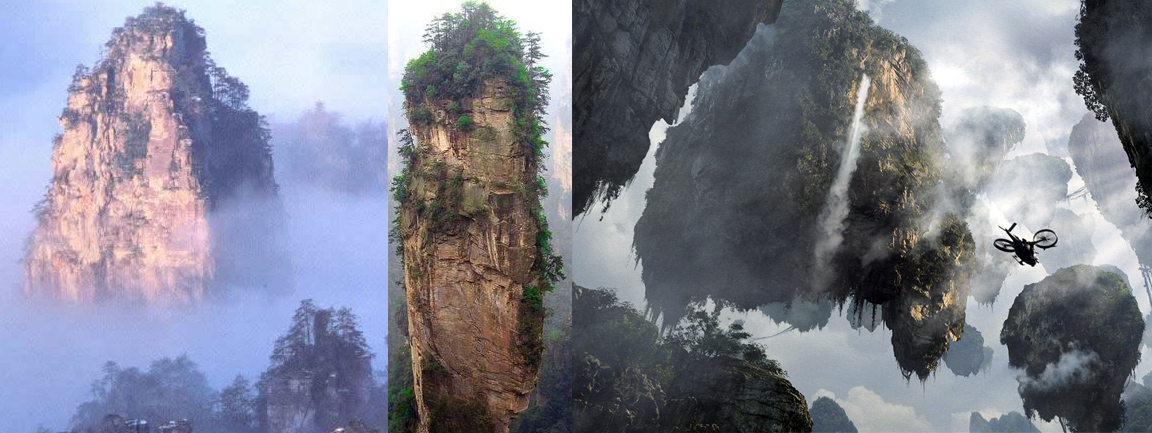
Chinese city rethinks renaming mountain after Avatar

A few days back we posted a story about how the Chinese city of Zhangjiajie, located in the southern Hunan Province, had renamed a mountain in the region after the blockbuster film Avatar, which is said to have found inspiration in the nearby landscapes. Now, according to ABC News, officials from the city are back peddling, denying that they changed the name at all, following online backlash over the affair.

Earlier in the week it was reported that a ceremony was held on Monday to officially rename a local peak formerly, known as “Southern Sky Column”, to “Avatar Hallelujah Mountain”. According to local oficials, a Hollywood photographer was in the area back in 2008 taking photos of the mountain, and those images would go on to inspire director James Cameron to create the floating mountains that wowed audiences in the film.

As word of the name change spread across China however, there was an outcry amongst the citizens there. The local government officials in Zhangjiajie were accused of being greedy and too accepting of western culture when they hastily renamed the mountain after the movie, which has been extremely popular with Chinese audiences.The choice to rename th e mountain was so unpopular in fact that an online poll logged a vote of 54,619 against the move, with just 5,897 in favor.

The sudden change in heart also signals a shift in the city’s tourism plans as well. Local guides were already offering “Avatar Pandora Tours”, but considering the public outrage, it seems the region will have to rethink their marketing strategy.

Seven new hotels around the world from Fairmont in 2010

This year promises to be exciting for fans of the Fairmont. New properties are set to open in London, China and many other cities, each with a distinct style. There’s no question that the Fairmont has the art and science of hospitality mastered, so these new properties are going to be exciting to watch.

1. The Savoy
With a design nodding toward Edwardian and Art Deco, the hotel reopens after a restoration program costing more than GBP100 million. The property has 268 guestrooms and a new luxurious Royal Suite. The Savoy Grill is going to come back … under the management of Gordon Ramsay Holdings. Look for the doors to swing open in the second or third quarter of this year.

2. Fairmont Peace Hotel
This Shanghai landmark will reopen in the second quarter of this year, with 269 guestrooms over 12 floors. The hotel faces the Pudong area over the Hangpu River, making it a great spot.

3. Makkah Clock Royal Tower
The Makkah will open in Saudia Arabia in the third quarter, where it will be the focal point of the Abraj Al Bait Complex. With 858 rooms, there will be plenty of space near Masjid al Haram, the Islamic holy site. The hotel stretches 76 stories high and will be the world’s tallest upon completion. The Makkah opens in the third quarter.4. Fairmont Pacific Rim
The 377-room luxury property will open this quarter in Vancouver and will include 175 residential condos. The property will be near the ocean, with great views, and the Willow Stream Spa and Fitness Center will make a commitment wellness easy to maintain. The Pacific Rim is scheduled for a first quarter opening.

5. Fairmont Pittsburgh
The new hotel, with 185 rooms, is intended for LEED certification, demonstrating Fairmont’s commitment to corporate social responsibility. Look for a mix of environmental concern and palpable luxury … and easy access to theater, entertainment and financial districts. Look for this property to open in the first quarter of this year.

6. Fairmont Beijing
Located close to The Forbidden City, the 222-room Fairmont Beijing is a solid location for visitors who worry about being intimidated by the scope of the city. After you’ve experienced the excitement of China’s capital, head back to the Willow Stream spa to have your muscles rubbed back to normal. The Fairmont Beijing is going through a soft opening already.

7. Fairmont Zimbali Resort
Enjoy views of the Indian Ocean from this South African resort, which is tucked between a forest reserve and the sea. The 154-room hotel is intimate and infused with luxury. Look for it to open in the first quarter. This property is scheduled to open in the second quarter.

[Photo courtesy of Fairmont Hotels & Resorts]

China renames mountain that inspired Avatar

While James Cameron’s latest epic, Avatar, continues to smash box office records around the globe, a remote Chinese mountain has been renamed to honor the film, and no doubt attract fans of Pandora in the process.

Located in the Zhangjiajie region of the Hunan province, the mountain was formerly known as the “Southern Sky Column”. Local officials claim that the rocky spire was the inspiration for the floating “Hallelujah Mountains”, the mystical floating peaks that are prominent in Avatar.

According to this story from Reuters, a Hollywood photographer was in the area in 2008 capturing the look of the mountain from a variety of angles. Those photos would later be used to construct the flying mountains of Pandora that would later appear in full 3D on the silver screen.

This past Monday a ceremony was held in Zhangjiajie to officially rename the peak “Avatar Hallelujah Mountain”, and the local tourism board is hoping that fans of the blockbuster film will want to come visit the place for themselves. The mountain is located in the Wulingyan National Park, which is a UNESCO World Heritage Site, which is home to more than 3000 similar peaks. Reportedly, local tourist agencies have already begun to offer “Avatar-Pandora Tours”, taking visitors to see the mountain, promising to deliver a bit of Pandora here on Earth.

As of this writing, Avatar has earned more than $80 million in China, making it the most popular film of all time in that country. Earlier this week, the film also passed the $1.84 billion mark in box office receipts, surpassing Titanic as the highest grossing film in history.

Travelfish sets a new benchmark in iPhone travel guides with their guide to Angkor

Travelfish has long been one of the most respected resources for travel in Asia. Their site covers Backpacker information for Cambodia, Laos, Malaysia, Singapore, Thailand and Vietnam. Of course, information provided on a web site is great for preparing a trip, but once you are actually on the road, you’ll need to find Internet access to get to it.

This is where the new Travelfish iPhone app can help. Their first app covers Angkor in Cambodia, and my oh my what an impressive app it is. In fact, as the title describes, I’m so impressed, that I’m calling it “a new benchmark in iPhone travel content”.

The application only runs in landscape mode, but it takes perfect advantage of this by presenting plenty of wide screen content. The app covers everything (and I really do mean everything) you need to know about the region For beginners, there is a huge background section, with history of the country and the region itself. It also offers 8 entire sections on how to plan your trip, with everything from visa information to the local weather and what to pack.

The sleep section shows all local hotels on a map, describing the different areas in the city. The application lists the 40 best hotels, hostels and guesthouses, along with a full review, online booking link, phone number and of course, its location on the map. Similar comprehensive guides are offered for restaurants, sightseeing attractions, local transportation.

The walking tours portion takes you on an iPhone guided tour, complete with when to start and exactly how to reach each highlight of the self-guided tour.

The maps support your location, and can be customized to show more (or less) locations.

Final thoughts

Of all the iPhone tour guides I’ve seen, this one really is the most comprehensive. I love the design and ease of use. Best of all, the application stores all its data on your phone, so there is no need for an (expensive) data plan when roaming abroad.

The program is perfect for pre-planning, as well as acting as a live guide when you are actually in Angkor. Each portion of the application offers handy features like bookmarks and “show on map”, and the designers make fantastic use of the touch friendliness of the iPhone and iPod Touch letting you swipe to browse articles.

You’ll find the Travelfish Angkor app in the iTunes store, where it sells for just $7.99.

%Gallery-83798%