Bananas, politics and the economy

If you eat bananas in your cereal for breakfast and don’t refrigerate them because you were taught not to, there’s a reason. There’s a new book out called Banana: The Fate of the Fruit That Changed the World that explains those habits, as well as how the Victorian era folks had a penchant for masking its shape lest it offend anyone. Most importantly, the book covers the politics of how the banana gained its fame, making fortunes for some and misery for others.

Terry Gross interviewed Dan Koeppel, the author of the book on Fresh Air yesterday. I caught part of the show and was fascinated. The story of the banana incorporates much of the world, offering insight into world economics and politics, particularly in Central America. The banana, for example, led to the overthrowing of the president of Guatemala in the 1950s and his exile.

During the conversation they also talked about the various types of bananas there are in the world and why they aren’t sold in the U.S. Buying various types of bananas overseas is a market going pleasure. I’ve found that the ones not much bigger than a finger are often the sweetest. There are these reddish colored ones, though, that are quite yummy. Reading this book, I think, would make a person eye those bananas in the grocery store in a different light. I do.

(Here’s the link to the broadcast page.)

Talking Travel with economist and traveler Tyler Cowen

For several years, economist Tyler Cowen has been the man behind Marginal Revolution, one of the world’s most popular economics blogs. In addition to being an economics professor and regular contributor to the New York Times, Tyler is also well-traveled, and often discusses his thoughts on travel and world affairs on his thought-provoking blog. I recently interviewed Tyler via e-mail about his travel experiences, and whether being an economist changes the way he travels.

AH: When and how did your love of travel begin?

TC: My love of travel began relatively late. At 23 I decided to go live in Freiburg, Germany for a year. I was hooked before my first day — spent in Mainz, Germany — was over.

AH: How does being an economist inform the way you travel? What are some surprising or counterintuitive tips for discovering the best a country has to offer?

TC: Being an economist means there is always, and I mean always, something interesting to look for. In the limiting case, if a country or place is really boring, suddenly it is fascinating to try to understand how it got to be so boring. Economics suggests there is always a “why.” Curiosity is what makes travel so fun and economics gives you one way of organizing your curiosity and framing your questions.

My main tip is simply: “Go, go go!” Go. People have a status quo bias when they make decisions and they don’t take enough chances. My colleague and co-blogger Alex Tabarrok makes an interesting point. If you knew your life were much shorter you would travel to those places you always wanted to see. If you knew your life were to be much longer you would have more time to travel; again you would travel more. So, are you trying to tell me that your expected lifespan is just at that length where you shouldn’t travel more? I don’t buy it.

AH: What are your favorite places in the world to visit? Any destinations that you’d really like to visit, but haven’t?

TC: Mexico, Haiti, and Brazil are clear favorites for me. I love the New World and its sense of being fresh and undiscovered. I regret never having been to Cali, Medellin, Santa Cruz (Bolivia), or northern Chile.

AH: “I’d love to travel, but it’s just so expensive,” people always say. What is your response to that?

TC: It’s easy enough to travel cheaply. Just don’t get fixated on Europe, which is now virtually unaffordable. Stay in a rural Mexican village for a week and you will save money and have the experience of a lifetime. The U.S. dollar is still strong in plenty of countries. Is Honduras — a lovely country — really too pricey for you?

Be sure to check out Tyler’s blog, Marginal Revolution, where he’s recently discussed the costs and benefits of long-distance relationships, abolishing cafeteria trays, and congestion pricing to reduce traffic in the air and on the road.

His most recent book is Discover Your Inner Economist: Use Incentives to Fall in Love, Survive Your Next Meeting, and Motivate Your Dentist. His ethnic dining guide for the Washington D.C. area is available online here.
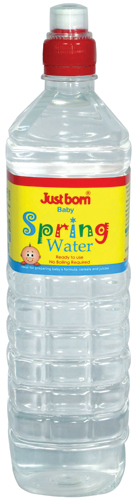
Water for $42 per bottle. What is wrong with people!?

I’ve never understood people’s fuss over the water they drink when they go to hotels, let alone their willingness to pay for what is otherwise free in most western countries. When I’m out in cities where you can drink tap water, that’s what I ask for; when I have to buy mineral water, I ask for the cheapest.

Water is water is water. Having said that, I agree that sometimes the taste is distinct. For example, here in Madrid, mineral water Bezoya and Aquafina taste strange to me; I will drink them if I have to, but I avoid buying those brands — I don’t like water that tastes like something (it’s not supposed to taste like anything!), but otherwise I’m not fussed. The whole “tap water isn’t good for you” conundrum doesn’t phase me in any way.

It totally ruffles my feathers when I go to a posh hotel and people I go with actually have a preference of mineral water, so I would go absolutely bonkers if I went to Claridge’s Luxury Hotel in London and was given a water menu with 30 international brands to choose from. 30!

According to a recent article in the BBC: For the most refined palette there is fine artesian water from Japan at $30 a bottle and $40 a bottle, or Mahaolo from Hawaii, described on the menu as “rare deep sea water” that is “very old.” And Just Born Spring Drops from India is apparently “light and not aggressive,” at $42 per bottle.

WHAT!? THAT’S MORE EXPENSIVE THAN A GOOD BOTTLE OF WINE! And this stuff sells?

“We wouldn’t do this if there wasn’t a demand for it,” says the hotel’s public relations manager. Apparently guests not only ask for berg or glacial water, but water with no sodium content or water fortified with calcium and magnesium; they even specify the region from where they want the water! “People are so very, very careful about what they eat these days that it’s moved into water.”

Have I completely lost perspective here or do you find this as absurd as I do?

Hotel water glass problems–still

With the way media news travels, one would think that hotel water glasses are no longer being squirted with glass cleaner and are being properly washed. The Atlanta news story about the questionable methods of cleaning hotel room glasses aired in November. It’s been two months since Martha’s post on these germ vectors.

If an article in yesterday’s Columbus Dispatch is reflective on the current hotel glasses scene, Martha’s advice to bring your own glasses might be well heeded–or, be prepared to wash glasses yourself, just in case. Don’t let that clean paper lid fool you. A team of reporters in Columbus recently pulled an undercover investigation similar to what was done in Atlanta area hotels and found similar results. The experiment of using glasses and then filming what happens after wards showed that although some of the high end hotels were in compliance with the standard others were not. At some of the high end hotels, infractions ranged from glass cleaner being used, glasses being wiped with a dirty towel and soap not being used to clean the glasses, only water.

When we stayed at a hotel in January, I was wary about the glasses and cleaned them myself. Martha’s post had a direct influence. Thanks, Martha. When I looked at the maid’s cleaning cart, I didn’t notice clean glasses ready to be put in rooms. What I think would be a great invention is a portable glass cleaner that could be attached to the bathroom sink. A maid could bring into a room, plug it in, pop in the two or four glasses that need to be cleaned, do the rest of the room while the glasses are going through the cycle and by the time she (or he) is done, the glasses would be sanitized and sparkling. If we’re heading towards space tourism, isn’t there a way we can get the glasses clean here on earth? By the way, coffee cups are also an issue.

Make Mozart Balls like a master

One of the finest discoveries I experienced when I first went to Europe as a junior in college was the European version of chocolate. In Denmark, I savored Anthon Berg. In Switzerland it was Toblerone. In Austria I became quite fond of Mozart Balls. Had I been eating only Hershey bars and Almond Joys up until that point? I don’t remember, but what I do remember in a semester of college travel was savoring chocolate very, very slowly since I was on a budget and wanted every bite to last. Just this past week, I had a Mozart Ball, my first in about a year. It lasted several minutes. Yes, it was great.

As I’ve found out, one can learn to make Mozart Balls according to the original recipe passed down from1890. Making Mozartkkugein, the original fancy name, is one of the draws to St. Gilgen, a small village on Lake Wolfgang near Saltzburg At the Konditorei Dallmann, you can take a 30 to 40 minute course in Mozart Ball making. Included in the price is a confectioner’s hat, apron, cake and coffee.