Pulse Art Fair in New York: Flatline

Armory week is always an exciting time for New York City’s art community. In addition to the main show that occurs on the city’s west side, there are seemingly countless smaller shows that have popped up all over Manhattan and in Brooklyn. If you’re looking for options … you’ve got ’em. Of course, serious collectors are drawn to the Armory, where you’ll find five- and six-figure pieces from established investment-grade artists who are represented by major galleries – household names for this world. If you’re looking for the next big name, however, the sort of artist whose work has yet to really soar, you need to check out the satellite shows.

Traditionally, Pulse has been among the must-see art fairs in Armory week, and for good reason. This time around, unfortunately, it didn’t measure up. Quite simply, Pulse lacked what its name asserts.

I walked into the pavilion on W 26th Street expecting to see edgy, interesting and engaging artwork, the sort of pieces that stop you, make you think and leave you with a broader perspective. I left the show a tad disappointed.

The greatest problem with Pulse was that few artists seemed to be taking any risks. Much of the fare was conventional, and it felt as though the artists (or, rather, the show’s decision-makers) were trying to play it safe. The exhibition appeared to be catering to a different audience, one that wasn’t willing to put its assumptions on the line. To those inviting a challenge, Pulse fell short.


Much of the work was devoid of expression. Artists either tried too hard to find the abstract – such as a video piece of feet and ankles walking through heavy mud – or they relied too much on shocking color. I haven’t seen so much pink and other bright colors since similarly hued ski jackets were in vogue in the early 1990s. And, the display of an empty wine bottle with “MUTE” printed on the label simply defines uninspired.

There were a few bright spots, though, particularly the exquisite layered video created by David Ellis. Nestled in the “Impulse” section of the fair, upstairs, the previous Pulse standout offered a time-lapse video that encompassed the creation of several pieces, all intricately and seamlessly linked together to create an ongoing narrative nearly 20 minutes long. Called “The Animals,” it provided an array of morphing geographic designs that occasionally stopped to show a (what I took to be) a walrus before continuing on to show further creations. The action didn’t stop, and the work reflected the vision necessary to be a true thought leader as an emerging artist.
Aside from Ellis, Pulse was on life support this year, and my fingers are crossed for something more engaging in 2012. If we learned anything from the art market bust of 2008 and 2009, it’s that we need fresh, original and interesting talent to engage collectors and the public.

Otherwise, art investment dollars will be funneled into the known quantities (a la Pablo Picasso, Francis Bacon and Andy Warhol), driving up the price and creating a new bubble. We also learned that betting on the vapid creations of emerging artists who have “made it” – such as Damien Hirst – isn’t enough. The purpose of Pulse is to give the next wave of artistic geniuses a platform.

Now, we just need the next wave of artistic geniuses …

Fountain Art Fair: This Is the Future of the Creative Mind


It isn’t unusual to see emerging artists speak angrily and earnestly about the evils of capitalism. They are hungry, struggling to be heard and eager to attain some degree of notoriety and success. Their voices, expressed on various forms of media, seek an understanding audience in a world increasingly programmed to reject the abstract and difficult in favor of that which can be digested comfortably and without risk of intellectual choking. So, it’s ironic to see such messages come with price tags that can reach into the thousands of dollars.

This is what occurred to me as I stepped off the in Manhattan, returning to terra firma from the dangerous, insightful and sometimes shocking Fountain Art Fair.

Fountain was among the Armory week satellite art fairs in Manhattan this weekend, though it won’t be confused with the rest of them. I was eager to visit Fountain. Rather than stumble through the same big names you see at the Armory, I prefer to spend my time with the artists who are fighting to become known. At Fountain, the pieces on display showed a violent desperation to be heard, with strong cultural and political messages that were impossible to be missed.

I left Fountain excited about emerging art again.


Some pieces, doubtless, were a bit heavy handed, and I do wonder how long the original messages can endure. One artist, for example, created a triptych lamenting the importance the art community places on an artist’s resume, bio and statement. Ironically, his rep was speaking from all three, at least implicitly, when explaining the work. And, if some possibility of commercial success emerges, I also wonder how long it would take the artist to polish up these documents for a major gallery or museum to review.

Another, in the “American Gangster” space, crowded the walls with as much work as possible, as if he wouldn’t have another chance to reach an audience of this magnitude – an assumption that, in itself seems tragic. While works such as “Snow White and the Seven Crackheads,” which actually included two (seemingly used) crack pipes, were a bit too blatant for my tastes, works such as an American flag devoid of color inscribed with “MADE IN CHINA” did a better job of hitting the mark.

Aside from these minor missteps, Fountain was full of work that would make you reconsider the world around you, with stunning photographs from depressed communities, street art that stretches the practical application of spray paint and performances that leave you paralyzed, unwilling to take another step before seeing what comes next.

So, will anything I saw really hit investment grade? I regret to say that I doubt it … but that’s not the point of it. Hell, it shouldn’t be the point of an art purchase anyway. After all, you purchase art to enjoy it, to derive pleasure or inspiration or understanding. If you’re looking for the sort of appreciation that comes in monetary form, you’re missing the point.

Harar home stay: living in a traditional African home


If you’re staying for any length of time in a place, the best way to experience the local culture is through a home stay. Luckily Harar has a number of traditional homes offering spare rooms.

A local guide showed me a few and I chose one hidden away in a small alley not far from the Catholic mission. This is the neighborhood that got Harar a UNESCO religious tolerance award because there’s an Ethiopian Orthodox Church, a Catholic mission, and several mosques all within sight of each other. Walking home I use three minarets and a giant cross as landmarks.

Harari homes look inward. All you see is a gate that leads to a compound of two or more houses, hidden behind their own gates. Enter the second gate and you’re still not inside, you’re in a courtyard with the bathroom to one side and to the other a large, ornately carved wooden door leading to the main building. Harari homes have a unique architecture. With thick stone walls and small windows, they stay cool even in the scorching heat of the day. Leaving your shoes at the front door, you enter the nedeba, or living room. The walls are covered in colorful plates and baskets and often cabinets with multicolored glassware. Hararis love to decorate their rooms with the products of their centuries-old crafts. People sit on a series of platforms, reclining against pillows. The platforms are painted red in memory of those who died at the battle of Tchellenqo in 1887, when the Ethiopian Emperor Menelik II defeated Harar’s Emir Abdullahi and the city lost its independence.

Where you sit depends on who you are. The amir nedeba is where the head of the family sits. It’s on the highest platform, usually in one corner where he can see the entrance to the compound. In olden days there was a spot for keeping some spears right next to the amir nedeba, just in case the person entering the compound wasn’t welcome. After a month in Harar I’ve only seen one guy who regularly carries a spear, though.

%Gallery-119012%I’m a regular at a few Harari homes and nobody throws spears at me. Since I’m an honored guest from far away, I sit at the gidir nedeba, the place of honor. I’ve seen members of the family sitting in that spot immediately move when I come in. No amount of protest will get them to sit back down. The next level down is the tit nedeba (“small place”) for lower-ranking people. This isn’t strictly followed, however. One birtcha (qat-chewing session) I attend has so many people that even some of the most prominent individuals sit on the lower level because there isn’t enough room on the upper. Another, separate platform is called the gebti eher nedeba (“the place behind the door”) and is for the young or people of a lower social class.

Harari homes are full of symbolism. My friend Amir says, “Every color, every shape means something. Most Hararis cannot know it all.”

Even little details are worked out in advance, he says. There’s a special room with a narrow entrance for women to stay during childbirth. It’s wider at the top so that big platters of food can be passed through.

The width of the bedroom door corresponds to the width of a coffin. “That’s to remind you of your fate and to live a good life,” he says.

My house, owned by Faisel and Anisa Abdullah, has a separate upstairs all for me. I get a bedroom, a living room, and a lounge with no furniture but a bunch of pillows ranged around the walls. This is for entertaining. Friends will sit here drinking coffee or chewing qat and talking the hours away. My rooms cost me 3500 birr ($212) a month. Water is included and this is important to confirm when renting a place because water is expensive in Harar, especially in the dry season we’re in now. I wasn’t expecting to have only a squat toilet and bucket showers but it turns out the bathroom has a European-style toilet and a proper shower, luxuries I don’t need but certainly appreciate.

Imme, a German painter staying in a different neighborhood, has three rooms even larger than mine for 3000 birr ($182) a month, but got the more traditional African bathroom. Both of us have far more space than we need, and for a price lower than the city’s hotels!

A home stay allows you to settle in a neighborhood for a while. The closed-off nature of Harari architecture means I haven’t met most of my neighbors, but I’m getting to know the people I pass in the nearby alleys every day. I’m also getting into the rhythm of the place. Just before dawn the muezzin of the Jamia mosque wakes me up with the morning call to prayer. The first couple of mornings I had a hard time falling back asleep, but now the flowery sounds of Arabic barely register in my dreams. I’d make a bad Muslim. The muezzin’s call to prayer is followed by low chanting coming from the Ethiopian Orthodox Church, announcing their morning service.

I’m usually up shortly after dawn in any case. Outside my window I can hear the kids from the local school horsing around before the bell rings. If I peek out my window I can just see the front door of the school over the rooftops. The kids in their yellow shirts and sky-blue pants or skirts wait in the shade or run around after each other laughing.

Soon I’m out wandering around Harar. I usually don’t come back until night, when I sit for an hour or two writing in my living room before turning in. The open window lets in all the sounds of the Harari night. Hyenas laugh and howl at the edge of town like the mad lost souls of Purgatory, sometimes getting closer, sometimes drawing away or shifting position. The town dogs bark defiantly but do no good. I often see hyenas pacing through the alleys in the center of town looking for scraps to eat. They keep quiet then, preferring to make noise outside the city walls. The battle ebbs and flows all night, at times lapsing into an eerie silence. Then the hyenas will call to each other again and the dogs will bark self-importantly, completely ignored by the hyenas.

It’s like falling asleep to music.

Don’t miss the rest of my Ethiopia travel series: Harar, Ethiopia: Two months in Africa’s City of Saints.

Coming up next: A visit to a traditional healer!

Flying Kites Adventure Challenges: Give back on your next trip

Travelers looking to add a new dimension to their next journey may want to check out the Flying Kites Adventure Challenges, which are a series of great adventure travel opportunities that allow you to visit some fantastic destinations, while raising funds for charity at the same time.

Organized by Flying Kites, a non-profit that is dedicated to improving the standards for childcare in some of the poorest nations in the world, the adventure challenges are an intriguing prospect to say the least. The process starts with travelers selecting their adventure of choice from a list of five options. From there, they pledge to raise a certain amount of funds for Flying Kites, and once they reach that goal, the entire trip is payed for including airfare, guides, accommodations, and so on.

The list of challenges include climbing Mt. Kilimanjaro in Africa and trekking to Everest Base Camp in Nepal, both of which require a $6000 fundraising goal. There are also two options for surfing in Nicaragua with an 8-day itinerary costing $2300 and a 10-day version requiring a $2500 commitment. Photographers and wildlife enthusiasts will no doubt be intrigued by the Kenya Film Expedition, which comes with a fundraising target of $7500, while runners and endurance athletes will want to compete in the North Face Endurance Challenge this May.

The fundraising goals are certainly reasonable, and attainable, for anyone who sets their mind to it. Most of those trips can obviously be done for less money on your own, but in this case, you not only get a fantastic travel experience, but also the added benefit of giving a little something back in the process. Great adventure travel combined with the chance to improve the lives of children in the places we visit? Sign me up!


Flying Kites – Adventure Challenges – Kilimanjaro/Nicaragua from Flying Kites on Vimeo.

Rome – 3 days in Italy

With the bustle of a large European metropolis and the detritus of a monumental past, Rome delights with a frenetic pace and antiquities lurking innocuously around each bend in the road. Here, history has been built on top of history for thousands of years. Seeing bankers in candy red Alfa Romeos zipping by millenia old ruins frames the endurance of this old city. Each sediment in time is visible and speaks to the ancient tale of decaying empire and modern function. The past is everywhere. You may be taking a stroll to sample some Trippa for a late lunch and accidentally stumble upon the Pantheon. There is a certain beauty to this unplanned chaos, and the overlapping of ages is historical mayhem at its most charming.

Rome is estimated to have been settled over ten thousand years ago. It has been a destination for a very long time. It is said that all roads once lead to this settlement on the Tiber. Thankfully, getting to Rome is inexpensive care of European budget air lines. Easyjet flies to Rome from several European cities such as Paris, London, Berlin, and Amsterdam for under $200 round-trip. Three days is plenty of time to see the highlights of Rome, but budget more time to truly understand this storied destination.

%Gallery-119063%

Day 1 – Roam the streets of Old Rome

One of the most amazing qualities of Rome is the integration of the ancient city into the modern metropolis. Most ancient sites beautifully disturb the modern order of things. On an old square, a McDonald’s faces the Pantheon in a worthy example of the strange compromises the present has made with the past. Due to this integration of the historical and the proximity of many Roman landmarks to each other, Rome is a great city for wanderers.

Start at the Colosseum, and take in the crumbling feat of ancient engineering. The queue at the Colosseum can be rather daunting, but booking tickets in advance or purchasing a Roma pass bypasses the line. Here is a great online resource for line skippers. Around the Colosseum, also seek out the Arch of Constantine. It is hard to miss.

From the Colosseum, start heading northwest towards Foro Romano, or the Roman Forum – the ancient seat of Roman government. It is a ruined old structure, and its considerate ambitions can be ascertained by the remnants. The Foro Romano is just east of Palatine Hill – one of the seven hills of Rome. The Circus Maximus, or old chariot racing ground, is just on the other side of the hill.

Continue northwest along Fori Imperiali road and slowly make your way to the heart of Rome. You will pass Foro Traiano, Piazza Campidoglio, and several other breathtaking landmarks. Eventually, if you stay the course, you will arrive at the doorstep of the Pantheon. The Pantheon is such a feat of engineering that it is still the world’s largest unreinforced concrete dome. During the renaissance, master architects such as Brunelleschi studied the Pantheon’s construction to reverse engineer advancements in the architectural field. This was 1300 years after the Pantheon’s construction. To call the Pantheon a marvel would be an insult. It stands as a testament to conquering impossibility.

Next the Pantheon, duck into Tazza D’Oro for some caffeine rejuvenation. Tazza is accused of making the best cappuccino in Rome. The place is busy and confusing. Follow someone who looks like they know the lay of the land.

Head north and east to the Trevi fountain, where well wishers toss away an estimated 3000 Euros per day. It is said that if you toss a coin into the Trevi fountain, then you will be guaranteed a return trip to Rome. North of the Trevi fountain is the Spanish Steps – the longest and widest staircase in Europe. Climb from the Piazza di Spagna to the top and cherish the view out over Rome.

For dinner, find a busy restaurant and order a lot of food. Rome is a mecca for food and has multitudes of delicious options. It is difficult to find a bad meal in Rome, so be adventurous. Hostaria Antica Roma on Appian Way is highly recommended.

Day 2 – Vatican City and Sistine Glory

Vatican City is a sovereign city state ruled by the Pope. With a population of less than a thousand, and only 110 acres in total size, the Vatican is considered the smallest country in the world, edging out the micro-state of Monaco. This center of the Catholic world boasts immaculate gardens, a heavenly basilica, and one of the top museums in the world.

The best way to reach the Vatican is on foot by crossing Ponte Sant’Angelo over the Tiber River. Castel Sant’Angelo is framed gloriously between winged angels on both sides of the bridge. The castle is a great first stop of the day, and houses a museum and Hadrian’s tomb. Castel Sant’Angelo has been a tomb, a castle for the popes, a prison, and also figures prominently int the novel Angels and Demons by Dan Brown.

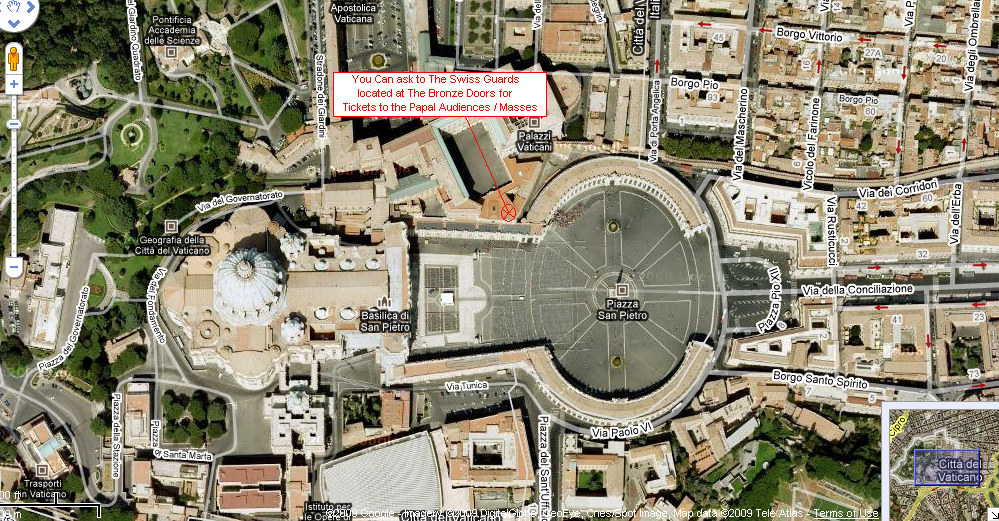
West of Sant’Angelo is Vatican City. Entering on Via della Conciliazione is probably the most dramatic way to approach the holy place. Once in Vatican City, take in the breathtakingly large Piazza di San Pietro (St. Peter’s square) before entering the basilica. The square boasts an obelisk that was relocated from Egypt almost two-thousand years ago.

The height of the Michelangelo designed dome in St. Peter’s Basilica is so lofty that you could fit the entire statue of liberty within the dome with room to spare. The interior of St. Peter’s is a heavenly place, festooned with gold finery and artistic masterpieces. You can climb to the top of the dome for a stunning view out across Rome, or take to the crypts beneath the marbled interior to check on some papal tombs.

If you happen to be in Rome on a Wednesday, then you can be blessed by the Pope himself. He hands out blessings at 10:30am on Wednesdays. Check with your hotel or guesthouse to arrange tickets for the event. The Swiss guard also hands out tickets on Tuesdays from their post near the bronze door. Be sure to check the Pope’s schedule before getting too excited about being blessed. He is a busy man and routinely leaves his Vatican home.

The Vatican Museum is my favorite museum in the world. From entire rooms filled with the works of masters to hallways covered with brightly painted maps of an uncertain world, this place is an unbelievable experience. Budget plenty of time to take it in. The museum is laid out to move you through several gorgeous rooms and immaculate hallways before climaxing at the Sistine Chapel. The museum is free the last Sunday of each month, and is not open any other Sundays. The rest of the week is fair game.

Finish your day with a stroll down the Tiber river just as dusk blankets Rome.

Day 3 – Trastevere and personal interests

With so many options around Rome, pick something personally interesting to do on your last day. Take a cooking class, check out the art at Galleria Borghese, go to a wine tasting, explore catacombs and crypts, check out Florence (only an hour and a half away by fast train), go to a football game, or perhaps just take to some serious shopping.

On your third night in Rome, spend some time in Trastevere. Trastevere is a cool neighborhood on the west bank of the Tiber filled with locals, expats, artists, and college students. It is a great place to sample authentic Roman food, explore, and get inexpensive lodging. The area feels less like a museum than ancient Rome and is a great place to get in touch with the city’s less touristy side.

All photography by Justin Delaney