Photo of the day – Blue Citroen, Paris

Paris is a city of romantic fantasy. Can any other city truly lay claim to the status of Paris in the public romantic imagination? As Fly For Fun, the photographer of this image points out, this blue Citroen 2CV symbolizes Paris, referencing both the city’s grit and its refined grace.

Got an image you’d like to show off to the world? Submit it to the Gadling Group Pool on Flickr. It might just get chosen as a future Photo of the Day.

Bud vs. Bud: Travel and the Great Beer War of the Last Century

There’s not enough beer in Bohemia to ever help you pronounce Ceske Budejovice, a Czech town located in southern Bohemia, about 100 miles from Prague. But there is at least one reason why you should go there.

Why? Let’s go back to the early 1870s, when soon-to-be major beer magnate Adolphus Busch and his friend/business partner Carl Conrad decided to do a European beer crawl, hitting the great centers of all things beer in Central Europe. Bohemians have long been known for their prowess in brewing (just go to the town of Pilsen, or Plzen in Czech, if you’re in doubt). Busch and Conrad made a special point to go to Ceske Budejovice because the town had a reputation for producing exceptionally good beer and the hops that grew in the fields around the it were (and still are) world renowned. Busch and Conrad sampled the local brew and were duly impressed.


So impressed, in fact, that Conrad bought the trademark for the name of one of the town’s famed beers, which was named after the town. Not Ceske Budejovice, but its German name. Before World War II many towns in Bohemia boasted a sizeable German population and thus, each town had a Czech and German name. Ceske Budejovice’s German name was–wait for it–Budweis.
By now, you can probably see where this is going. But with that trademark for the name of the town’s beer not only was an American beer named Budweiser born, but a century-long legal battle as well. The Czechs argued that they’d been brewing a beer called Budweiser (and, in Czech, Budvar) for centuries. Even though the actual Czech Budweiser/Budvar was founded after the trademark, they argued they had a geographical right to the name. Anheuser-Busch, though, would simply wave the trademark document at the Czechs and say–and I’m summarizing–sorry suckers!

After the Velvet Revolution in 1989, Czech breweries were slowly privatized and then bought up by one of the three major multinational brewing corporations. Pilsner Urquell, Radegast, Velkopopovicky Kozel and Gambrinus were sold to SABMiller; Starobrno and Krusovice to Heineken; and the Prague-based Staropramen to InBev (which now owns Anheuser-Busch, by the way), and so on. But the Czech government never privatized Budweiser/Budvar, fearing Anheuser Busch would buy the brewery and dismantle it, paving the way for complete European domination.


But all that came to an end in 2007 when the two companies formed a loose partnership. In an unpredictable turn of events Anheuser-Busch now distributes the Czech Budwieser in the United States. You’ll never find it under that name, though. An earlier ruling stated that Czech Budweiser could never be sold in the United States because of the possible trademark infringement. So the Czechs did something quite brilliant. For the beer sold in the United States, they changed the name from Budvar to Czechvar (not a brilliant name, if you ask me, though).

So while beer drinkers of America can finally sit back and actually drink the original Budweiser, I say make a pilgrimage to the town formerly known as Budweis. Brewery tours, in my opinion, are dull, but nothing beats sitting in a big beer hall like Masne Kramy, located in a former meat shop hall from the 16th century in the center of Ceske Budejovice, a huge chunk of pork in front of you and a mug of golden, fresh-from-the-brewery Budweiser–Czech Budweiser, that is.

Oh, and if anyone asks, it’s pronounced Ches-kay Boo-day-yo-vit-say.

Travel + Leisure best in the world announced

Results of the Travel + Leisure World’s Best Awards 2011 Readers’ Survey were announced this week, revealing the world’s top hotels, airlines, cruise lines, islands and more.

“It’s clear that remote and exotic destinations-places that convey a sense of authenticity and adventure-are ruling the day once again in Travel + Leisure’s World’s Best Awards,” said Nancy Novogrod , editor in chief of Travel + Leisure.

Let’s take a look at the best of the best

World’s Best City- Bangkok

Worlds Best Hotel- Singita Grumeti Reserves (Saskwa Lodge, Sabora Tented Camp, and Faru Faru Lodge), Tanzania


World’s Best Island- Santorini Greece

Worlds Best Large-Ship Cruise Line- Crystal Cruises


Worlds Best Small-Ship Cruise Line- Seabourn

World’s Best River Cruise Line- Tauck


World’s Best International Airline- Singapore Airlines


World’s Best Domestic Airline- Virgin America

World’s Best Tour- Micato Safari’s


World’s Best Car Rental Agency- Zipcar

World’s Best Destination Spa- Rancho La Puerta Fitness Resort & Spa Tecate, Mexico


World’s Best Hotel Spa- Sofitel Queenstown Hotel & Spa New Zealand

See all the winners at Travel + Leisure.

This year a digital edition for the iPad will be available for $1.99 on iTunes beginning July 11. This special iPad edition will include dozens of trip ideas, with itineraries created by T+L editors and insider information on World’s Best Award-winning destinations such as New York, Florence, Bali, the Great Barrier Reef, and beyond. Users can tap in to TravelandLeisure.com destination guides for the top cities and islands right from the digital version, with advice on where to stay, what to do, and how to create your own perfect trip. Plus, there are direct links to sites for the hotels, cruise lines, outfitters, and destinations for easy booking and users can share trip ideas via Facebook, Twitter, and email.


Top ten most crowded islands in the world

From an island microslum in Colombia to a haute enclave in central Paris, the ten most crowded islands in the world bear scant similarities in class or culture. In fact, every entry in the top ten comes from a different country. But being islands, each shares the common thread of scarcity – whether it be land, resources, or housing. In general, these islands are prophetical microcosms for an overcrowded earth – finite spaces where self sufficiency governs and demand pierces supply.

With the world’s population racing higher and higher, and the “megacities club” accepting new members yearly, some day the earth could bear the traits of one of these densely packed islands.

%Gallery-127866%

10. Vasilyevsky Island
Location: St. Petersburg, Russian Federation
Population: 202,650
People per square kilometer: 18,592
Size: 10.9 square kilometers
Story: This island located in St. Pete is a collection of 18th and 19th century buildings with some Soviet built apartment blocks lining the Gulf of Finland on the western shore. The communist housing ethos of the twentieth century called for rows and rows of tight apartments, and this historic island in Russia’s second city was not immune to the sprawl. This created the compact quarters of Vasilyevsky island. Famous for its old school stock exchange and giant Rostral columns, the island is popular with tourists.

9. Lilla Essingen
Location: Stockholm, Sweden
Population: 4,647
People per square kilometer: 20,204
Size: .23 square kilometers
Story: This small island in central Stockholm once served as a hub of industry for Stockholm’s industrial operations. The easy boat access allowed for ease of shipping by boat, and the island factories manufactured an array of goods, from massive lamps for lighthouses to vacuum cleaners. Eventually, as the industrial applications became outmoded, the island became home to several apartment towers. Today, the island is crammed full of smiling Swedes living in apartments with (presumably) tasteful modern furniture.

8. Île Saint-Louis
Location: Paris, France
Population: 2,465
People per square kilometer: 22,409
Size: .11 square kilometers
Story: Perhaps the most stylish island in the world, Île Saint-Louis is a marvel of 17th century urban architecture and planning. Narrow roads and some of the priciest real estate in the world have allowed the island to remain relatively calm, despite its location in central Paris. While Île Saint-Louis is off of the tourist radar for most, this island in the Seine River embodies the classic Parisian spirit, worthy of an afternoon stroll with a perfect sorbet from Berthillon. The island is named for France’s canonized King, Louis IX.

7. Manhattan
Location: New York, New York
Population: 1,585,873
People per square kilometer: 26,879
Size: 59.47 square kilometers
Story: In 1626, the Lenape Indians sold Manhattan island to the Dutch for a bag of axes, hoes, iron kettles, duffel cloths and other 17th century garb worth about $24 (roughly $1000 in modern value). It is safe to day the island has grown ambitiously from this humble transaction. The center of the financial universe is now home to many – truly a place where the world lives. The island once known as New Amsterdam, and briefly, New Orange, shadows America’s story, both tragic and triumphant.

6. Salsette Island
Location: Mumbai, India
Population: 13,175,000
People per square kilometer: 30,217
Size: 436 square kilometers
Story: Salsette, an island off the western coast of India, is home to Mumbai and its sprawling suburbs. As a poster boy for “New India,” Mumbai is as dichotomous as it gets, at once the wealthiest city in south Asia and also home to one of the world’s largest slums – the notorious Dharavi. Dharavi is an island within an island, a super-slum with roughly one million people spread out over an area less than a square mile. At the other end of the spectrum, Salsette Island is also home to extreme wealth. The house known as Antilla is a 400,000 square foot giant that towers with some of Mumbai’s tallest buildings. Truly a contrast from the squalor in Dharavi, the private residence houses six people, can accommodate 168 cars, has 9 elevators, and an ice room with snow flurries.


5. Ebeye Island
Location: Marshall Islands
Population: 15,000
People per square kilometer: 41,667
Size: .36 square kilometers
Story: When the United States decided to test nuclear weapons in the South Pacific, they chose to do so amongst the atolls of the Marshall Islands. U.S. officials uprooted many residents from Bikini Atoll and Enewetak Atoll to insure that the testing did not directly harm human life. The relocated Marshallese had to move somewhere, and most moved to Ebeye under the assistance of the United States. This forced relocation caused a huge mess, including a severe housing shortage and land owner legality issues that persist today. The combination of factors created an environment of hostility and squalor, creating the slum of the South Pacific.


4. Malé
Location: The Maldives
Population: 103,693
People per square kilometer: 53,121
Size: 1.952 square kilometers
Story: The Maldives is one of Asia’s top tourist destinations, with 26 atolls and 1,192 islands offering beach perfection. At its center is the capital city – Male. Male is a humbly sized island of just a couple square miles. It is stuffed full of people, hotels, mosques, and office towers that efficiently utilize the scare land resources. While landfills have reclaimed some land from the sea, most progress is made vertically rather than horizontally. The modern downtown island in the middle of the Indian Ocean is a stark aberration from the deserted islands that dot most of the Maldives.

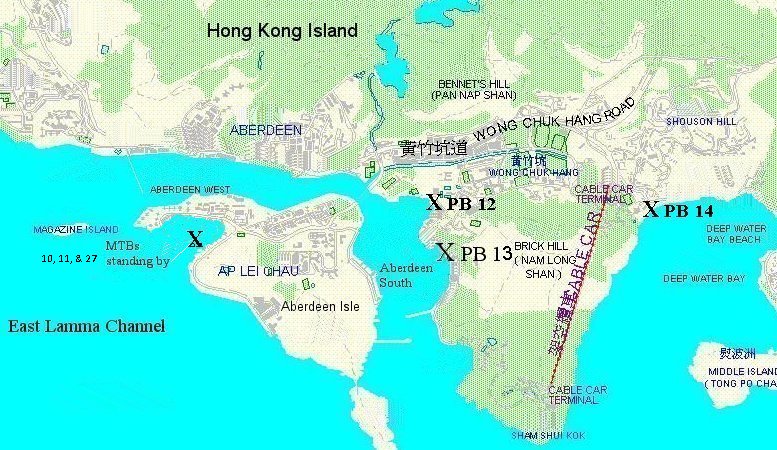
3. Ap Lei Chau
Location: Hong Kong
Population: 86,782
People per square kilometer: 66,755
Size: 1.32 square kilometers
Story: Hong Kong is the land of a thousand towers, clustered most densely on the island of Ap Lei Chau just southwest of Hong Kong Island. Ap Lei Chau served as the settlement for Hong Kong Village, theorized to be the etymological source for the famous larger territory of Hong Kong. Strangely, Ap Lei Chau translates to Duck Tongue Island, said to be named for the island’s shape. It is filled with high rise residences and even a winery.

2. Migingo Island
Location: Kenya, though Uganda disputes this
Population: 400
People per square kilometer: 100,000
Size: .004 square kilometers
Story: This bantomslum in the middle of Lake Victoria is a fishing village perched precariously on half a sphere of rock. The residents take in large hauls of the Nile Perch – a poster boy for River Monsters that can grow to a comedically large size. Migingo is famous for a decades-old dispute between Kenya and Uganda over the sovereignty of the small island. There is even a facebook page where individuals can “like” declaring the island Kenyan. (The page has twice as many followers as there are residents on Migingo.) Uganda agrees with this claim, most of the time, though the tiny rock island is not the issue – the fishing rights are.

1. Santa Cruz del Islote
Location: Colombia
Population: 1,247
People per square kilometer: 124,700
Size: .01 square kilometers
Story: The most densely populated island in the world is a microslum off the coast of Colombia. This tropical island is located in the emerald waters of the idyllic Caribbean, though is packed so tight that most activities are done off island. Schooling, football, graveyards, and work all take place away from Santa Cruz del Islote. The island park is the size of a small tennis court, and fresh water must be shipped in by Colombian Navy ships. Santa Cruz del Islote also does not have electricity. What the island favela does have is people, lots of them. To visit the world’s most packed island, hop on a ferry from Tolu, Colombia. The nearby hotel of Punta Faro can arrange tours of the island.

All unattributed images from wikimedia commons

European low-cost airlines fail to enforce charges and fees

Flying around Europe on low-cost airlines over the last few months has taught me a few things. Among the most useful lessons I’ve picked up: Baggage and check-in fees and charges are enforced quite unevenly.

European low-cost carriers present their customers with a frightening thicket of charges and fees. These charges, which serve as a revenue stream for the airlines, are less readily enforced by contract agents who are not direct employees of the airlines in question, though bona fide airline employees also appear to enforce them inconsistently.

Some anecdotes from the last few months follow.

In Tel Aviv in March I tried to inform the easyJet check-in agent–clearly not an employee of easyJet–that, having failed to pay to check a bag online, I would need to cough up some shekels to do so. Not only did she refuse to take money to check my duffel bag but she clearly had no idea that I was supposed to be charged to check by bag in the first place.

Flying airBaltic between London and Finland last month, I was made to weigh my carry-on en route to Finland by an airBaltic agent. Returning, the contract employee in Oulu didn’t ask me to weigh my bag, which, at 9 kilos, was right at the weight limit.

Three events, arguably, serve as a representative sample. I flew WizzAir last week to and from the Balkans. WizzAir demands that its customers’ carry-on bags not exceed ten kilos, but neither the agent at Luton nor the at Dubrovnik on my return weighed my bag to see if it had exceeded the limit. In both cases I was very likely just over the baggage weight limit.

This is a case not so much of lessons learned than of a pattern observed. Contract check-in agents don’t appear to have been taught about the intricacies of their employers’ rules and regulations, first off. Secondly, and just possibly, if your carry-on bag looks diminutive, you may be able to get away with a few extra kilos.

That said, this is not an official Gadling recommendation to start to think of these charges and fees as inconsequential. They’re imposed to make money and they succeed in doing so for their airlines. To some degree, I’m sure I was simply lucky in these instances. But clearly the fees and charges are not being enforced as fully as they were designed to be.

[Image: Flickr | jenny-bee]