Have a winter adventure of your own in Vancouver

Planning on heading to the Winter Olympics in a few weeks? Looking for something to do while you’re not busy with the curling match between Switzerland and Denmark? Perhaps you’d enjoy a little outdoor activity of your own while visiting beautiful British Columbia? Then you’re definitely headed to the right place, as Vancouver Island is one of the best adventure travel destinations in the world, no matter what season you go.

For winter adventures, the options are nearly endless. The snow begins falling on Vancouver Island in November and tends to stick around until late March, with the surrounding mountains remaining covered in the white stuff until well into the spring. Once the snow does start flying however, the local ski resorts, Mount Washington and Mount Cain, open for business offering great skiing and snowboarding for the beginner and the experienced snow bum alike. Mount Washington is the larger of the two, and more centrally located, and although Mount Cain is smaller, it is also a bit more remote and often less crowded. Both offer plenty of great runs, but if you’re more in the mood for cross country skiing, then go with Mount Washington, which has more than 34 miles of groomed trails and gets as much as 30 feet of snow annually.

If sliding down (or around) a mountain with skis strapped to your feet isn’t your cup of tea, then head to Vancouver’s West Coast to take in one of the other popular winter activities – storm watching. The raw power of the Pacific Ocean is regularly unleashed on the shoreline, with eight to ten foot waves smashing against the rocks, high winds pounding the cliffs, and copious amounts of snow and and rain blowing in off the water. Fortunately, there are a number of great viewing spots out of the gale force winds. Check out the Snug Harbour Inn or the Pacific Sands Resort for great views of nature’s raw power on full display.Vancouver Island is an incredibly beautiful place with mountain vistas and thick forests that are fun to explore year round. But the best way to visit the backcountry in the winter is on snowshoes, which are not only incredibly fun, but a great workout too. It’s the perfect way to spend the day away from the crowds and noise of the Olympic Village. But for a really amazing snowshoeing adventure, check out the Lantern Light Cross-Country and Snowshoeing tour around Mount Washington. This excursion hits the trail after dark, with a blanket of twinkling stars overhead and nothing but lanterns to light the trail ahead. It’s an experience you won’t soon forget.

There are plenty of other options for outdoor winter adventures on the island as well. For instance, snowmobiling is a popular pass time, with hundreds of miles of logging roads and backcountry trails open for exploration. Alternatively, consider packing a four-season tent and warm sleeping bag to go camping while you’re there, as there are camp sites open even in the winter months.

These activities are just a taste of what Vancouver Island has to offer, and once you get a chance to experience it all for yourself, you’ll want to book a return trip in the summer. When the snow melts, there is an entirely new set of outdoor activities to entice you to come back. From hiking to sea kayaking to mountain biking, Vancouver is equally intriguing in the summer as it is in the winter.

Want more Olympics coverage?

New Hampshire’s Mt. Washington sees windspeed record broken

New Hampshire’s Mt. Washington has long been hailed as having the “worst weather on the planet”. The summit is regularly pounded with high levels of precipitation and snow storms are a routine occurrence every month of the year, with annual snow fall averaging over 21 feet of accumulation. The place is also well known for its high winds, and for more than six decades, it has held the record for the highest wind speed ever measured. But now that record, which has long been a source of pride for the state, has been broken.

Way back on April 12, 1934, a sustained wind speed of 231 miles per hour was recorded on Mt. Washington, and until recently, it was widely recognized as the faster ever recorded on the planet. But it has now come to light that Typhoon Olivia, which moved through Barrow Island off the coast of Australia in 1996, managed to generate winds of 253 miles per hour. The new record was confirmed last week by the World Meteorological Organization (WMO), a branch of the United Nations that studies global climate patterns and changing weather conditions. The Barrow Island record was uncovered largely by accident while examining data from the typhoon.

While the loss of the speed record may take a little of the luster off of the mountain, it will no doubt remain a major draw for hikers and climbers alike. Standing 6,288 feet in height, what Mt. Washington lacks in stature, it more than makes up in challenge. While the altitude and trails aren’t especially note worthy in and of themselves, that legendary weather is a constant shadow over any trek. Experienced climbers looking for the ultimate challenge should give it a go during the winter months in particular.

New glaciers discovered in European mountains

British geographers from the University of Manchester have discovered four previously unknown glaciers while on a recent expedition to the “cursed” Prokletije mountains of Albania. The discovery was published in the December issue of Arctic, Antarctic, and Alpine Research, ahead of a full scholarly paper to be released later this year.

The newly found glaciers are located unusually low on the mountains,, beginning at roughly 6500 feet. But despite that, their existence has gone unnoticed for so long because the region has been embroiled in war and chaos for decades. Over the past decade some semblance of order has been achieved in the region, and it has allowed expeditions to explore the mountains more fully. The peaks are considered cursed by the locals, so few have ever ventured up their slopes.

The researchers from the university were completely surprised by their discovery. They suspect that other than a few local shepherds, no one else was even aware of the existence of the glaicers. They were also surprised to find them at such low altitudes and so far south. Glaciers at the same latitude are generally found much higher on mountains, but ample snow fall and cool temperatures all year long, help to feed these patches of snow.

By all accounts, the Prokletije mountains are said to be quite beautiful, offering good opportunities for trekking and backpacking throughout the area. The discovery of the glaciers is likely to make the region even more appealing to adventurous travelers looking to visit an area that has been mostly off limits for years.

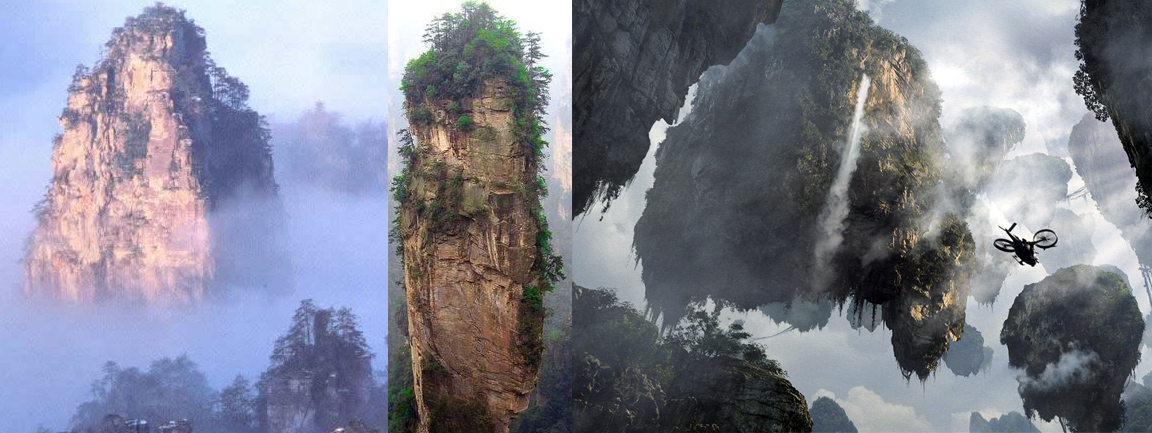
Chinese city rethinks renaming mountain after Avatar

A few days back we posted a story about how the Chinese city of Zhangjiajie, located in the southern Hunan Province, had renamed a mountain in the region after the blockbuster film Avatar, which is said to have found inspiration in the nearby landscapes. Now, according to ABC News, officials from the city are back peddling, denying that they changed the name at all, following online backlash over the affair.

Earlier in the week it was reported that a ceremony was held on Monday to officially rename a local peak formerly, known as “Southern Sky Column”, to “Avatar Hallelujah Mountain”. According to local oficials, a Hollywood photographer was in the area back in 2008 taking photos of the mountain, and those images would go on to inspire director James Cameron to create the floating mountains that wowed audiences in the film.

As word of the name change spread across China however, there was an outcry amongst the citizens there. The local government officials in Zhangjiajie were accused of being greedy and too accepting of western culture when they hastily renamed the mountain after the movie, which has been extremely popular with Chinese audiences.The choice to rename th e mountain was so unpopular in fact that an online poll logged a vote of 54,619 against the move, with just 5,897 in favor.

The sudden change in heart also signals a shift in the city’s tourism plans as well. Local guides were already offering “Avatar Pandora Tours”, but considering the public outrage, it seems the region will have to rethink their marketing strategy.

Why you should visit National Parks in the off-season

So, you missed out on those fee-free weekends at the National Parks last year? Don’t sweat it — you didn’t miss much. As with anything that’s both free and open to the public, those weekends drew huge crowds. And while gratis is always nice, fighting the crowds is decidedly not. The way we see it, America’s pristine National Park system is best enjoyed with as little ambient noise as possible. After all, entering these parks gives you a chance to really connect with nature and to simply soak in some of the most beautiful regions of the country. Good luck trying to soak anything in with hordes of tourists surrounding you, kids wailing about their PSP battery dying and crowded roadways leading to the entrance.

For better or worse, most National Parks turn into circuses (or zoos, if you prefer that visual) during the warmer months. Particularly in the flagship parks (Yosemite, Grand Canyon, Zion, Great Smoky Mountains, etc.), the summer months lead to bumper-to-bumper traffic, waiting lines at scenic pulloffs, and a general sense of frustration. Call us crazy, but that doesn’t exactly sound like the ideal National Park experience.

Thankfully for you, there’s a solution. Go now.The winter months are undoubtedly the time to visit, and for a number of reasons. For starters, you’ll find fewer people around you. In essence, you get more of the park to “yourself,” with more room to explore areas that you find particularly interesting. There’s also less waiting at the entrance, no queues for snapping shots at gorgeous overlooks and no added stress. There’s also the distinct chance that you’ll see magnificent sites covered in snow, which certainly adds a touch of character to things and gives your shots a lot more color.

We recently visited the south rim of the Grand Canyon National Park, and we’d be shocked if 50 other vehicles were at the park. Generous portions were drizzled with a light dusting of snow, but all of the roads were perfectly clear and all of the trails were open for exploration. There’s also the huge benefit of being able to drive yourself up and down Hermit Road. For those unaware, Hermit Road is a seven mile stretch that bends around the south rim, and it provides stunning overlooks over a great variety of points around the canyon. You’ll feel as if you’re looking at completely different canyons when moving from pullout to pullout, and it’s a real joy to cruise at your leisure, pull off at each stop and gaze at the new angles presented to you. Here’s the kicker: it’s only open to public vehicles in December, January and February. The rest of the year, you’ll be forced to park your ride and hop on a shuttle with scads of others. Don’t get us wrong — we appreciate the green aspect of using public transportation, but having the autonomy to drive yourself really enriches the experience.

We also stopped by Arches National Park in Utah, and we were able to secure rare shots of Delicate Arch surrounded by snow. The 1.5 mile hike was also made more difficult (and in turn, entirely more fun) by forcing us to trudge through the white stuff while attempting to scout out the next trailhead. We only passed three couples on the march to the top. It felt less like following school kids in a single-file line and more like blazing our own trail up a mountain. Be honest with yourself — which option would you prefer? To contrast this, we visited Yosemite in the dead of summer last year, and even during the recession, the main highway (US 120) that crosses from east to west was jammed, and we had a much tougher time locating spots for pictures in which no people were around.

Finally, heading to National Parks in the off-season will save you big bucks on travel. Flights are typically cheaper, hotels are definitely cheaper (our 2-bedroom room at the Best Western Bryce Canyon Grand Hotel was literally 50 percent less expensive than the summer rate), and you won’t have to pay peak prices when it comes time to pick up a souvenir. If you’ve got some vacation time that you’ve been dying to burn, there’s no better time to make a National Park run than right now. These gems weren’t meant to have a theme park vibe to ’em, and all of that serenity you’ve been dreaming of will be a lot easier to find if you make the off-season your season.

[Images provided by Dana Jo Photography]