Leaked Documents Show Looming Budget Crisis For National Parks

Leaked documents from National Park Service Director Jonathan Jarvis give us a glimpse at the looming budget crisis that threatens to alter the operating landscape for America’s national parks. The documents paint a dire picture for the NPS and could have a major impact on the overall experience for visitors to the parks in 2013 and beyond.

In a letter from Jarvis dated January 25 of this year, regional, associate and assistant NPS directors are warned that unless Congress and President Obama can come to a fiscal agreement in the next few weeks, they will be asked to make 5% cuts to their budgets across the board. Having already missed a January 2 deadline for the sequestration of funds, the House and Senate have passed a law extending that deadline to March 1. Ahead of that date, the Park Service has already instituted a hiring freeze and has asked for recommendations from the management of each of its entities on where cuts should be made.

In addition to the immediate hiring freeze, the parks have been asked to continue planning for their seasonal hiring, but to not extend any offers until further notice. As the busy summer travel season nears, many of the parks hire temporary employees to help deal with the influx of visitors. For now, filling those positions has been put on the back burner. Furthermore, furloughed employees are to remain so for as long as possible, while overtime has been cut altogether. All non-essential travel has also been canceled and the purchasing of supplies has been cut as the organization strives to save cash.

A second leaked document shows the actual budgets of each of the parks and how much they are being asked to cut in order to make the 5% goal. Some of the hardest hit national parks include Yellowstone, which is being asked to cut $1.75 million, and Yosemite, which will lose $1.4 million in operating expenses. Those two locations aren’t the only ones feeling the pinch, however, as the National Mall will also shed $1.6 million from its budget and the Grand Canyon will cut an additional $1 million.Unless the budget sequestration is averted before March 1, these cuts could have a dramatic impact on the national park experience for travelers. Understaffed and under-budgeted parks could lead to reduced hours of operation, shorter overall seasons and even the potential closure of certain areas. Visitor services would also likely be hit hard with fewer rangers on duty and less staff in visitor centers and information kiosks.

These budget cuts could have a trickle-down effect on surrounding communities too. With reduced operating hours and shorter seasons, the amount of revenue generated in the public sector will drop, possibly taking jobs with it. Many of the small communities that sit close to a national park rely on tourism traffic to help keep the towns healthy and vibrant. When those resources go away, those places are likely to suffer as well.

For those of us who love the national parks, seeing these budget cuts is very disheartening. Hopefully a budget deal can be reached ahead of the March 1 deadline, but considering Washington’s track record in recent years, I have my doubts.

[Photo Credit: National Park Service]
Adventure Guide 2013: Lexington

Often referred to as the Horse Capital of the World, Lexington, Kentucky, lures in visitors for its horses, yes, but also for the incomparable surrounding landscape and the adventures that await within. The city itself is historic – it was founded in 1775 when it was still a part of the state of Virginia. Lexington was booming and cosmopolitan by 1820, and it impresses to this day.

With gentle hills and the surrounding Bluegrass Region, much of Lexington stands erect on limestone, which births the famous poa pratensis grass, more commonly known as bluegrass, and helps to carve the world-renowned caves of Kentucky below. Travelers in Lexington enjoy the Kentucky River, a thriving landscape cushioning the city, abounding horse farms and enough bourbon for everyone. Since Lexington was named the fourth best city for “Businesses and Careers” by Forbes in 2011 and sixth in “Best Value Cities” in 2011 by Kiplinger, the city is expanding with the adventure community in tow. Before it gets too big, visit Lexington with a certainty that you’ll experience the charming downtown area and the unscathed natural beauty that made the city grand.

Hotels

Gratz Park Inn: Centrally located and more charming than your run-of-the-mill corporate chain, Gratz Park Inn gives you easy access to vibrant Lexington and just a short drive from the countryside. In true bed-and-breakfast style, the rooms and suites are all decorated tastefully but differently, yielding a unique experience for each guest. One of the packages at Gratz Park Inn includes a picnic in the park, which you can follow up with a bike ride through the trails of Lexington. From $179.
gratzparkinn.com 120 West 2nd Street

Essence of The Bluegrass: This elegant bed-and-breakfast hides within a large brick house in the country outside of Lexington’s center. A double-grand staircase hovers over a grand player piano – the whole place is grand. Just minutes away are some of the best bourbon distilleries and the Kentucky Horse Park, where you can spend the day riding. From $149.
essenceofthebluegrass.com 343 Mt Horeb Pike

Three Tress Campground: If you’re looking for an accommodations adventure and would rather sleep beneath the stars than a ceiling, check out the Three Trees Campground. Just 16 miles southeast of Lexington, this campground is just across the road from Fort Boonesborough State Park. Three Trees offers canoeing and kayaking, primitive sites, water and showers. The campground is beautifully situated along the Kentucky River. From $28.
threetreeskayak.com 300 Athens Boonsboro Road

Eat and Drink

Sahara Mediterranean Cuisine: For a Mediterranean food adventure, check out the lauded Sahara Mediterranean Cuisine, where well-executed staples are served at an affordable price. Grab stuffed grape leaves, falafel or Tabooli to start and finish off with lamb, beef or chicken sandwiches ($5) or dinner plates ($11). Whatever you get from Sahara will be good, but be sure you can get it when you want by checking the restaurant’s hours before you go (they’re closed on Sundays and open 11 a.m. – 7 p.m. all other days while hours in December vary). Stop in on your way south out of town toward the deepest lake in Kentucky, Herrington Lake.
sahara-lex.com 3061 Fieldstone Way, Suite #1200

Ramsey’s Diner: If you want southern food done right during your stay in Lexington, make sure to visit Ramsey’s Diner. The unsuspecting white building on the corner serves up dishes on mismatched plates in a room that will make you feel like you’re grabbing a bite to eat in your uncle’s house – the uncle who hangs American flags indoors. Whether you want the Catfish Sandwich, BBQ, Country Fried Pork Chops or one of the most decent selections of vegetarian options you could ask for at a comfort food joint, this is the place for you. Have a meal before or after spending the morning or afternoon at Jacobson Park fishing or kayaking.
ramseysdiners.com 500 East High Street

Bourbon n’ Toulouse: You can’t visit Lexington without exploring the area’s bourbon culture. Make a plan to have a meal at Bourbon n’ Toulouse and indulge in some great Creole/Cajon food while you’re sipping your whiskey. Jambalaya, gumbo, crawfish and other southern favorites help complete a menu here that also offers gluten-free and vegetarian options. Since the restaurant is located near downtown, dine before you dash off beyond the city center for fun.
bntlexington.com 829 East Euclid Avenue

Adventure Activities

Red River Gorge: Just about an hour outside of Lexington is the Daniel Boone National Forest, which features infinite opportunities for adventure. Red River Gorge, which lies within the park, is a canyon system known for its phenomenal climbs. The area offers sandstone cliffs, natural bridges, rock shelters and waterfalls, ranging in difficulties from the casual to the professional. Zip-lining and hiking are also available within the RRG. Meanwhile, the forest offers hiking, camping, boating and various water activities. redrivergorge.com

Herrington Lake: Whether you’re looking for a place to fish, wakeboard, waterski, tube or boat, Herrington Lake is a perfect day trip. Herrington Lake is the deepest lake in the state of Kentucky, and it’s also just 25 miles outside of Lexington. If you like to golf, try the Peninsula Golf Resort or if you just want to play in and near the water, there are several marinas near the Peninsula Golf Resort for entry. kentuckytourism.com/lakes_rivers/herrington-lake/12/

McConnell Springs Park: Home of the county’s only known sinking springs, McConnell Springs Park is a 26-acre lush and well-preserved natural area within Lexington. Spend the day exploring the trails that run through the park or participating in one of the many educational and community-centric events that take place at McConnell. mcconnellsprings.org 416 Rebmann Lane

Get Around

Fly into the Blue Grass Airport and get into Lexington’s downtown area by renting a car, taking a taxi or hopping on a LexTran bus, which offers express transportation from the airport to downtown. There’s a curbside designated pickup waiting area for the bus right outside of the Blue Grass Airport – follow the signs. You can also utilize the LexTran buses while navigating your way around town, and Google transit integrates well with the network. A $3 day pass will give you unlimited rides for the day. You can also rent a bike from Scheller’s Fitness & Cycles downtown for as low as $29 per day.

Adventure Tip

There are great biking trails running through Lexington and the county, but Legacy Trail is one of the most notable. The 12-mile trail runs from downtown to the Kentucky Horse Park. Other than crossing the busy Newtown Pike, you don’t have to worry about traffic while on this trail, but make sure you take note of this intersection before you begin your journey.

[Photo credit: J.M. Giordano]

Video: One Day In Yosemite National Park

On June 26 of last year, 30 filmmakers descended on Yosemite National Park to take part in a very interesting project. They spread out across the park’s 761,000 acres in an effort to capture the essence of a single day in that iconic place. They shot footage of the landscapes, wildlife, visitors and staff. They managed to record images from that day that were both sprawling in scope as well as intimate and personal. And at the end of the day, everything they captured on film was turned over to Steven Bumgardner, the park’s official videographer, who compiled everything into the stunning short film that you’ll find below.

Ever wondered what a day in Yosemite is like? Watch the video and find out. Enjoy!


Google Maps Now Lets You Explore The Grand Canyon

Have you always dreamed of hiking the Grand Canyon but just can’t get past all of the walking that would entail? Then you’ll be pleased to learn that the latest update to Google Maps brings Street View technology to the national park, allowing us to take a virtual tour of its trails without ever leaving home.

Back in October we told you how Google planned to capture images from the trail by using their new high-tech Trekker camera system. The device is worn like a backpack and automatically snaps photos while some lucky Google employee wanders the landscape. Yesterday, the company announced that it has now incorporated the images and data that were collected on that October excursion, bringing more than 75 miles of Grand Canyon trails directly to your browser.

Amongst the more well known routes that are now included on Google Maps are both Bright Angel Trail and South Kaibab Trail, both of which provide superb views in their real and virtual states. You can even explore nearby Meteor Crater or wander along the banks of the Colorado River, the force responsible for carving the Canyon over many millions of years.

Now we at Gadling would never advocate using Street View as a substitute for actually visiting any destination, let alone one as amazing as the Grand Canyon. But we do think that this makes an excellent tool for someone who wants to explore the site before they go so they have an idea of what to expect when they get there. It also serves as a great reminder of just how amazing travel can be on those days when you are stuck at your desk for hours on end. The next time that happens, just open your browser, hop over to Google Maps and spend a little time hiking the Canyon. It’s not as good as the real thing, but it sure beats the work you’ll be avoiding.

[Photo Credit: Google]

The Best Of The West: Classic Ski Lodges

Despite deceptively balmy temperatures in parts of the U.S., there’s still plenty of ski season left. Why not spend it staying at a classic ski lodge or chalet out West? These regal or groovy remnants from the early-to-mid-20th century are a dying breed, although some have been refurbished to good effect, while still retaining their original style. They also tend to offer friendly, personalized service, so you feel like a welcome guest, not just a number.

Classic places are often more affordable, and just as stylish and comfortable than their boutique or generic high-end chain counterparts. Even when they’re pricey, they’re a bit of living history that can give your ski trip a fun retro feel. Think racy Piz Buin and Lange boots ads, fondue, tight, color-blocked sweaters, Bicentennial Ray-Bans, and all things Bavarian.

Below, some favorite vintage ski accommodations across the West. Don’t forget your Glockenspiel.

Tyrolean Lodge, Aspen, CO
It may come as a shock that Aspen has a classic ski lodge that’s remained little-changed in atmosphere or ski-town spirit since its opening in 1970, but the Tyrolean is just that place. Located several minutes’ walk from the slopes, this no-frills, family-owned chalet is one of the best deals in town, with rooms starting at $155/night; some with kitchenettes. The rooms have been upgraded to be more modern, but the decor and vibe is still vintage Tyrol ski culture. Love.

Tamarack Lodge
, Mammoth Mountain, CA
This small, mid-century property overlooking Twin Lakes is on the California Register of Historic Places, and caters to the cross-country crowd. It has both European guesthouse style rooms, historic, refurbished cabins (see photo above), and from December through April, ski-in/out access. If the town of Mammoth is too hectic and soulless for you, consider this a peaceful alternative to the mainstream.
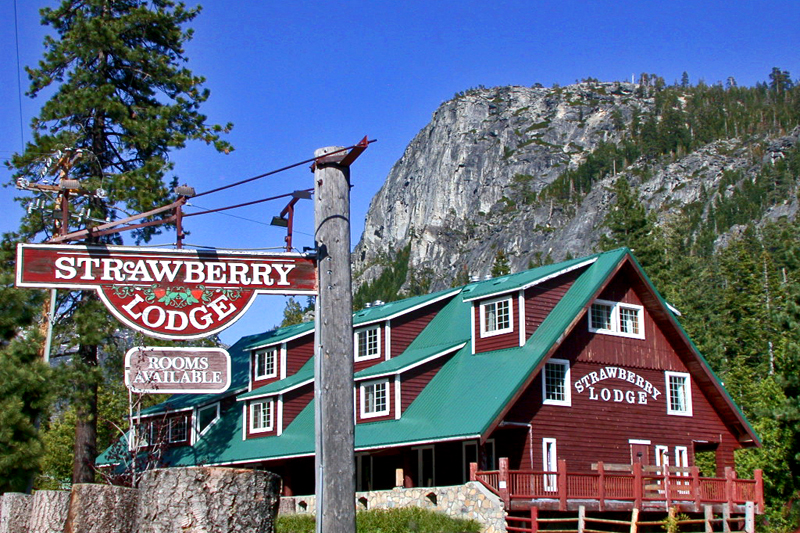
Strawberry Lodge, Kyburz, CA
Highway 50 Tahoe road-trip regulars will be familiar with this former Pony Express stop (right). Located off the side of the road in the nano-community of Kyburz, Strawberry is 20 minutes from South Shore. It’s seriously old-school, in that musty, funky way, with bad taxidermy, historical oddities, and is a much-loved Lake Tahoe institution.

With 31 rooms starting at just $49 a night (some are European style, with a shared bath), it’s hard to pass up, especially when you consider the proximity to all manner of vices, ranging from drinking (please don’t attempt to drive back) and gambling, to outdoor recreation. I love it because it’s one of the last remnants of old Tahoe, in a pastoral mountain setting. Strawberry also offers cross-country skiing, and the restaurant and bar can get hopping, sometimes with live music.

Sun Valley Lodge, Idaho
Built in 1936 at America’s first destination ski resort (with the world’s first chairlifts), the SVL was considered cutting-edge. It offered “every amenity a skier could possibly imagine.” Today, the 148-room property has been completely refurbished into a luxury hotel, complete with glass-encased swimming pool, yet it retains its majestic timber-and-stone facade and stately atmosphere.
P.S. Hemingway slept here.

Timberline Lodge, Mt. Hood, OR
Celebrating its 76th year, this National Historic Landmark (lobby, right) was built at a time when American heritage and the spirit of adventure crashed head-on with the Great Depression. FDR heralded the lodge as a “testament to the workers on the rolls of the Works Progress Administration,” which funded most of the property’s construction. The lodge shut down twice, once during WWII, and again in 1955, as it had fallen into disrepair. Under a new lessee, it was restored to grandeur and reopened later that year.

Located less than 90 minutes from Portland, Mt. Hood is a favorite local’s ski area. Timberline is built in the classic Pacific Northwestern lodge style, constructed primarily by hand of native timber and rock. The bright rooms are upscale rustic, with wood paneling, thick comforters, and stone fireplaces: all the trappings for a cozy getaway.

Alta Peruvian Lodge
, UT
Located at one of Utah’s premier ski resorts, this three-story wooden lodge had an unlikely start as a pair of barracks buildings in Brigham. They were relocated to Alta in eight pieces, and reconstructed into a 50-room lodge that opened in 1948. In 1979, an architect was hired to gussy up the property, although by today’s standards, it retains a retro Alpine charm (the kelly-green shutters decorated with Edelweiss, for example).

Rooms are straightforward and more motel than mountain lodge, but a fantastic deal, starting at $129 for a dorm bed. Prices include all meals, served family style in the lodge dining room, and free shuttle service to Alta Mountain and Snowbird. There are also twin and queen rooms with a shared or private bath, as well as bedroom suites. As for why the property is called the Peruvian? No one knows, although possibly it’s for a nearby landmark, Peruvian Creek.

Nordic Inn, Crested Butte, CO
Reopened on December 15, 2012, under new ownership, this beloved, 28-room Alpine lodge (right) opened over 50 years ago. Located just 500 yards from the slopes, the Nordic has refurbished half of its spacious rooms, which are now kitted out with hardwood floors, down comforters and pillows, and gorgeous Colorado beetle kill pine woodwork. The remaining rooms (which are a colorful ode to the ’80s, and a screaming deal for ski-in lodging) will be redone by June 1.

P.S. Ski lodges aren’t just for winter! Many are open year-round, and summer is also peak season for outdoor recreation.

[Photo credits: Tamarack, Mammoth Mountain Ski Area; Strawberry, 50Cabins.COM; Sun Valley, Sun Valley Resorts; Nordic Inn, Ken Stone]