Rome – 3 days in Italy

With the bustle of a large European metropolis and the detritus of a monumental past, Rome delights with a frenetic pace and antiquities lurking innocuously around each bend in the road. Here, history has been built on top of history for thousands of years. Seeing bankers in candy red Alfa Romeos zipping by millenia old ruins frames the endurance of this old city. Each sediment in time is visible and speaks to the ancient tale of decaying empire and modern function. The past is everywhere. You may be taking a stroll to sample some Trippa for a late lunch and accidentally stumble upon the Pantheon. There is a certain beauty to this unplanned chaos, and the overlapping of ages is historical mayhem at its most charming.

Rome is estimated to have been settled over ten thousand years ago. It has been a destination for a very long time. It is said that all roads once lead to this settlement on the Tiber. Thankfully, getting to Rome is inexpensive care of European budget air lines. Easyjet flies to Rome from several European cities such as Paris, London, Berlin, and Amsterdam for under $200 round-trip. Three days is plenty of time to see the highlights of Rome, but budget more time to truly understand this storied destination.

%Gallery-119063%

Day 1 – Roam the streets of Old Rome

One of the most amazing qualities of Rome is the integration of the ancient city into the modern metropolis. Most ancient sites beautifully disturb the modern order of things. On an old square, a McDonald’s faces the Pantheon in a worthy example of the strange compromises the present has made with the past. Due to this integration of the historical and the proximity of many Roman landmarks to each other, Rome is a great city for wanderers.

Start at the Colosseum, and take in the crumbling feat of ancient engineering. The queue at the Colosseum can be rather daunting, but booking tickets in advance or purchasing a Roma pass bypasses the line. Here is a great online resource for line skippers. Around the Colosseum, also seek out the Arch of Constantine. It is hard to miss.

From the Colosseum, start heading northwest towards Foro Romano, or the Roman Forum – the ancient seat of Roman government. It is a ruined old structure, and its considerate ambitions can be ascertained by the remnants. The Foro Romano is just east of Palatine Hill – one of the seven hills of Rome. The Circus Maximus, or old chariot racing ground, is just on the other side of the hill.

Continue northwest along Fori Imperiali road and slowly make your way to the heart of Rome. You will pass Foro Traiano, Piazza Campidoglio, and several other breathtaking landmarks. Eventually, if you stay the course, you will arrive at the doorstep of the Pantheon. The Pantheon is such a feat of engineering that it is still the world’s largest unreinforced concrete dome. During the renaissance, master architects such as Brunelleschi studied the Pantheon’s construction to reverse engineer advancements in the architectural field. This was 1300 years after the Pantheon’s construction. To call the Pantheon a marvel would be an insult. It stands as a testament to conquering impossibility.

Next the Pantheon, duck into Tazza D’Oro for some caffeine rejuvenation. Tazza is accused of making the best cappuccino in Rome. The place is busy and confusing. Follow someone who looks like they know the lay of the land.

Head north and east to the Trevi fountain, where well wishers toss away an estimated 3000 Euros per day. It is said that if you toss a coin into the Trevi fountain, then you will be guaranteed a return trip to Rome. North of the Trevi fountain is the Spanish Steps – the longest and widest staircase in Europe. Climb from the Piazza di Spagna to the top and cherish the view out over Rome.

For dinner, find a busy restaurant and order a lot of food. Rome is a mecca for food and has multitudes of delicious options. It is difficult to find a bad meal in Rome, so be adventurous. Hostaria Antica Roma on Appian Way is highly recommended.

Day 2 – Vatican City and Sistine Glory

Vatican City is a sovereign city state ruled by the Pope. With a population of less than a thousand, and only 110 acres in total size, the Vatican is considered the smallest country in the world, edging out the micro-state of Monaco. This center of the Catholic world boasts immaculate gardens, a heavenly basilica, and one of the top museums in the world.

The best way to reach the Vatican is on foot by crossing Ponte Sant’Angelo over the Tiber River. Castel Sant’Angelo is framed gloriously between winged angels on both sides of the bridge. The castle is a great first stop of the day, and houses a museum and Hadrian’s tomb. Castel Sant’Angelo has been a tomb, a castle for the popes, a prison, and also figures prominently int the novel Angels and Demons by Dan Brown.

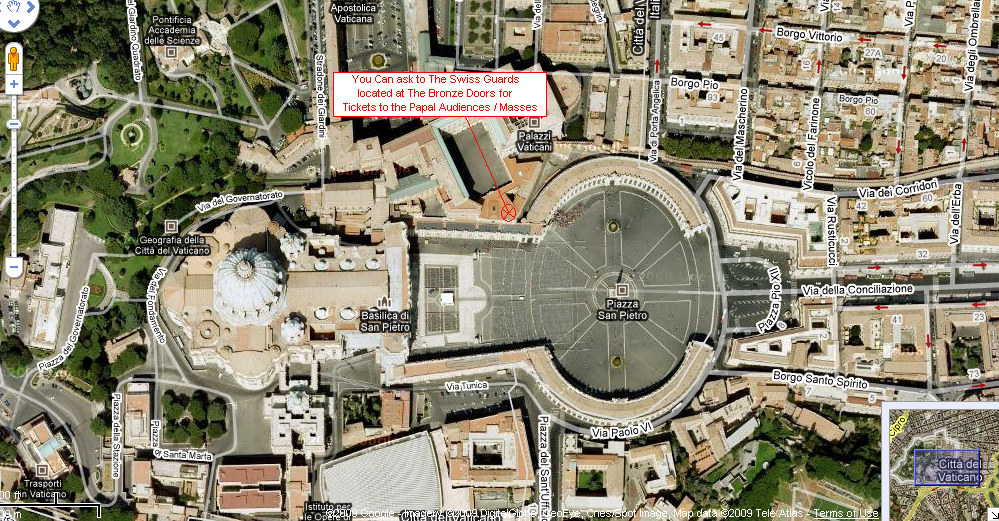
West of Sant’Angelo is Vatican City. Entering on Via della Conciliazione is probably the most dramatic way to approach the holy place. Once in Vatican City, take in the breathtakingly large Piazza di San Pietro (St. Peter’s square) before entering the basilica. The square boasts an obelisk that was relocated from Egypt almost two-thousand years ago.

The height of the Michelangelo designed dome in St. Peter’s Basilica is so lofty that you could fit the entire statue of liberty within the dome with room to spare. The interior of St. Peter’s is a heavenly place, festooned with gold finery and artistic masterpieces. You can climb to the top of the dome for a stunning view out across Rome, or take to the crypts beneath the marbled interior to check on some papal tombs.

If you happen to be in Rome on a Wednesday, then you can be blessed by the Pope himself. He hands out blessings at 10:30am on Wednesdays. Check with your hotel or guesthouse to arrange tickets for the event. The Swiss guard also hands out tickets on Tuesdays from their post near the bronze door. Be sure to check the Pope’s schedule before getting too excited about being blessed. He is a busy man and routinely leaves his Vatican home.

The Vatican Museum is my favorite museum in the world. From entire rooms filled with the works of masters to hallways covered with brightly painted maps of an uncertain world, this place is an unbelievable experience. Budget plenty of time to take it in. The museum is laid out to move you through several gorgeous rooms and immaculate hallways before climaxing at the Sistine Chapel. The museum is free the last Sunday of each month, and is not open any other Sundays. The rest of the week is fair game.
Finish your day with a stroll down the Tiber river just as dusk blankets Rome.

Day 3 – Trastevere and personal interests

With so many options around Rome, pick something personally interesting to do on your last day. Take a cooking class, check out the art at Galleria Borghese, go to a wine tasting, explore catacombs and crypts, check out Florence (only an hour and a half away by fast train), go to a football game, or perhaps just take to some serious shopping.

On your third night in Rome, spend some time in Trastevere. Trastevere is a cool neighborhood on the west bank of the Tiber filled with locals, expats, artists, and college students. It is a great place to sample authentic Roman food, explore, and get inexpensive lodging. The area feels less like a museum than ancient Rome and is a great place to get in touch with the city’s less touristy side.

All photography by Justin Delaney

The ten best castles in Europe

Castles originated in Europe over a thousand years ago. These fortresses were one of the original defense systems, and erecting the structures on hills or just beyond moats was a functional choice. Castles were built to house rulers, impose power, and above all, spurn would be attackers. Conforming to these basic principles of utilitarian design, the strongholds now appear solitary, majestic, and frozen in time. The attackers are long gone, and now a steady stream of camera clutching invaders breach the castles daily, ready to inspect the epic grandeur of the past.

While Europe has hundreds of excellent castles, these ten all have design, character, and history that sets them apart. Some occupy the center of bustling cities, while others lurk in forgotten countrysides. Spanning eight countries across Europe, each of these castles has a story to tell.

Prague Castle (above)
Location: Prague, Czech Republic
Nearest airport: Prague Airport
Year originally built: 870
Inhabitants: Kings of Bohemia, Holy Roman Emperors, and presidents of the Czech Republic
Interesting fact: According to the Guinness Book of World Records, Prague castle is the largest castle complex in the world.

Bran “Dracula’s” Castle
Location: Bran, Romania
Nearest airport: Henri Coandă International Airport in Otopeni, Romania near Bucharest
Year originally built: 1212
Inhabitants: Teutonic Knights, Mircea the Elder, Vlad III, and Romanian royalty
Interesting fact: In 2007, the castle was put up for sale for $78 million. It has since been taken off the market.

Neuschwanstein
Location: Schwangau, Germany
Nearest airport: Munich International Airport
Year originally built: construction began in 1869
Inhabitants: King Ludwig II
Interesting fact: This castle has been visited by over 60 million people and is the template for Disney’s Sleeping Beauty castle.

Leeds Castle
Location: Maidstone, Kent, England
Nearest airport: Kent International Airport
Year originally built: 1119
Inhabitants: King Edward I, Henry VIII, and other notable British royalty
Interesting fact: Leeds Castle hosts a large garden maze and a dog collar museum.

Windsor Castle
Location:
Windsor, Berkshire, England
Nearest airport: Heathrow Airport
Year originally built: 11th century
Inhabitants: William the Conqueror, Henry I, Edward III, and many other British rulers
Interesting fact: Windsor Castle is the longest-occupied palace in Europe.

Mont Saint-Michel
Location:
Mont Saint-Michel, Normandy, France
Nearest airport: Rennes Britanny Airport
Year originally built: 10th century, though the earliest abbeys in the fort date to the 6th century
Inhabitants: Currently 41 people call the Mont Saint-Michel home, and the structure has been home to monks to over a thousand years.
Interesting fact: The tides around Mont Saint-Michel vary by almost 50 feet, and many people have drowned approaching across the sands.

Château de Chambord
Location:
Chambord, Loir-et-Cher, France
Nearest airport: Paris Charles de Gaulle
Year originally built: 1526
Inhabitants: King François I, Louis XIV, and the Ducal family
Interesting fact: Though the original designer of the châteaux is widely disputed, some insist it was Leonardo Da Vinci.


%Gallery-48553%

Hohenwerfen
Location:
South of Salzburg, Austria
Nearest airport: Salzburg Airport
Year originally built: 1078
Inhabitants: Salzburg rulers and prisoners
Interesting fact: The misty castle served as a prison for hundreds of years.

Buda Castle
Location:
Budapest, Hungary
Nearest airport: Budapest Airport
Year originally built: 1265
Inhabitants: Hungarian Kings
Interesting fact: You can visit a portion of the 6 mile subterranean labyrinth under Buda Castle.

The Alhambra
Location:
Granada, Spain
Nearest airport: Federico García Lorca Granada-Jaén Airport
Year originally built: 14th century
Inhabitants: Muslim Emirs from the Nasrid Dynasty and Charles V
Interesting fact: It was in the Alhambra’s Hall of Ambassadors that Columbus made his pitch to sail to the orient by heading west from Spain.

5 European adventure destinations

With its old world styling and modern luxuries, Europe isn’t typically the first place that comes to mind when adventure travelers are searching for their next destination. But there are plenty of adventures to be had on the European continent as well, and here are five fantastic places to do just that.

Chamonix, France
One of the top mountain destinations not only in Europe, but the entire world, is Chamonix. Located in eastern France, the town sits at the base of Mount Blanc, the tallest peak in Western Europe, and is a mecca for skiers and snowboarders in the winter. Chamonix is also a popular spot for climbers year round as well, and there are numerous rock and ice climbing routes throughout the area. Alpine mountaineers are drawn to the region thanks to the many snow capped peaks to conquer and with hundreds of miles of single track in the area, mountain bikers have found plenty to enjoy as well. Chamonix is also one of the starting points for the famous Haute Route, a 110-mile long trek through the Alps that is amongst the most spectacular hiking routes in the entire world.

Zermatt, Switzerland
The mountain village on the other end of the Haute Route is Zermatt, Switzerland, another destination that is popular with the skiing and mountaineering crowd. Zermatt sits in the shadow of one of Europe’s most well known peaks, the Matterhorn, which cuts a distinctive profile in the skies overhead. Climbers come to challenge that peak as well, but less adventurous visitors can take a train to the summit to experience the breathtaking views too. There are miles of hiking trails throughout the region as well, and thanks to the high altitude (Zermatt sits at 5315 feet above sea level) skiing is an option year round.

Spitsbergen, Norway
Located at the extreme northern end of the Svalbard Archipelago in Norway, Spitsbergen is an island paradise for the adventure traveler looking for some arctic fun. The region is a popular destination for cross country skiing, snowshoeing, and dog sledding, all of which are options for most of the year. Surrounded by the Arctic Ocean, as well as the Greenland and Norwegian Seas, Spitsbergen is also a great place for sea kayaking, although hiking through glacier caverns may be the most unique reason to visit. The island is a popular stop-over for cruise ships and it is often used as a launching point for expeditions headed into the Arctic as well.

Karlovac, Croatia
Located in central Croatia, Karlovac has the unique distinction of sitting near the confluence of four rivers. That makes it a fantastic, if lesser known, destination for paddlers looking for a variety of challenges. The Dobra River, for instance, offers an amazing canyon to run, with challenging whitewater in the spring and early summer months. The Mreznica, on the other hand, features a series of interconnected lakes with a number of waterfalls to either portage or drop, depending on your skill level. The city also offers unique glimpses into Croatian history and culture, and its location allows for day trips to great hiking trails or sea kayaking spots along the coast as well.

Urtijëi, Italy
Located in the Italian Dolomites, an offshoot of the Alps, Urtijëi is yet another mountain village that is long on charm and even longer on adventure. The town serves as a perfect base camp for rock climbers, base jumpers, and backpackers looking to explore the picturesque Dolomites which extend throughout the northeastern part of Italy. The region’s via ferrata trekking routes range from easy to frightening depending on the path you take, and in the winter months the mountains offer a less crowded alternative to other European ski resorts.

There you have it! Five great European destinations to help you get your adventure travel fix. Anyone of those places will provide plenty to see and do, and each is a beautiful outdoor playground just waiting to be explored.

[Photo credits: Zermatt Photos, Moroder via WikiMedia Commons]


Explorers look to save elephants, end ivory trade

Two American explorers are heading to Africa today to begin an important expedition that could prove vital to the fight against the illegal ivory trade. Their five week long journey, dubbed the Elephant Ivory Project, may help to save herds of those creatures, which have come increasingly under attack from poachers in recent years.

Former National Geographic Adventurer of the Year Trip Jennings and partner Andy Maser are on their way to the Democratic Republic of Congo, where they’ll spend the next few weeks backpacking through the bush on the trail of elephants there. The duo hope to collect samples of elephant scat from five distinct herds which will then be used to build a “DNA map” of the various pachyderms of the region. Armed with the DNA data that they collect, they further hope to be able to trace the routes of the ivory trade and cut them off before irreparable damage is done to the DRC’s elephant herds.

Despite laws to the contrary, the demand for ivory is on the rise, particularly in Asia and the U.S. Because there is a great deal of money to be made in dealing in ivory, poachers will take great risks to sneak into protected areas in order to kill elephants and harvest their tusks. This practice has put the large creatures in jeopardy in a number of places in Africa, and the poor countries there often lack the resources necessary to stop these illegal practices.
Jennings and Maser hope to raise awareness of the situation through their efforts, and to that end they will be posting updates to their website throughout the expedition. You’ll also be able to track their progress through the use of their SPOT Satellite Messenger and upon their return, they plan on creating a documentary about their experiences as well.

On a personal note, I recently came back from a trip to South Africa, where the subject of poaching is a major issue as well. I spent some time in Kruger National Park, where poachers focus more on rhinos, but still go after the elephants too. South Africa has recently made the move to increase the sentences and penalties for anyone caught poaching, but it hasn’t seemed to have had much of an impact thus far.

These animals are one of the greatest natural resources that African countries have, and they often play an important role in the ecosystems there as well. The thought that they are slaughtered needlessly is a disturbing one, and hopefully we can find ways to put an end to those actions before they cease exist at all.


Rwanda pledges to save the environment

The United Nations has declared 2011 as the “Year of the Forests” as it continues to work to encourage nations across the globe to take sustainable actions to protect the planet’s woodlands. One of the first countries to answer the call to action is Rwanda, which has laid out an ambitious plan to protect its jungles, even as it struggles to develop economically.

As most people know, Rwanda was devastated by civil war and genocide during the 1990’s. That struggle extended throughout the country and caused untold damage to its natural resources, including the rainforests that are home to a host of amazing creatures – not the least of which are the endangered mountain gorillas. Since that time, Rwanda has been experiencing plenty of growth and prosperity however, with the economy making strides forward in recent years and the population expanding at a rapid pace. Those conditions have put demands on the country’s natural resources, including the jungles. One report says that the Gishwati rainforest, for example, has shrunk in size by as much as 90% since 1960.

Earlier this week the Rwandan government vowed to change that pattern. Minister of Land and Environment Stanislas Kamanzi has pledged that “By the year 2035, Rwanda will have achieved a country-wide reversal of the current degradation of soil, land, water and forest resources.” A bold statement indeed for a country that faces many challenges to its continued growth.

The pledge was met with applause by environmentalists across the planet, who say that the commitment to protecting the environment is the first of its kind from a developing country. The plan is to not only re-plant and replenish forests, but to also build an infrastructure to improve water, work on soil conservation and build more sustainable agriculture as well.

One area that may aid Rwanda in their efforts is tourism. The country is already seen as a model for how ecotourism can be put to great use, as it is viewed as one reason why the population of mountain gorillas is increasing. Visitors to their protected habitat are willing to pay a hefty sum to spend a few hours with the creatures, and that money goes directly to preserving the forests that they call home. That same approach may be extended to protecting other regions and species in the country as well.

Rwanda’s landmark pledge to protect the environment is a good thing and hopefully they’ll be able to put it into action. In the long run, it will be an important piece to the country’s continued development and its ability to support its population. As an eco-conscious traveler, that’s just the kind of place that I want to support with my dollars.

[Photo credit: d_proffer via WikiMedia Commons]