Russian riverboat tragedy highlights cruise ship safety

The Russian river boat Bulgaria went down at 2 p.m. local time Sunday about 450 miles east of Moscow. While the exact cause is unknown, it was reported to be raining heavily at the time, the ship was maintained poorly and a lax implementation of safety rules look to be contributing factors in the Titanic-like sinking of the ship. The tragic accident highlights good reasons for some of the strict requirements major cruise lines have for passengers.

The ship was overloaded

The 56 year old ship had 208 people on board including 25 unregistered passengers and not enough life vests in Russia’s worst river accident in three decades.

“We have raised 41 bodies. There are 28 women, 10 men and the rest are children,” an emergencies ministry official in the central Russian republic of Tatarstan where the accident occurred Sunday told the Interfax news agency.

This is one reason why major cruise lines (Carnival, Royal Caribbean, Princess, etc) have cabins rated to hold a certain number of passengers. While double occupancy is the industry standard, a limited number of cabins on most ships will accommodate more, but not all. U.S. Coast Guard ship inspections put a high emphasis on safety and ships not in compliance with standards are not able to sail. Period.

Children lost at sea

As many as 60 of the passengers may have been children, Russian media reported, and survivors said some 30 children had gathered in a room near the stern of the ship to play just minutes before it sank.

“Practically no children made it out. There were many children on the boat, very many,” survivor Natalya Makarova said on state television. She said she had lost her grip on her daughter as they struggled to escape.

Major cruise lines tag children with arm bands and know were children are. In order to board ships operated by major cruise lines, strict documentation requirements are in place that must be satisfied or boarding will be denied.

The Moscow Times reports that thirty-six children who died on the Bulgaria all had the same birth date, Dec. 30, 1999, on the passenger manifest, indicating that they were allowed to board without their identification documents, said ministry official Marat Rakhmatullin.

Safety is an ongoing issue with major cruise lines who are constantly working to make ships even safer. Royal Caribbean, for example, introduced a tagging system on Oasis of the Seas for three to 11-year-olds that uses an electronic device built into the wristbands that all children on the ship must wear. The system enables parents to locate children wherever they are among the ship’s 16 decks reports the Telegraph.

Safety not a big priority

Lax implementation of safety rules are responsible for many of Russia’s deadly accidents, from fires to plane crashes and mining disasters since the collapse of the Soviet Union in 1991. Major cruise lines hold safety drills at the beginning of each voyage so passengers know what to do in case of emergency.

‘It sank in two or three minutes, very fast,” Liliya Khaziyeva, a spokeswoman for the Rescue Service from the neighboring Udmurtia region, said by phone from a boat near the accident site. “We found dead people wearing life vests, people who were simply unable to leave the ship.” reports Business Week.

Last overhauled in 1980, the ship was running with a malfunctioning left engine and was not licensed to carry passengers.

One possible cause appeared to have been a lack of air conditioning which prompted the crew to open portholes that were then flooded by an incoming wave reports the Moscow Times.

Lessons learned

History will probably write that this ship sank over safety issues. From overloading the vessel with too many passengers to relaxed maintenance or simply attempting to operate a ship that was too old, the incident clearly points out how very important these issues are and what a good job major cruise lines do of answering the call for safety.

Safety drills at the beginning of each cruise on major cruise lines are mandatory, ships have ample life vests for all guests and oversight by government authorities keep the system in check.

Today’s Titanic

The Russian incident naturally raises some serious questions. Are today’s cruise lines operating as safely as possible? Is it possible to ever have another Titanic-like event?

Major cruise lines have set-in-stone rules regarding documentation needed to board a passenger ship. The requirements are strict and systems on board keep track of every passenger coming on or going off a ship. Behind-the-scenes activities performed by everyone from travel agents to embarkation staff at the pier help insure a safe voyage.

Cruise liners today are much bigger and better equipped. At 46,328 gross registered tons, Titanic was the largest and most advanced ship of her day. Today’s largest and most advanced ship, Allure of the Seas, is more than four times larger and carries almost twice as many people. Big ships are not nearly as “remarkable” as they were in 1912. Shipyards seem to crank them out as fast as they are ordered. Cruise lines deploy ships all over the planet now without hesitation to move one if an itinerary does not produce the anticipated results.

This Russian riverboat tragedy looks to be a totally preventable accident if common safety and maintenance procedures used by cruise lines world-wide had been followed. It is also a good reason to pay attention during those safety drills performed at the beginning of each cruise. Yes, odds are your cruise ship will not sink, but its a good idea to know what to do in case of an emergency and maybe have a little more patience with cruise line workers who insist on following the rules.

Flickr photo by mil8

Top ten most crowded islands in the world

From an island microslum in Colombia to a haute enclave in central Paris, the ten most crowded islands in the world bear scant similarities in class or culture. In fact, every entry in the top ten comes from a different country. But being islands, each shares the common thread of scarcity – whether it be land, resources, or housing. In general, these islands are prophetical microcosms for an overcrowded earth – finite spaces where self sufficiency governs and demand pierces supply.

With the world’s population racing higher and higher, and the “megacities club” accepting new members yearly, some day the earth could bear the traits of one of these densely packed islands.

%Gallery-127866%

10. Vasilyevsky Island
Location: St. Petersburg, Russian Federation
Population: 202,650
People per square kilometer: 18,592
Size: 10.9 square kilometers
Story: This island located in St. Pete is a collection of 18th and 19th century buildings with some Soviet built apartment blocks lining the Gulf of Finland on the western shore. The communist housing ethos of the twentieth century called for rows and rows of tight apartments, and this historic island in Russia’s second city was not immune to the sprawl. This created the compact quarters of Vasilyevsky island. Famous for its old school stock exchange and giant Rostral columns, the island is popular with tourists.

9. Lilla Essingen
Location: Stockholm, Sweden
Population: 4,647
People per square kilometer: 20,204
Size: .23 square kilometers
Story: This small island in central Stockholm once served as a hub of industry for Stockholm’s industrial operations. The easy boat access allowed for ease of shipping by boat, and the island factories manufactured an array of goods, from massive lamps for lighthouses to vacuum cleaners. Eventually, as the industrial applications became outmoded, the island became home to several apartment towers. Today, the island is crammed full of smiling Swedes living in apartments with (presumably) tasteful modern furniture.

8. Île Saint-Louis
Location: Paris, France
Population: 2,465
People per square kilometer: 22,409
Size: .11 square kilometers
Story: Perhaps the most stylish island in the world, Île Saint-Louis is a marvel of 17th century urban architecture and planning. Narrow roads and some of the priciest real estate in the world have allowed the island to remain relatively calm, despite its location in central Paris. While Île Saint-Louis is off of the tourist radar for most, this island in the Seine River embodies the classic Parisian spirit, worthy of an afternoon stroll with a perfect sorbet from Berthillon. The island is named for France’s canonized King, Louis IX.

7. Manhattan
Location: New York, New York
Population: 1,585,873
People per square kilometer: 26,879
Size: 59.47 square kilometers
Story: In 1626, the Lenape Indians sold Manhattan island to the Dutch for a bag of axes, hoes, iron kettles, duffel cloths and other 17th century garb worth about $24 (roughly $1000 in modern value). It is safe to day the island has grown ambitiously from this humble transaction. The center of the financial universe is now home to many – truly a place where the world lives. The island once known as New Amsterdam, and briefly, New Orange, shadows America’s story, both tragic and triumphant.

6. Salsette Island
Location: Mumbai, India
Population: 13,175,000
People per square kilometer: 30,217
Size: 436 square kilometers
Story: Salsette, an island off the western coast of India, is home to Mumbai and its sprawling suburbs. As a poster boy for “New India,” Mumbai is as dichotomous as it gets, at once the wealthiest city in south Asia and also home to one of the world’s largest slums – the notorious Dharavi. Dharavi is an island within an island, a super-slum with roughly one million people spread out over an area less than a square mile. At the other end of the spectrum, Salsette Island is also home to extreme wealth. The house known as Antilla is a 400,000 square foot giant that towers with some of Mumbai’s tallest buildings. Truly a contrast from the squalor in Dharavi, the private residence houses six people, can accommodate 168 cars, has 9 elevators, and an ice room with snow flurries.


5. Ebeye Island
Location: Marshall Islands
Population: 15,000
People per square kilometer: 41,667
Size: .36 square kilometers
Story: When the United States decided to test nuclear weapons in the South Pacific, they chose to do so amongst the atolls of the Marshall Islands. U.S. officials uprooted many residents from Bikini Atoll and Enewetak Atoll to insure that the testing did not directly harm human life. The relocated Marshallese had to move somewhere, and most moved to Ebeye under the assistance of the United States. This forced relocation caused a huge mess, including a severe housing shortage and land owner legality issues that persist today. The combination of factors created an environment of hostility and squalor, creating the slum of the South Pacific.


4. Malé
Location: The Maldives
Population: 103,693
People per square kilometer: 53,121
Size: 1.952 square kilometers
Story: The Maldives is one of Asia’s top tourist destinations, with 26 atolls and 1,192 islands offering beach perfection. At its center is the capital city – Male. Male is a humbly sized island of just a couple square miles. It is stuffed full of people, hotels, mosques, and office towers that efficiently utilize the scare land resources. While landfills have reclaimed some land from the sea, most progress is made vertically rather than horizontally. The modern downtown island in the middle of the Indian Ocean is a stark aberration from the deserted islands that dot most of the Maldives.

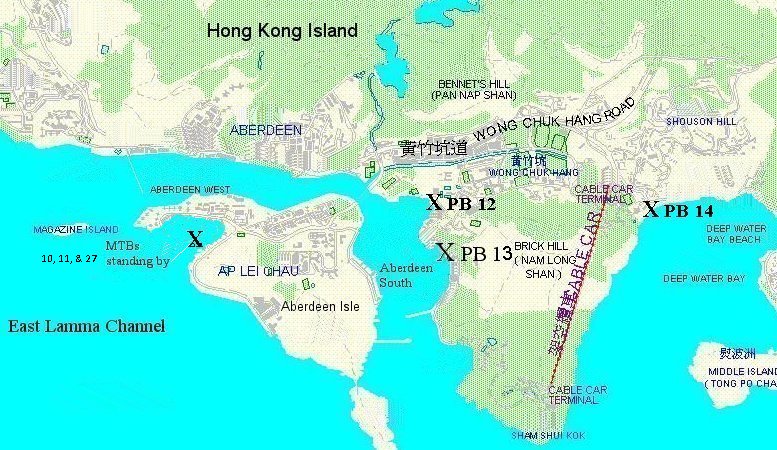
3. Ap Lei Chau
Location: Hong Kong
Population: 86,782
People per square kilometer: 66,755
Size: 1.32 square kilometers
Story: Hong Kong is the land of a thousand towers, clustered most densely on the island of Ap Lei Chau just southwest of Hong Kong Island. Ap Lei Chau served as the settlement for Hong Kong Village, theorized to be the etymological source for the famous larger territory of Hong Kong. Strangely, Ap Lei Chau translates to Duck Tongue Island, said to be named for the island’s shape. It is filled with high rise residences and even a winery.

2. Migingo Island
Location: Kenya, though Uganda disputes this
Population: 400
People per square kilometer: 100,000
Size: .004 square kilometers
Story: This bantomslum in the middle of Lake Victoria is a fishing village perched precariously on half a sphere of rock. The residents take in large hauls of the Nile Perch – a poster boy for River Monsters that can grow to a comedically large size. Migingo is famous for a decades-old dispute between Kenya and Uganda over the sovereignty of the small island. There is even a facebook page where individuals can “like” declaring the island Kenyan. (The page has twice as many followers as there are residents on Migingo.) Uganda agrees with this claim, most of the time, though the tiny rock island is not the issue – the fishing rights are.

1. Santa Cruz del Islote
Location: Colombia
Population: 1,247
People per square kilometer: 124,700
Size: .01 square kilometers
Story: The most densely populated island in the world is a microslum off the coast of Colombia. This tropical island is located in the emerald waters of the idyllic Caribbean, though is packed so tight that most activities are done off island. Schooling, football, graveyards, and work all take place away from Santa Cruz del Islote. The island park is the size of a small tennis court, and fresh water must be shipped in by Colombian Navy ships. Santa Cruz del Islote also does not have electricity. What the island favela does have is people, lots of them. To visit the world’s most packed island, hop on a ferry from Tolu, Colombia. The nearby hotel of Punta Faro can arrange tours of the island.

All unattributed images from wikimedia commons

Russians ready to travel, voting on destinations

While only 15% of Russia‘s 142 million population have ever traveled abroad, in the last decade Russia has been one of the world’s fastest growing outbound travel markets and the world of travel wants to know what they are all about. The My Planet Travel Awards, voted on by the Russian public, promises to tell the world what Russians are looking for when they travel.

“The inaugural My Planet Travel Awards continue to surpasses all expectations, as international hotels, resorts, and service providers sign up to be part of Russia’s unique travel awards” says eturbonews.com.

Following a huge nationwide awareness campaign covered by the All-Russian State Television and Radio Broadcasting Company (VGTRK) and a public online vote, the awards will culminate with a gala dinner in September 2011 at The Ritz-Carlton Hotel in Moscow where the winners will be announced.

Guests at the gala dinner will include up to 400 people from Russia and around the world, including nominees and other representatives of the travel industry, celebrities, journalists, relevant government agencies and trade associations.As the My Planet Travel Awards have been created to reflect Russian ready to travel. Hoping to map their tastes in travel, the voting process is conducted in the Russian language as is a promotional YouTube video.

Yesterday it was announced that Hong Kong is the latest and 100th nominee to join the My Planet Travel Awards 2011 and will be represented in the category Best Hotel in Asia, Australasia and the Indian Ocean.

Flickr photo by Ed Yourdon

Related Stories


Poison alcohol kills Russian tourists: three things they should have known

Poisonous alcohol has been blamed for the deaths of three Russians on a cruise off the Turkish resort of Bodrum.

The Russians were part of a trip by travel agency managers exploring tourism possibilities in Turkey. In total, 20 Russians and one Turk were poisoned by the drinks. The $50 cruise included 10-12 mixed drinks. While some reported that the alcohol had a strange taste, it appears that didn’t stop them from drinking it.

Initial reports suggest methanol was added to the booze.

This tragedy could have easily been avoided if these travel professionals had followed three simple rules:

1. Be wary of alcohol in Muslim countries. I’m sorry if this offends any legitimate Muslim brewers or vintners out there, but the fact of the matter is that much of the alcohol produced in Muslim nations is substandard, and apparently in this case downright dangerous. A culture that frowns on drinking pushes drinking underground. This lowers standards both for producers and consumers. Also, consumers are less likely to know what’s good and what isn’t. I’ve traveled all around the Muslim world and have seen a lot of dodgy booze.

2. If it tastes strange, don’t swallow. This is standard travel health practice. One of my worst cases of food poisoning happened in India. It was a hot day and I bought a local brand of cola. I took a big slug of it and swallowed, only to wince at an acrid, industrial chemical taste. I spit out what remained in my mouth but it was too late. Within an hour my gut felt like I’d swallowed a dozen razor blades. I learned my lesson: taste first.

3. Don’t overdrink. The cruise included ten to twelve mixed drinks? That’s poison even if the booze is normal. Overdrinking overseas (or even in the wrong bar back home) can make you ill, get you robbed, or worse. Drink sensibly. You’ll enjoy your vacation more.

[Photo courtesy Georges Jansoone]

Moscow Metro celebrates 76th anniversary


This year marks the 76th anniversary of the Moscow metro system. From the public to the private areas, the stunning architectural images showcase one of the world’s most fascinating transportation masterpieces, far exceeding the beauty of those in the United States.

Opened in 1935 with one 11 kilometer line and 13 stations, it was the first underground rail system in the then Soviet Union. Today, the system has 182 stations and a route length of 301.2 kilometers and is the second most heavily-used rapid transit system, just behind Tokyo.

Take a look at this magnificent panoramic image gallery:

%Gallery-124107%

Thanks to @LegalNomads for the tip and to Russos for the image gallery.