Living Naked And Free On The Beach In Greece

I spent seventeen years in Catholic schools and that’s probably why you’ll never see me lolling about naked on a beach. I have no moral opposition to naturists, but like many others, I’ve observed firsthand that nudists tend to be a bit older, with many old enough to qualify for senior citizens discounts, and some aren’t exactly easy on the eyes. There’s something about the aging process that makes some people want to revert to their natural state as they grow older.

Men hear the words “nude beach” or “clothing optional beach” and their heart rates accelerate a few notches. But are you going to bump into Gisele Bundchen or Brooklyn Decker sunning themselves in the buff on a beach? Probably not.

In the Greek Isles, you can’t help but bump into people who are naked or nearly naked, even without seeking out nude or clothing optional beaches. A couple weeks ago, I saw a few portly, hardy souls, certainly from Northern Europe, looking burned like lobsters and naked as jaybirds on Tigaki Beach in Kos.

Then you also see men who have suits on, but they’re so skimpy they’re almost more of an assault on the eyes than if they were actually naked. I saw a man at the Livadi Geranou beach in Patmos last week that was actually wearing a thong bathing suit reminiscent of the one Borat used in his movie, save the shoulder straps. He appeared to be about 85 years old.The next day, a portly, middle-aged man tried to board a public bus we were on in Patmos with a tiny speedo half pulled down, exposing both pubes and half his ass. A group of Greek schoolchildren on the bus began to point at him and laugh hysterically, and he turned around and got off. (Perhaps the driver told him to get dressed, I’m not sure.)

Then on Saturday, my wife and two young boys and I found ourselves in the company of a whole host of naked people at the Psili Ammos Beach in Patmos, much to our surprise. The beach can only be reached via a boat ride or rigorous 30-minute hike, so it’s apparently an ideal place for naturists to hide out on a very religious island that frowns upon public nudity.

We noticed that a few of the nudists were actually camping on the beach, which isn’t technically legal, and I was curious about the practicalities. But how does one go about interviewing naked people on a beach? Surely approaching them naked, on their terms, would have been best, but I wasn’t going to do that.

I asked my wife, Jen, to accompany me, thinking that I might seem less like a horny stalker if I had a woman with me.

“I don’t know,” she said, clearly dreading the chore. “I feel like you need to give naked people on a beach a really wide berth.”

But she eventually agreed to accompany me on my quest to speak to naked campers. We approached a variety of naked people, feeling very awkward since we had suits on, and none admitted to being campers, though this might be because they thought I was some sort of undercover police officer.

The naturists were all friendly, and obviously not Americans. One older gentleman who we approached, sort of half rolled over when we addressed him and I accidentally caught sight of his junk – clearly a low point in our trip. It’s odd but when you’re speaking to naked people on a beach, you focus so hard on making eye contact that it’s almost ridiculous.

After a few hours on the clothing-optional beach, I told my wife I’d had enough and wanted to leave. And then just as the words left my mouth, a large group of attractive young people came hiking down the hill and plopped down right next to us on the beach. Well, not so fast, I thought. But alas, they turned out to be a wholesome group of Norwegians on a Bible study tour, and they definitely weren’t there to get naked.

For those who are interested in getting naked and camping for free on Greek beaches, check out the Captain Barefoot site, which appears to be a comprehensive guide to Greece for naturists. In some way, I kind of envy people who feel free enough to live naked and free on a remote beach in Greece, but I’m still keeping my suit on.

Read Part 2 of this story, A Prude Bares it All On a Nude Beach in Crete here.

(Photos by Dave Seminara, the second one needed blurring)

The World’s 10 Scariest Haunted Castles


From a Czech forest castle reported to house the gates of hell to a gargantuan castle right here in the United States, the world’s most haunted castles boast histories rich with frightening details. Specters haunt the halls of these old castles and travelers visit to experience brushes with the paranormal. Some of these castles possess secrets darker than a moonless night, and when darkness comes, the spirits stir.

These are the ten places to go and meet ghosts. Covering nine countries, each of these castles has a past that may just try and make a ghostly impression on your present.


%Gallery-155791%

Edinburgh Castle
Country: Scotland
Built: 12th century
Haunting: Do you believe in ghosts? Edinburgh is one of those places where skeptics cross the threshold and start saying yes. A few years ago, Time Magazine set out to name the ten most haunted places in the world and included Edinburgh Castle on that list. For starters, a headless drummer has been seen and heard in the castle halls beginning around 1650. Lady Glamis, accused of witchcraft in 1537 and burned at the stake while her young son watched, is also known to prowl the dark halls. A ghost dog has even been seen delicately prancing through the misty graveyard.

There have been so many hauntings for so long that Edinburgh Castle attracted one of the most thorough paranormal investigations ever. In 2001, an English doctor enlisted roughly 240 volunteers to spend 10 days in and around the castle. The volunteers were all screened to insure that none of them knew anything about the castle. The findings? The place is a paranormal hot spot. Many of the volunteer experiences were consistent with past sightings at the castle. There were burning sensations, phantom gropes, shadowy figures and a specter in a leather apron seen in the same spot he was seen by unrelated individuals before the study. Its ancient dungeons and cobbled corridors are home to some serious creepiness.

Visiting: Fly to Edinburgh from London for under $100 round trip. Buy tickets to visit the castle here.

Chillingham Castle
Country: England
Built: 12th century
Haunting: The appropriately named Chillingham Castle is located in the northern corner of England and has been haunting guests for a very long time. The castle served as a fortress to repel attacks from the Scots in the north and has thus seen a great deal of bloodshed. Chillingham has been featured on at least six ghost-related shows, and the webs are rife with strange pictures of its ghosts and orby videos.

So what haunts this medieval castle that appears to be plucked from Westeros? Most notably a childlike ghost, called the blue boy. The blue boy is seen regularly in the pink room as a flash of blue light and also above guests’ beds as a blue halo following a loud cry. Perhaps most creepy is one of the castle’s ghostly apparitions who wanders the dank halls late at night – John Sage. John Sage has a terrifyingly ridiculous backstory and was hung by Longshanks during the war with the Scots. He can be heard dragging bodies here and there.

Visiting: The Chillingham homepage states, “Tours last about 2 hours, depending on psychic activity.” The castle also accepts brave overnight guests. To get there, fly into Newcastle or Edinburgh and travel 70 miles to reach the castle.

Houska Castle
Country: Czech Republic
Built: 13th century
Haunting: Located in the forests north of Prague, Houska castle was never a strategic battle location. It also appears to have no function of outside fortification. It was not built to repel attacks or to keep things out. It was built to hold something in. It was built to close the gateway to hell.

The castle is built upon a fabled bottomless pit from which winged creatures and half-man-half-beasts allegedly exited. Demonic activity persisted at this site and eventually, Bohemian rulers decided to seal up the gateway with a castle. Before sealing off Hell’s realm, it is said that nearby prisoners were granted pardons if they would agree to be lowered by a rope into the hole. The story goes that the first lowered prisoner let out a yell after entering the hole. When he was raised up, he appeared to have aged over 30 years. He died of unknown causes just days later.

Wait, it gets stranger. During the 1930s, the Nazis took over the castle to conduct occult experiments with dimensional portals. Hitler, a paranormal enthusiast, was known to dabble in the occult, and it is uncertain what the scientists learned from Housksa Castle. Years later, during renovations, several Nazi officer skeletons were found, and it appeared they were killed execution style.

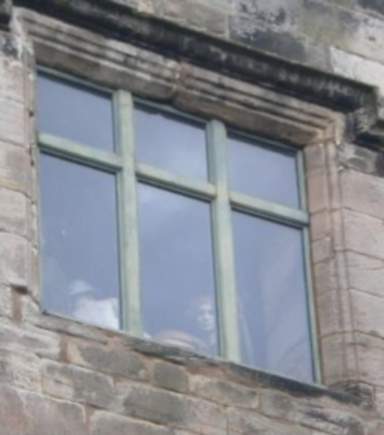
The recurring ghosts at Houska are plentiful, and include a giant bulldog/frog/human, a headless black horse and a woman in an old dress who is frequently seen peaking out of the top floor windows. Beneath the cellar there is said to be some nonhuman remains of the beasts that emerged from the hole.

Visiting: Houska Castle is just north of Prague and day trips to this spot are easy.

Belcourt Castle
Country: United States
Built: 1894
Haunting: In adjusted today dollars, Belcourt Castle cost its owner over $100 million back in the 19th century. Oliver Belmont, namesake of the Belmont stakes, heir to the Belmont family empire and poster child for turn of the century trustfund champions, built this behemoth. On its completion, Oliver chose to instead travel the world, collecting artifacts for the castle, which sounds like a pretty cool thing to do after building a gigantic home. The years were not kind to the castle and disrepair plagued it for much of the 20th century. In 1956, the mansion was sold to the Tinney family for $25,000 ($200,000 in today dollars), or about a fifth of a penny on the dollar (adjusted for inflation).

The Tinneys got a beat-up fading mansion with massive infrastructural needs – and a few ghosts. The strangest thing about Belcourt is that the hauntings allegedly come from the vast assortment of artifacts rather than the actual house. There is a haunted 15th century set of armor that lets out a blood-curdling scream every March, said to be the time that its medieval owner took a spear through the eye. In the Gothic ballroom there are haunted chairs that many claim to have been pushed out of while sitting by unknown forces.

Visiting: The owner of Belcourt Castle gives ghost tours and this May, he will be giving them on Friday and Saturday evenings. It is also open for weddings and other events. Belcourt Mansion is roughly an hour-and-a-half drive from Boston down 95 South.

Brissac Castle
Country: France
Built: 11th century
Haunting: The stylish French château is over seven-stories tall with around 200 rooms and is considered the tallest château in all of the Loire Valley. After a rich history, beginning with the Counts of Anjou in the 11th century, the domain was purchased by a noble husband and wife named Jacques and Charlotte. Charlotte enjoyed tormenting her husband by having noisy sex with randoms. She would keep her husband up all night with her lovers and eventually her husband snapped.

The affair ended when both the lover and Charlotte the wife disappeared. Jacques was likely behind it, but after their death, the lovers’ moans did not stop – they grew louder. The moans persisted and Jacques was forced to sell the castle, tormented by the ghosts of his past. Today, it is said that in the early morning the lovers’ moans persist.

Visiting: Château de Brissac is open to tours and even has two suites and two rooms to stay in overnight. The price for the overnight stay is not cheap, starting at 390 Euros with availability from May through September. Reach Brissac from Paris by high-speed train, taking just an hour and a half to reach nearby Angers.

Eltz Castle
Country: Germany
Built: 1157
Haunting: A picturesque castle with one of the richest interiors in all of Deutschland, Eltz rises up out of the surrounding Mosel forest as if boasting its longevity to the surrounding environs. A testament to its strength as a stronghold, Eltz Castle is one of few castles in the region that has never been destroyed. It is also one of just a few German castles that is said to be haunted. Allegedly, the ghosts of medieval knights still patrol the castle, which, 33 generations later, is still owned by the same original family. Imagine living in the same house as your Great X 30 grandmother.

Visiting: Reach Eltz Castle by flying into Frankfurt Hahn airport and traveling by bus or taxi for the final 15 miles to the city of Cochem.

Castle of Bardi (or Landi Castle)
Country: Italy
Built: 900, ish
Haunting: Built on a spur of red jasper, Bardi towers over the Emilia-Romagna valley. Bardi’s etymological impetus began with Hannibal and his cavalry of war elephants. The last elephant, named Bardus, allegedly died here during the march to Rome. Unfortunately, the castle is not haunted by a menacing ghost elephant.

A sad old story explains the real ghosts of this incredible fortress. Instead of Romeo and Juliet, we have a tale of Moroello and Soleste. Soleste was the daughter of the castle’s lord, and she was in love with Moroello, the captain of the knights. During a long battle, Soleste waited for Moroello to return, perched on the edge of her family fortress, eyes locked on the distant horizon. Eventually, she saw riders galloping back from the battlefront. When the soldiers reached her eyesight, she noticed they were riding with enemy colors. She was overcome with grief at the possibility of Moroello’s death and threw herself off of the castle’s edge. In a sad twist of irony, the riders were in fact Moroello and his soldiers, and they were just wearing the enemy colors to boast. Moroello found his love dead on the ground and immediately realized what he had done and killed himself. The ghost of Moroello haunts the castle to his day, wandering the grounds searching for his lost love.

Visiting: Bardi is located in Emilia-Romagna in northern Italy. The easiest way to reach the region is by plane to Parma or by train from nearby Bologna or Milan.

Dragsholm Castle
Country: Denmark
Built: 1215
Haunting: Some places are simply haunted by a ghost or two, but Dragsholm, located on an islet in Denmark, is allegedly home to 100 ghosts. How anyone came to take inventory on the ghosts and find such a round number was likely done with some relation to Dragsholm tourism development, but the place is wicked haunted, having functioned as both a prison and a battle fortification. Some consider it the most haunted castle in the world.

Of the many stories about Dragsholm’s ghosts, perhaps the most terrifying origin ghost tale involves the White Lady. Before she wandered the castle halls as a ghost, the White Lady was just a girl – a girl who was in love with one of the castle laborers. As a member of nobility, her father, and owner of the castle, condemned the relationship, but the affair persisted. Eventually, the father grew so angry about the ongoing affair that he imprisoned his daughter in the walls of the castle. She was not seen again until hundreds of years later. In the 20th century, during some routine castle remodeling, workers found a skeleton in one of the walls. The skeleton was wearing a white gown.

Visiting: Dragsholm Castle is open to overnight visitors, so if you want to stay in a really creepy castle this is probably the one. To get there, take a train from Copenhagen through Hillerød to Odsherred. The castle also has a restaurant.

Moosham Castle
Country: Austria
Built: 1208
Haunting: Built by the Prince-Bishops of Salzburg, Moosham Castle has a strange and sinister past. Hundreds of witches were beheaded within the walls of Moosham, and many still haunt the Austrian castle. Due to these hauntings, the castle is known colloquially as the Witches Castle.

In addition to being home to a coven of creepy witch ghosts, Moosham is also allegedly the lair of the werewolf. During the 1800’s, Moosham saw a sudden preponderance of mutilated cattle and deer corpses. As a consequence of this, several Moosham residents were tried and imprisoned as werewolves.

Visiting: Take bus #270 from the Salzburg bus station to reach Moosham. The trip takes about two hours.

Warwick Castle
Country: England
Built: 1068
Haunting: First built in the 11th century by none other than William the Conqueror, Warwick has seen more battles than perhaps any other castle in Europe. It has found peace in recent years, but the spirits still linger. Its eroded walls and faded battlements tell the tale of a long hard life for the spirits that now walk its halls.


The ghost tower is said to be one of the castle’s most haunted areas, as Sir Fulke Greville still wanders its interior. Murdered by his manservant in 1628, he is said to materialize from his portrait late on cold evenings. The castle dungeon, home to all sorts of past torment, also seems to be quite haunted. Many visitors complain of vertigo and nausea upon touching the dungeon apparatuses.

Visiting: Warwick Castle is very tourist accessible and is open every day except Christmas. Warwick Castle is located just 40 minutes from Birmingham airport.

Honorable mention:

Castle Bran or Dracula’s Castle
Country: Romania
Built: 1212
Haunting: In the heart of old Transylvania, deep in the Carpathian wilderness, is a castle named for a ruler from the 15th century – Vlad III Dracul. After Vlad’s father was assassinated and his brother was buried alive, he set out to become more ruthless than anyone in fiction could believably create. He makes pint-sized tyrants like Joffrey Baratheon look like equitable play dates.

It all began at an Easter feast when Vlad asked his nobles how many princes they had survived, insinuating that they conspired against past rulers. The story goes that he arrested all of them. He impaled the older ones and their families and made the younger nobles into slaves for a wave of ambitious improvements to the castle. All told, Vlad impaled tens of thousands of people, earning the nickname Vlad the Impaler, and the tales get so ridiculous that it is difficult to sift the myths from the truth. In fact, Vlad never actually lived in Castle Bran, though the castle has come to be associated with the “Son of the Dragon.”

Visiting: The easiest way to reach the castle is by traveling by train from Bucharest, Romania to Brasov, Romania. Many tour companies in Bucharest can arrange a day trip for well under 100 Euros.

[Top image of Brissac Castle via flickr image user @lain G]
Where To Stay On A Budget For The 2012 London Olympics

From July 27 to August 12, London will host the 2012 Olympic Games. During this time, sporting events will be held all over the city, like at Olympic Park in east London, Regent’s Park in central London and Greenwich Park in south east London. To help you enjoy the Olympic Games on a budget, here are 10 affordable accommodations.

Hotels

Falcon Hotel

Located in central London, Falcon Hotel is a bed and breakfast hotel that provides clean rooms and personalized service. Rooms are all fully equipped with comfortable mattresses, large plasma screen TVs, tea and coffee making facilities and free Wi-Fi. Attractions like Hyde Park, Madame Tussauds, Marble Arch and the lively Oxford Street are nearby. Furthermore, the accommodation is conveniently located within a few minutes walking to Paddington Station, making it easy to get to and from the different event venues of the Olympics.

Rates start at $130 per night. Click here to book.Jury’s Inn Croydon

Twenty minutes away from central London by train, Jury’s Inn Croydon is a comfortable accommodation in south London, located near excellent shopping, beautiful parks, historical sites and fun nightlife. Some nearby attractions include the Tate Museum, Wimbledon Stadium and Lloyd Park. All rooms are air-conditioned with spacious bathrooms, high-speed Internet and wheelchair access. And for $31, you can get upgraded to a Superior Room.

Rates start at $144 per night. Click here to book.

Paramount Hotel London

Located in Kensington, Paramount Hotel London features 30 well-equipped rooms in a renovated Victorian building. Upon arrival, guests receive a welcome tray, which includes coffee, tea, milk, mineral water and biscuits. The accommodation is a short walk from many sites, like Kensington Palace, the Natural History Museum, Hyde Park, Harrods and The Science Museum. To easily get around the city and get to all the events of the Olympics, Earls Court Tube Station is only five minutes away by foot. When spending time in the hotel, guests can enjoy the onsite garden, free Wi-Fi and cable and satellite television. Moreover, to help with budgeting, there is a communal kitchen so guests can make their own meals.

Rates start at $151.54 per night. Click here to book.

London Visitors Hotel

Located in central London in the trendy area of Kensington and Chelsea, the London Visitors Hotel is a beautiful Victorian accommodation featuring 28 comfortable rooms. Guests of the hotel are in close proximity to the excellent restaurants and shopping of High Street Kensington, the picturesque Holland Park, the nightlife of Shepard’s Bush and the tube station, to help travelers easily get to different areas of the city. And best of all, a complimentary continental breakfast is included in the stay.

Rates start at $119. Click here to book.

Warwick Lodge

The Warwick Lodge is a family-run guesthouse featuring comfortable rooms, flat screen televisions and coffee and tea making facilities. Likewise, the proximity to the city center makes it very convenient for exploring London. As it’s a B&B, they offer a delicious breakfast of cereals, eggs, sausage, bacon, beans, toast and juices. The staff here is extremely friendly, and will go out of their way to make your stay pleasant.

Rates start at $125.30. Click here to book.

Cedars House Hotel

For those looking for a charming and friendly accommodation, Cedars House Hotel is a great option. Less than a mile from Croydon Station and a two-minute walk to the bus stop, you’ll be able to get to central London in 15 minutes. Furthermore, complimentary offerings like Wi-Fi, free child stays, tea, coffee and breakfast make this a great accommodation for travelers on a budget.

Rates start at $127 per night. Click here to book.

London Guest House

London Guest House is a reasonably priced bed and breakfast in west London. It is easy to get to the city center, as there’s a bus stop right next to the property with buses to the tube station running every six to eight minutes. Alternatively, you can walk to the station, which takes about 15 minutes. The staff is friendly and accommodating, and rooms are clean and feature comfortable beds. Moreover, there is a delicious breakfast set out each morning of muffins, toast, coffee, juices, cheeses, tea, jam and fruit, all served in a brightly-colored breakfast room.

Rates start at $136 per night. Click here to book.

Hostels

New Cross Inn Hostel

The New Cross Inn Hostel is a cheap, friendly and fun hostel located in south east London. Guests will receive free perks like breakfast, Wi-Fi, hot beverages, linens, towels, luggage storage and ear plugs. Moreover, a common room with Sky TV, mini-library, plush sofas, two kitchens and in-room refrigerators make this a very comfortable hostel. Their largest room is an eight-bedroom dorm, but for more privacy you can opt for a four-person room.

Rates start at $50.96 per person, per night for an eight-bedroom mixed dorm. Click here to book.

St. Christopher’s Inn

Personally, this is one of my favorite hostel chains for traveling in Europe. In London, I stayed at the London Bridge – the Village location, although St. Christopher’s Inn has various properties around the city. The Village was named “best hostels in London,” and is centrally located on the energetic Borough High Street. This is great for when you’re not watching the Olympics and want to explore the other things London has to offer. The hostel is within walking distance to the Borough Market, the Tate Modern, the London Eye and the Thames River. While this location tends to be a bit of a party hostel, you can find a quieter reprieve at St. Christopher’s Inn on the same street. The biggest room is a 14-bed dorm, and private rooms are also available.

Rates start at $78 per person, per night for all dorms. Click here to book.

The Walrus Waterloo

The Walrus Waterloo is a centrally located hostel near Big Ben, the London Eye, the Houses of Parliament and Waterloo Station, making it convenient to get to and from the Olympic Games. Guests will enjoy free perks like Wi-Fi, linens, a free city tour and an expansive breakfast. For those who want to socialize, there’s an onsite bar with discounted drinks and a lively atmosphere. Moreover, this is one of the best hostels for customer service, and staff can provide great tips and itineraries for exploring London. Depending on what you like, the property offers a range of rooms, from 16-bed dorms with en suite showers to private rooms.

Rates start at $51.72 per person, per night for 16-bed dorm. Click here to book.

A Traveler In The Foreign Service: Rooms By the Hour In Belgrade And An Insane Taxi Driver from Novi Sad

Have you ever met a taxi driver who was more interested in showing you staged photos of him with his cars than getting you to the airport to catch a flight? No? Well, you’ve probably never met Novica Jurisic, a Serbian taxi driver from Novi Sad, whose most prized possessions are kept in the trunk of his Mercedes Benz taxi.

When I worked at the American Embassy in Skopje, Macedonia in the early aughts, my wife and I took advantage of every long weekend to travel around the region. But Skopje isn’t much of a flight hub, so it’s tricky to see much in a three-day weekend, and flight schedules are inconvenient at best.

Very early one Saturday morning we caught a 6 A.M. flight to Belgrade, on JAT, the old Yugoslav National Airline that, at least at that time, still inexplicably allowed passengers to put large suitcases in empty seats around the cabin. On the way to Belgrade we decided on a whim to spend just one day in the city and then take an overnight train to Budapest.

After a delightful day of exploring Belgrade, we were exhausted, after having gotten up at 4 A.M. for our flight, but we had six hours to kill until our train left at midnight. We came across the Hotel Beograd a place near enough to the station to be convenient, and shabby looking enough to have hourly rates.I had checked out a room at the Beograd before, after arriving in the city late at night, alone, on my 30th birthday. But I could not bring myself to celebrate the auspicious occasion in a room with sloping beds, dirty, velvety bedspreads with miscellaneous stains and rotary telephones, so I cut bait and went elsewhere.

There is never a graceful way to enquire about hourly rates at a hotel, particularly when you arrive with a member of the opposite sex and are encircled by numerous loitering and inquisitive men. The desk clerk, a middle aged man with thick glasses who wore an unfriendly scowl, wanted about $12, but would only let us stay in the room until 20.00. In my rudimentary Serbian/Macedonian I told him that I might need a bit longer, say, until 22.00 or 23.00. He scoffed at the request and the loitering men began to laugh and chatter about us.

Why does he need so much time with her, is what they were probably saying.

We haggled a bit and he eventually agreed to let us stay in our room until 21.00, enough time for us to take a nap, in theory. The clerk asked for our passports and it suddenly dawned on me that I had left my regular tourist passport in Skopje and had only a black diplomatic passport. After our public negotiation over the day rate at this shabby hotel, I was certain that pulling out this passport would cause a stir and sure enough it did, as the men began to howl.

Can you believe the American! He’s a diplomat and he comes here with a woman, doesn’t want to pay for the room for a whole night and then tries to haggle!

Even though our objectives were pure, I felt dirty in our sweaty, cramped and noisy room at the Beograd. My wife was certain that she saw some bloodstains on her twin bed, but mine had nothing worse than a few hairs and some holes in the sheets. The room was so hot, we had to keep the window open, and the traffic outside kept me awake. The lock on the door didn’t work so we barricaded a chair up against the door and I paced around the suffocating, dismal room until check out time, feeling oddly like Robert De Niro in his threadbare apartment in the movie Taxi Driver.

After a day and a half enjoying all of the cultural delights of Budapest, including foot-long meatball subs at Subway, and other treats unavailable in Skopje, it was time to figure out how to get back to Belgrade in time for our 21.00 flight. I assumed we’d have no problem, but both the bus and the train left at 14.00, with the bus arriving in Belgrade after our flight and the train arriving just an hour before departure. We looked into renting a car, but no Hungarian rental car company would allow us to drop off in Serbia.

We decided to take the train and then race into a taxi to the airport and hope for the best. But as we approached Novi Sad, a fellow passenger advised us that we should get out in Novi Sad, and then take a taxi directly to the Belgrade airport to catch our flight. He called a taxi company, we agreed to pay 50€ and a man bearing a sign with our names was there at the train station waiting to pick us up. Perfect! Right?

Our new friend on the train told us that Novi Sad and Belgrade were connected by a four lane highway and advised us that a taxi could get us to the airport in an hour, while the train took 90 minutes just to get to downtown Belgrade. The main introduced himself as Novica, and handed us his business card, which showed him all dressed up in a royal blue suit befitting a rap star attending a baptism posing in front of two Mercedes Benzes. (see photo)

As we approached his car, he pointed to a white Benz that was perhaps 8-10 years old but very nicely polished.

“Mercedez Benz,” he said proudly pointing to the car. “You know it?”

We slowly made our way in and then out of Novi Sad as Novica narrated his Serbian and very rudimentary English. From what I understood, Novi Sad was a great city and we were making a huge mistake by not stopping and spending time in the town. I assured him that we would be back another time, while reminding him that we were in a hurry and had a flight to catch.

About twenty minutes into the ride, my wife and I began to mutter concerns to each other. “Ask him why we aren’t getting on the highway,” Jen instructed me. I tried asking him, but he just kept telling us not to worry and that he knew what he was doing.

We were on a busy, two-lane country road that began to ascend up a mountain. Eventually we saw a sign indicating that we had entered some kind of national park. As our concerns grew, Novica began to banter about the park, and what a great tourist destination it is. I started to look up some words in a Serbian phrasebook and managed to say: “SEGA, NE TOURIST! AVION AERODROM, SEGA!” Which means, “Now, no tourist, flight, airplane, now!”

Novica seemed stung by my scolding. He had taken us on a massive detour in the mistaken belief that we had wanted to take a scenic route to the Belgrade airport.

After another half hour on a sickeningly twisty country road, we eventually came to the entrance to the highway, which pleased us immensely. Right after going through the toll area and getting our ticket, though, Novica inexplicably pulled over and began rummaging around for something in his trunk. I looked at the gas gauge and noticed that he was almost out of gas.

A minute later Novica emerged, smiling and brandishing a few photo albums. The first album was filled with pictures of him in various poses in front of his two taxis. In each photo he was pimped out with his dark glasses along with his royal blue, three-piece suit or a white vest along with white dress shirt and white dress pants. We had to laugh.

The second photo album contained photos from various weddings he had been the driver for. And the final one contained photos of him at various radical Serb political demonstrations. He appeared waving placards denouncing sending Serb war criminals to The Hague. In the photos you could see bunches of scary looking Chetniks with mean faces and long straggly beards. So this is why he is taking us on a scenic route, I thought. It was less then three years after NATO forces bombed Belgrade and this was his revenge.

I asked Novica what all the political photos were about and he seemed a bit embarrassed, saying that these days all he cared about was business, not politics.

Most of the cars on the highway seemed to be zooming past us; the speed limit was 70, but Novica was only going 50. We had no idea how far we were from the Belgrade airport and it was just about an hour before flight time. After a detour to get gas, Jen finally lost her patience and loudly chided him to go faster, while tapping her watch insistently. Probably only a minute later, the airport actually came into sight.

We could hardly believe it, and Novica made a point of telling us that he had told us so all along. Of course the post script to this tale writes itself: we were there 40 minutes before our scheduled departure, but the flight took off two hours late anyways, so we could have stayed on the train and saved ourselves the 50€. But then we wouldn’t have met Novica from Novi Sad.

Read more from A Traveler in the Foreign Service here.

Vagabond Tales: Kidnapped in Borneo

As a disclaimer, I have never officially been kidnapped in Borneo. For a very uncertain period of about 15 minutes, however, things were starting to look that way and the mental unrest was all the same.

The idea of being kidnapped in Borneo is not without precedent. In April of 2000 there was a much publicized incident in which 20 international tourists were kidnapped from the island of Sipadan by the Muslim separatist group Abu Sayyaf. Abducted in the night by armed men brandishing assault rifles, the remarkably unlucky group of tourists were shuttled 90 minutes by speedboat to Jolo, a small neighboring island belonging to the Philippines. Although all the Sipadan hostages would eventually be released, there would be future hostages taken by Abu Sayyaf who would be found decapitated in the jungle.

Nevertheless, I somehow found myself on a cramped minibus navigating the dense jungle roads of Northern Borneo en route to the island of Sipadan. Famous in the scuba world for having some of the best wall diving in all of Asia, the island presented visions of sea turtles and reef sharks that obscured the harsh realities, which may or may not have been lurking all around me.

To be fair, nine years had transpired since the Sipadan kidnappings and tens of thousands of tourists since that time had successfully made voyages to Sipadan without becoming a ransom piece. PADI even held one of their international conferences there.

When the minibus made an unplanned exit down a sketchy dirt road, however, the wheels of media-induced paranoia began to slowly churn into motion.In an effort to transport ourselves from the town of Sandakan – a festering hole of a city, which shockingly used to be home to the highest concentration of millionaires on the planet – to the coastal town of Semporna, I had opted to share a small minibus with my wife and eight other foreign tourists. Two Americans, two Germans, two Finnish speaking gentlemen, one Israeli and a curious Englishman who had somehow managed to teach himself the Malay language in a period of about three weeks.

It was a neatly packed little metal box of Westerners just rife for the taking.

Statistically, kidnapping should be the least of my worries in this situation. In Robert Young Pelton’s legendary travel series “World’s Most Dangerous Places,” he lays out the facts, which show that statistically the most dangerous form of transport on the planet is a shared minibus in Southeast Asia. The chances of my dying in a head-on collision with the various other minibuses all adhering to the non-existent traffic laws are far greater than the likelihood of being targeted for an international ransom showdown.

Again, once our driver made an unexpected turn off of the highway and down a narrow dirt road, however, the fear of crashing was replaced by the fear of being videotaped in front of an Arabic banner hanging on a wall. Granted, this isn’t Pakistan, but the Malaysian state of Sabah still sports some hardline Islamic fundamentalists. Furthermore, the Abu Sayyaf kidnappers had actually departed that fateful evening from Semporna, the town where we were headed.

**As a highly relevant side note, I recognize the intrinsic and massive differences between peace loving Muslims and Islamic fundamentalists who adhere to misguided interpretations of the Quran. I have no problem traveling in countries where a muezzin announces the calls to prayer, and I feel safer in many of these places than I do in bad neighborhoods of American or European cities. With so much fear being broadcasted over the airwaves nowadays, however, you’ll have to excuse my mind for even going there for a brief moment since our modern-day world is saturated with such images.**

Bouncing further and further down the dirt road it became glaringly apparent this was not the way to Semporna. We hung a left, then a right, and then two more lefts before we were on narrow ribbon of dirt leading through the teeming green jungle. In the ten minutes or so which had transpired since departing from the paved highway our repeated attempts to communicate with the driver had gone unanswered.

“Umm…excuse me. Is this the way to Semporna?”

Silence.

“So…where are we going?”

Silence.

Even the self-taught Englishman attempted to make some inroads in Malay.

The only response was furtive glances in the rear view mirror, a cracked piece of glass where we could momentarily make contact with the pupils of his eyes.

Finally, just as the confusion was beginning to turn to angst, our rickety van pulled up in front of a collection of wooden shacks surrounded by a semi-functional barbed-wire gate. Columns of smoke rose from smoldering piles of leaves and the incessant sounds of the jungle provided the only break in the silence.

If ever there were a rebel jungle compound it would be in a place that looked exactly like this.

Still not having informed us as to where exactly we were, our driver hopped out of the van, slammed the door behind him, and proceeded to walk part way behind the wooden hut closest to the van.

As the driver casually strolled into the compound all of us hostages inside of the van strained our necks so as to be able to watch as he lit a cigarette and proceeded to get in an argument with an unseen person standing behind the hut.

In my mind it went something like this:

“I brought you the van full of foreigners, now I want my money! That’s not the price we agreed upon! What do you mean I’m going to have to tie them up myself! Ugh…fine”.

Tossing his still lit cigarette onto the damp grass our driver then reached out for an object, which at this point I was almost certain was going to be an automatic weapon.

“Unbelievable,” I trembled. “This is actually happening.”

I squeezed my wife’s hand and hoped for the best. I can only assume the others in the car were somewhat on the same wavelength, as the vibe was undoubtedly tense.

Then, in a moment which will forever cause me to doubt the paranoid ramblings of my mind, our driver emerged from behind the shed holding an…

infant.

He was holding a small, peaceful, sleeping child. If ever there were a sign of pacifism and calm then it was in the shallow breaths of that sleeping Malaysian child. Cradling his young daughter in his arms, our driver gently kissed her forehead and told the rest of his family it was time to leave.

This was not some military compound where they beheaded innocent travelers in a political and religious global war. This was his family’s house and he was here to pick up his children.

Cramming his wife and four children into an already packed van our relieved group humbly endured the remaining 45 minutes of the ride to Semporna. I, for one, internally hung my head in shame for allowing my mental demons to get the best of me.

Here before us was not a terrorist operative but a hard-working man just trying to make a living to support his wife and children, a human trait that defies religious affiliation, language-barriers and the image which might grace the cover of your passport.

This, I feel, is one of the greatest gifts of international travel: the ability to witness firsthand that regardless of geopolitical stereotypes, religious affiliation, general ethnicity, or what modern media may lead us to believe, we’re all just humans trying to make it in this world, who work jobs to survive, love our families and strive to sculpt the most comfortable and successful lives possible.

So no, I have never been kidnapped in Borneo. My mind, however, has been a hostage of the largest kind.