Classic Treks: The John Muir Trail

The U.S. offers plenty of great options for long distance hikers looking for amazing trails to explore. Of course, there are the three epic hikes, The Appalachian Trail, The Pacific Crest Trail, and the Continental Divide Trail, all of which extend for at least 2000 miles in length. But for those who don’t have months on end to spend on an extended trek, there are some excellent alternatives that may be shorter in length, but no less scenic and challenging.

Take for example the John Muir Trail, a 211 mile long route that runs in parallel to a section of the PCT from Yosemite Valley to Mt. Whitney in California. Named for the first president of the Sierra Club, the trail passes through some of the most scenic backcountry in the U.S., as it winds its way through the Ansel Adams and John Muir wilderness areas, and across Kings Canyon and Sequoia National Park.

One of the great challenges of the JMT is altitude. It passes through a stretch of the Sierra Nevada mountains, rarely dropping below 8000 feet and crosses through six passes, each of which exceed 11,000 feet in in height. It that wasn’t enough, more than 90% of the hikers who cover the route travel north to south, which means they end on the summit of the 14,505 foot tall Mt. Whitney, the highest mountain in the lower 48 states. Those same trekkers will also have to deal with another 11 mile hike, dropping 6000 feet in altitude, just to get to the Whitney Portal, and a ride home.

The best time of the year to make the trek is between July and September. In the high passes, snow is a consideration late into the summer, and the weather can be an obstacle at any time. During those months, it tends to be warm on the JMT, but cold weather clothes are needed as a contingency none the less. There are also plenty of bears to be found along the route, and while they are rarely a threat, bear proof storage for your food is a necessity.Speaking of food, unlike the Appalachian Trail or PCT, there are very few places along the John Muir where you can resupply. Road access is at a minimum once you leave one of the trail heads, so be prepared to carry your food with you at all times. Water is generally not a concern however, as it is plentiful in the mountains, although a good water filter is highly recommended.

All told, it will require approximately two to three weeks to hike the JMT from end to end, depending on your pace and if you make any side trips to places such as Half Dome or Vermillion Resort. The hike down to the Whitney Portal will extend your hike as well, even though it is not an official part of the trail. The fact that the trail can be completed in a relatively short time is part of what makes it so popular with backpackers.

A permit is required to make the trek, and they can be obtained from the Federal Recreation Reservation Service. Those hoping to hit the trail are encouraged to get their permits early however, as the wait list can be more than six months in length. But once the permit is obtained, the hikers are good to go, and enjoy one of the best, and most beautiful, trail experiences in the U.S., if not the world.

Peru’s Inca Trail closed thru March

A few days back we posted the news that the train to Machu Picchu would be resuming operations sooner than expected after recently being shutdown due to heavy rains and flooding in the area. In that story, we mentioned that the Inca Trail, a popular alternative method for visiting the ancient Inca city, was also closed for February so that it could under go its annual maintenance and repairs. Now comes word that the trail will not re-open in March as expected, but will remain closed for that month as well.

According to Detour Destinations, the Instituto Nacional de Cultura, the governing body that oversees the Inca Trail, has announced that no treks will be allowed on the trail through the end of March. Furthermore, the INC is already issuing refunds to those that had purchased permits to hike the trail, and is encouraging visitors to seek alternative options for their Peruvian adventures.

With Machu Picchu remaining largely inaccessible at the moment, and the trail closed off as well, the Peruvian economy, which relies on tourism as a major source of income, has taken a bit of a hit. But, an alternate route to the mountaintop fortress is expected to open next week, with regular train service resuming in early March. By April, everything should be back to normal, although travelers expecting to get the full Peru experience will be out of luck for the next few weeks.

If you were planning on hiking the Inca Trail in March and now suddenly find yourself looking for alternative options, you may want to check out this story that we posted last year. It offers three other great options for trekking in Peru, each with their own unique options.

Chinese city rethinks renaming mountain after Avatar

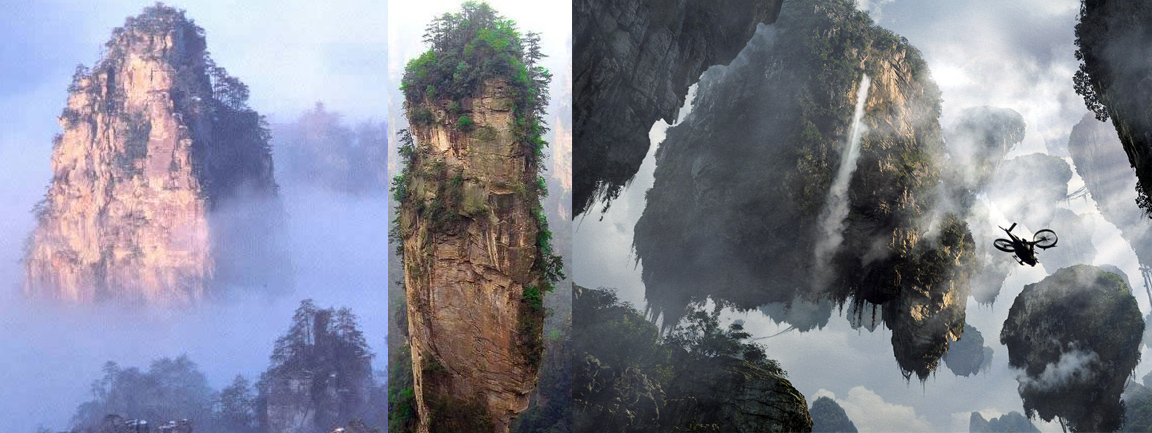
A few days back we posted a story about how the Chinese city of Zhangjiajie, located in the southern Hunan Province, had renamed a mountain in the region after the blockbuster film Avatar, which is said to have found inspiration in the nearby landscapes. Now, according to ABC News, officials from the city are back peddling, denying that they changed the name at all, following online backlash over the affair.

Earlier in the week it was reported that a ceremony was held on Monday to officially rename a local peak formerly, known as “Southern Sky Column”, to “Avatar Hallelujah Mountain”. According to local oficials, a Hollywood photographer was in the area back in 2008 taking photos of the mountain, and those images would go on to inspire director James Cameron to create the floating mountains that wowed audiences in the film.

As word of the name change spread across China however, there was an outcry amongst the citizens there. The local government officials in Zhangjiajie were accused of being greedy and too accepting of western culture when they hastily renamed the mountain after the movie, which has been extremely popular with Chinese audiences.The choice to rename th e mountain was so unpopular in fact that an online poll logged a vote of 54,619 against the move, with just 5,897 in favor.

The sudden change in heart also signals a shift in the city’s tourism plans as well. Local guides were already offering “Avatar Pandora Tours”, but considering the public outrage, it seems the region will have to rethink their marketing strategy.

Remote Places: the Nanda Devi Sancturary, India

Travelers have always been drawn to remote places. There is an undeniable lure to visit distant lands seldom seen by others. To trek through beautiful, untouched landscapes that allow us to escape the distractions of modern life, and get in tune with nature.

One such remote destination is the Nanda Devi Sancturary, located deep inside the Garhwal Himalaya of northern India. The lands surrounding the Sanctuary were established as a national park in 1982 and a UNESCO World Heritage Site six years later. The region is nearly 400 square miles of rugged wilderness that is renowned for its mountain meadows lush with wildflowers and diverse wildlife that includes the Asiatic black bear and the elusive, almost mythical, snow leopard. And while the entire park is remote, the Sanctuary itself takes it to an entirely different level.

Surrounded by a ring of mountains, ranging from 19,700 to 24,600 feet in height, it is a serous challenge just to get inside the Sanctuary itself. These incredibly steep and rugged peaks form a wall that is nearly impassable. In fact, they kept out all trespassers until the famous explorers Eric Shipton and H.W. Tillman found their way in through the Rishi Gorge in 1934, ending a fifty year search for an entrance. Once inside, they were greeted with breathtaking views of the Uttari Rishi and Dakkhni Rishi Glaciers, a sight never looked upon by human eyes before.

At the very heart of the Sanctuary is Nanda Devi itself, a twin-peaked mountain whose name means Bliss-Giving Goddess. Renowned for its beauty, legendary mountaineer Willi Unsoeld went so far as to name his daughter after the peak. The 25,643 foot mountain is considered to be one of the jewels of the Himalaya, attracting top climbers from around the globe who come to challenge their skills on the rocky prominence which was first conquered in 1936. While not as high as Everest or K2, Nanda Devi consistently makes the list for favorite mountains amongst climbers.

The Sanctuary is also a popular destination for trekkers who want to explore the unspoiled wilderness of the park. Popular trekking routes run along the same path that Shipton and Tillman took when they explored the region, crossing through deep valleys and mountain passes. Backpackers can spend anywhere from a few days to a few weeks hiking the area, which is held as sacred ground in the Hindu culture, with the central peak representing the patron-goddess of the local state.

When it comes to remote places, there are few as alluring and stunningly beautiful as the Nanda Devi Sanctuary. Visiting the region isn’t for everyone, but for those that do go, it can be a life altering experience.

Exploring Venezuela’s lost world

We told you about Roraima, the remote and rugged region along the border of Venezuela, Guyana, and Brazil last year. Known for its flattop mountains, called tepuis, Roraima was made all the more famous when it was featured prominently in last year’s Pixar movie Up. Now, U.K. newspaper the Guardian has discovered the allure of the place, posting a story of their own.

Known as the Lost World, Roraima is said to have inspired Sir Arthur Conan Doyle’s book of the same name. Grainne Mooney, the travel writer for the Guardian, was similarly inspired when visiting the place, starting with the wildlife. The lowland areas are teeming with animals, including crocodiles, giant anteaters, monkeys, and capybara, the largest species of rodents in the world.

Eventually, the writer’s attention turned to the mountain itself, which towers more than 9200 feet above the jungle below. The entire trek would take six days to complete, including two nights spent on the flat summit. Beginning in arid grasslands, the hike eventually moves up into humid rainforests, before climbing above the tree line altogether. On top, the mountain seems like another world, and the rocky surface is often described like being on the moon.

Not only is this story a good overview of what it is like to visit Roraima, it offers plenty of insights into current conditions traveling through Venezuela as well. The writer notes that the capital city of Caracas is the most dangerous in the world after Baghdad and with inflation running wild, it is recommended that you exchange your dollars for bolivars on the black market, where the exchange rate is much better.

Seems like visiting Roraima isn’t the only adventure to be had in Venezuela.