Know the limitations of GPS when hiking

There is no doubt that using a GPS has changed the way we travel. Adding one of the little devices to our cars allows us to navigate effortlessly to our destinations and has all but eliminated our need to carry road maps or stop off at the local gas station to ask for directions. That same technology can be of benefit when we leave the vehicle behind and hit a hiking trail as well, although hikers should be aware of the limitations of their devices, and be prepared to use their common sense and good judgment when employing such a device.

Hand held GPS units are very common and inexpensive these days. Most are small, light weight and battery operated, allowing them to be dropped into your backpack when you head out for the day. They generally offer such features as trail maps, suggested points of interest, and topographical data, all of which can be helpful for finding your way in the backcountry.

But unlike GPS devices in our cars, our hand held units don’t do “turn-by-turn” navigation while out in the wilderness, mostly because there are no clear cut roads or landmarks that can be used in the same fashion as when we are on the streets, and natural obstacles can abound. Hikers are instead provided with a general indication of where their destination is from their current position in an “as the crow flies” fashion, and they are forced to navigate to that destination themselves. When doing so, they’ll generally take advantage of the GPS’s built in electronic compass and topographical information to assist them, but more importantly, they’ll need to constantly survey the terrain, adjusting their course as needed, in order to reach their end point successfully.
Speaking of terrain, it can also have a direct impact on the performance of your GPS device while hiking. In order to find your location, you’ll need a clear view of the sky overhead, and that works fine when you’re in a wide open field. But many trekkers have found their hand held GPS can’t connect to the orbiting satellites when they are under a thick canopy of trees or deep in a canyon or gorge where the sky is obscured by the rock walls. It is important to know how your device will perform on the trails that you’ll be hiking so as to avoid a surprise that may leave you lost in the woods and without alternative methods of find your way.

The battery life of our hand held GPS units are also a cause for concern, as they can chew through a full charge in to time at all if you’re not careful. That means you’ll need to carry more batteries in your backpack, which hampers the portability of the device to a degree. And should you run out of juice while on the trail, then your expensive electronic toy becomes useless. Make sure it is fully charged before heading out, and that you’re aware of how long the batteries last under typical conditions. Also keep in mind that cold weather will have an impact on battery life as well, often reducing run times dramatically.

Most of this isn’t new information of course, and experienced hikers have learned that a GPS can be an invaluable tool. However, they’ve also learned not to become overly reliant on the devices, preferring instead to continue to use the time tested skills of reading maps and compasses to find their way. Those skills are enhanced however by being able to turn on the GPS, take some quick readings to find your bearings, plot your course on the map, and set out for your destination, returning to the GPS from time to time to ensure that you’re still on course and making adjustments as necessary.

Despite some of these drawbacks to the use of a hand held GPS, they can be quite a powerful addition to anyone’s mandatory gear list. They are an excellent navigational tool, as long as the person using it is familiar with both the strengths and limitations of such a device. Finding our way in the backcountry has never been so easy, and we’re definitely safer than ever while on the trail.
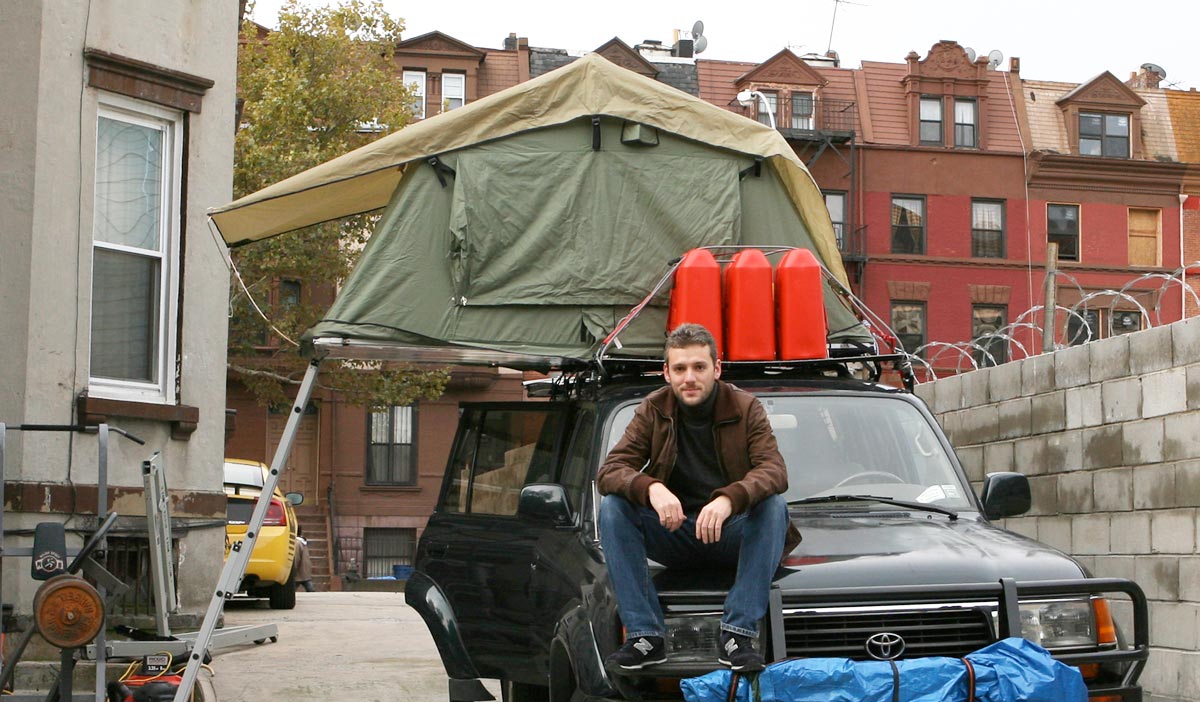
Trans World Expedition: Driving around the globe

In a little over two weeks time, on November 15 to be exact, Nicolas Rapp will be setting out on an adventure of a lifetime. He’ll be quitting his comfortable job as an art director for the Associated Press, and setting out on a year long road trip, driving his way around the globe.

Nick’s route will begin and end in New York City. First, he’ll head south into Mexico, continuing down through Central and South America. Eventually he’ll ship his vehicle by boat to South Africa, where he’ll turn north and drive his way to Europe, before turning east across Asia. From there, he’ll once again ship his vehicle, this time across the Pacific, where he’ll then complete his expedition by driving across the U.S. back to New York City. You can review his entire route on his website by clicking here.

In order to complete this type of long distance driving journey, the intrepid traveler had to select the perfect vehicle. Nick elected to go with the Toyota Land Cruiser, which seems like the most logical choice. The rugged and powerful 4×4 is used all over the planet, which means finding parts for it should be easy, and it will perform well in nearly any type of terrain. In preparation for the journey, Nick upgraded the suspension, reinforced the bumpers, added a roof rack, and installed a storage system for all of his gear. He also added a rooftop tent to the vehicle which will give him a comfortable place to sleep each night, saving him money on accommodations as he goes.

Nick budgeted $46,000 for his year long adventure, which includes all of his supplies, costs for shipping the land cruiser, while flying himself, and a fund for emergency repairs. He’s also had to get a battery of vaccinations, as well as a number of travel visas, maps, and guide books as well. He admits that sticking to his budget will be one of the challenges along the way.

Fortunately for us, we all get to follow along with Nick on this journey. He’ll be posting updates and stories from the road at his website located at TransWorldExpedition.com. You can head over there now and read about his preparation for the trip and his final thoughts in the days leading up to the journey.

Good luck Nick! Enjoy the ride!

Dutch teen denied chance to solo circumnavigate the globe, for now

A few months back we posted a story about 13-year old Laura Dekker, who was hoping to become the youngest person to sail solo around the world. At the time, the Dutch government stepped in to prevent her from making the journey by placing her under the care of child protection authorities while they reviewed her qualifications to make such a journey. Yesterday, a judge ruled that they felt that she lacked the experience necessary for circumnavigating the globe, and that Laura should remain under the supervision of the Council of Child Protection for the foreseeable future.

The decision isn’t a total loss for the now 14-year old girl. Her case will come up for review again next July, when it is quite possible they will rule in her favor and allow her to set out on the voyage. In the meantime, she’ll work hard to polish her skills under the tutelage of her father, who is an expert sailor himself. The judge also said that they felt that the teen was mentally prepared for the trip, but that they still had concerns about security and safety issues.

Laura’s parents are separated and seem to be split on the young girl’s adventure as well. Her father feels that she is more than prepared for the months at sea alone, but her mom has her doubts, and has gone on record as saying that she is too young to set out on her own.

This is just the latest in a growing trend of teens embarking on dangerous adventures so that they can claim the right to be called the youngest to have achieved one goal or another. Personally, I applaud the Dutch Government for taking a stand on this issue. While Laura may very well have the technical abilities necessary for long distance sailing, that doesn’t mean that she has the life experience necessary to deal with all the potential adversity she could face while at sea. Besides, if she just wants to make the journey, and it isn’t about achieving some record, then where is the harm in waiting a few more years? Does anyone else think that it’s wrong for someone this age to set out on such a dangerous voyage?

Cycling the Silk Road

Cycling tours have become increasingly popular in recent years, especially amongst adventure travelers who are looking to explore the world from the seat of their bikes. One of the leaders in organizing these kinds of adventure cycling trips has always been Tour d’Afrique Ltd, the creative minds behind such epic rides as their namesake Tour d’Afrique and the Vuelta Sudamericana. The company has even launched a website called DreamTours that allows us to design and plan our own cycling adventures, leaving all the logistics to their travel experts.

As if that wasn’t enough to keep us happily peddling our way around the globe, the Tour d’Afrique team is busily preparing for another long distance ride for 2010 that will cover the entire Silk Road, starting in Istanbul, Turkey and ending in Xi’an, China. The ride will cover more than 6650 miles over 16 weeks time, crossing through Iran, Turkmenistan, Uzbekistan, Kyrgyzstan, and Tajikistan, as riders follow one of the most famous and important trade routes of all time, a route that was also explored by such historical figures as Alexander the Great, Marco Polo, and Genghis Khan.

Some of the highlights of the journey will include passing through an amazing variety of landscapes, from including snow capped mountains and desolate open plains. Travelers will get the opportunity to camp below sea level in the arid deserts of the Xinjiang Province in western China, while also ascending to dizzying heights as they climb along the Pamir Highway in Tajikistan, which rises well above 15,000 feet, offering a challenge for both the heart and the legs. The ancient cities of Samarqand, Bukhara, and Merv will be stops along the way as well, offering refuge from the road and a chance to explore marketplaces that have been bustling with shoppers for centuries.


All told, this cycling tour will put riders in the saddle for a total of 92 days, covering an average of roughly 70 miles per day. There will also be 22 rest days, and one day of travel by ferry across the Caspian Sea, bringing the total number of days on the Silk Road to 114. That’s quite a commitment for any traveler, but fortunately the route is broken down into seven stages, so even if you can’t make the full ride, you can still have the opportunity to experience part of the adventure by riding one of those sections instead. The cost for the full trip is €8500, but the company is currently running an early-bird special that cuts €400 from the price when you book the trip before November 15th. Pricing for the individual stages can be found on this web page near the bottom.

The Silk Route Tour is an amazing cycling tour that combines culture, history, and adventure into one spectacular trip that is sure to be a life altering experience. The ride gets underway on May 22nd of next year, so get training now and prepare to join in on this once in a lifetime experience

Racing on foot through the Sahara

Last Sunday, an incredible endurance event got underway in Cairo Egypt, when the 2009 Sahara Race began. The 155 mile event pits 130 runners from more than 30 countries against one another in a six-stage race through the heart of the Western Desert, a part of the Sahara that covers more than 1.7 million square miles along Egypt’s borders with Libya and the Sudan.

Over the past few days, the runners have covered a variety of challenging stages ranging in length from 21 to 28 miles. In a sense, they are running a marathon each day, through the sand and heat of one of the hottest and driest environments on the planet. Along the way they passed through three or four mandatory checkpoints along the way, collecting water as they go. Upon completing the day’s stage, they camp in the desert for the night, resting up, and preparing for another run the following morning.

Today’s stage is the longest and most grueling however, with a 54 mile course dubbed the Black Desert March. The runners got underway at 4 AM this morning, and many will continue well into the night before they reach their next camp. If they complete the stage, they’ll finish up on Saturday, with a short run to the finish line at the Great Pyramids in Giza, capping the week’s events.

The Sahara Race is part of the 4 Deserts series of Ultramarathons, each of which take place on an annual basis. The other three events are held in the Atacama Desert of Chile, the Gobi in China, with the final race taking place in Antarctica, the largest desert on the planet. Each of the races offers its own unique challenges, pushing some of the world’s best endurance athletes to their limits in races against themselves and the environments around them.