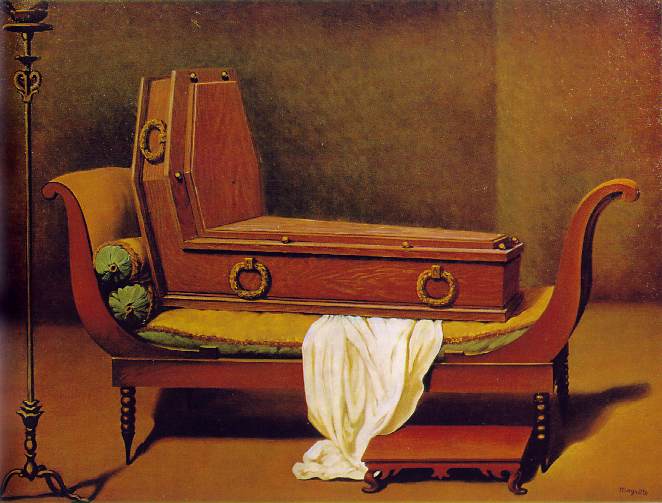
If you’re going to your eternal rest in the Eternal City, you should go in style.
Sure, you can’t take it with you, but you can show off what you had, and with all the competition in this place you have to do something special to make an impression. Rome is filled with grandiose monuments to the dead. First there are the giant tombs and temples of the Roman emperors. They were worshiped as gods, so they always got a nice sendoff. The most famous is the mausoleum of Hadrian, a giant circular building by the River Tiber. It was so splendid that the Popes preserved it and expanded it with additional stories and fortifications before renaming it the Castel Sant’Angelo. Just a cannon shot away from Vatican City, it proved a convenient bolthole for the pontiff back in the days when he ran the Papal States, an independent nation in central Italy, and warred with his neighbors. It saved Pope Clement VII when Charles V sacked Rome in 1527. Neither Rome nor the Vatican had great defenses, but the Castel Sant’Angelo proved too much for the invaders. It’s not often a mausoleum saves lives! While it’s not one of the ten toughest castles in the world, it is an impressive tomb/fortification all the same.
Then you have the early Christians with their miles of catacombs, and the churches filled with saint’s relics. More on those in two later installments in this series. There are so many tombs and monuments both pagan and Christian that sometimes it seems Rome is dedicated to death. The city even has a Purgatory Museum.
The Renaissance was a golden age of church building. Italy, while still divided into several different nations, was a rich place. Seagoing merchants dominated the lucrative trade in the Mediterranean, and the Pope’s coffers were full from tithes and donations. Much of this money went to sponsor the great architects and artists of the age. These talented men built lavish churches and adorned them with giant paintings. The rich and powerful vied for one another to be buried in the most prestigious churches, and they commissioned tombs to match the glory of the buildings.
Every Renaissance church in Rome is filled with these masterpieces of funerary art. Marble bishops lie in state flanked by angels. The walls are adorned with paintings of noblemen surrounded by reminders of life’s brevity–skulls on wings, hourglasses, and the grim Reaper with his scythe. Even the floors are covered in tombs. Most are smooth flagstones, but on some floor tombs bishops and cardinals had their likenesses carved in bas-relief. While these are not the most impressive of the graves, they’re perhaps the most poignant. Centuries of visitors have walked over them until their features have blurred beyond recognition, and their epitaphs have been lost. These powerful clergymen, respected and feared in their time, have all but melted away.
The Funeral Service Institute of Vienna is responsible for most of the city’s undertaking. They will cremate you, find you your ideal coffin or even have you turned into a diamond. Whatever your needs after death may be, they can probably accommodate you.
They also happen to have a museum, which is open to the public but viewable by appointment only. I would highly recommend making an appointment, as you’ll get a €4.50 personal tour (€2.50 for larger groups) from the museum’s delightfully enthusiastic curator, Dr. Wittigo Keller. The exhibit is truly fascinating. From their funeral customs to their beliefs about death, the Viennese have an intriguing cultural perspective on the big sleep.
There is currently very little English-language information available about the Museum of the Funeral Service Institute of Vienna, so I’m delighted to be the first to take you on a virtual tour. Let’s start with the sitting-up coffin above.
%Gallery-88625%The Sitting-Up Coffin
Jacques-Louis David famously painted this portrait of Madame Récamier, then this coffin to go around her. Keller, the curator of The Museum of the Funeral Service Institute of Vienna (FSIV), created this coffin for a European funeral fair (which happens every three years). “It’s not practical,” he noted. Bodies must legally be buried six feet underground (below the freezing line), so one would have to dig several feet deeper to bury this coffin. Still, for the right price, he could says they could make it work.
The sitting-up coffin was one of the first things we saw at the museum, and it set the stage for an intellectual and curious look into death, rather than one filled with dread. The initial willies were shaken off, and we began discussing the new trend of creating diamonds out of the deceased’s ashes.
Diamonds Made of Dead People
You may have heard of LifeGem or another company which does this. People have been making diamonds synthetically for years (all you need is carbon, heat and pressure), and making a diamond from someone’s ashes, to some, is a beautiful way to give them metaphorical “eternal life.” Most diamonds created from human ashes are light blue, due to the chemicals in our bodies, but in the cases of people who’ve been through extensive medical treatments, the color can be different. Some companies will add chemicals post-mortum and allow you to make the diamond any color you like, but the FSIV doesn’t do that. Keller reports that it takes about 8 months to turn human ashes into a diamond, and the price for a quarter carat is about €4,680 (€14,440 for a full carat). It’s something to think about, because unless you put your desire to become a diamond in your will, your loved ones probably won’t come up with the idea.
Wearing Grandma’s ashes in a diamond necklace isn’t really any stranger than keeping her on the mantle.
Funeral Fashion
Next, we headed into a room filled with black outfits for all the various officiants in historical Viennese funerals. In addition to black, funerals in Vienna could feature red paraphernalia for military men, and for children, youths and anyone unmarried, much of the black regalia would be light blue. Keller joked that a light blue funeral meant that you were “a complete loser in this life and the next,” and added that if you’re not married, you’d best not die in Vienna.
From about 1850 to about 1930, what mourning women wore to funerals in Vienna was an extremely important matter. Every October, newspapers would publish what the proper style for funerals would be that year, and if women were spotted in last year’s style, it reflected very poorly on them and their families. Naturally, it became possible to rent the appropriate dress to wear to a funeral — in fact, this is still practiced in Vienna. Just as you might rent a gown for a ball, you can rent a mourning dress for an important funeral. Jewelry was also regulated by the annual October announcement, and Keller says that this was actually the origin of costume jewelry.
After Death Certification
Next, we headed into a room of what Keller called “rescue alarm clocks.” Production of these began around 1854 when there was mass hype about the possibility that you could seem dead and be buried, and then suddenly wake up — buried alive. There were many, many different contraptions you could purchase to prevent this horrifying fate. For example: the double-sided knife, which specially licensed doctors would stab into your heart to ensure that you were dead (you can still request this, and he says old ladies in particular sometimes do, €300), known as “after death certification.” Another rescue alarm clock was quite literally an alarm, which he demonstrated for us:
That rope would have led from a coffin directly into the dining room of the cemetery-keeper. That’s a dinner party foul.
Cultural Differences
Next, we looked at some antique children’s funeral toys, which really confused me at first. Basically, Keller explained, a funeral is viewed like a wedding, or any other important passage, and children must be taught how to behave before they can attend. So, from a very young age, children would be given funeral toys to play with so that they could learn the proper procedures and not be afraid.
On the whole, death in Vienna is regarded as a far less scary affair. Perhaps it’s because of the toys, or perhaps it’s because Austrians save money — some their whole lives — for their funerals. Farmers would buy their coffins during a good year when they had the cash and paint it to match their furniture, then use it as a bookshelf or wardrobe until they, you know, needed it. Having a savings account for your funeral or a coffin in your living room probably helps you get used to the idea of dying. “Old Viennese folk songs are all about wine and death,” said Keller. “Death goes with you to the wine tavern and follows you home at night; it’s your best friend.”
The funeral is regarded as a festival, a goodbye party. People save their whole lives to throw a good one, so that they will be remembered for that last great party they gave. “You should tell people they can learn to die in Vienna,” said Keller with a cheeky smile.
Final Details
As I mentioned, you can only visit the Museum of the FSIV by appointment, so to make one, call 501-95-4227 (country code 43) or ask your concierge. If your German’s pretty good, you can get more information here on the website. Alternatively, if you should happen to be in Vienna on the Long Night of the Museums (the first Saturday in October, when museums stay open late), you can test out the coffins. Literally. They’ll put you in a coffin, close it, and leave you there until you knock. According to Keller, last year, 1,500 people did just that. The oldest was an 88-year-old woman. “The girls are much braver than the boys,” he noted cheerfully.
My visit to Vienna was sponsored by the Vienna Tourist Board and Cool Capitals, but the opinions expressed in the article are 100% my own.
A few days ago, Kraig wrote about the three hikers lost on Mt. Hood. At the time of his post, one of the hikers had been found dead. The other two were still missing. Almost a week after they set out on their climb, they are still missing and most probably are dead. Because of this tragic situation, the question of who foots the bill for rescue efforts has come up once more.
Back in 2005, then Gadling blogger Erik Olsen wrestled with the question about who should pay–the lost hiker who hopefully is found–or tax payers? Olsen’s musings came about after a hiker hurt his ankle while hiking in Colorado. Several fire departments rescued the hiker after he spent a night on the mountain. The sticker price for the rescue was $5,000. In this case, the fire departments wanted the hiker to pay.
Usually, the people who are getting rescued don’t pay anything. But is that fair? Rescue attempts can be pricey. Consider this: From 1992 to 2007, the U.S. National Park Service spent $58 million on search and rescue efforts.
This recentNewsweek article echoes some of Erik’s points. As the article highlights, the hard economics question of who should pay for rescue attempts has as many facets to consider as it always has.
While one might say that people who take risks by heading up a mountain top or straying off a path should pay up once he or she is found, there are other factors to keep in mind.
One is a concern that people may avoid calling for help until it’s too late out of fear for what a rescue attempt might cost.
Some risks are unknown. A beautiful sunny day could go sour if the wind shifts, for example. Should people be punished when nature is at fault?
A large portion of rescue attempts are made by volunteers, therefore the cost is curtailed.
When fire departments and military units are part of rescue efforts, they often have hours to log towards rescues. A real live rescue helps them meet their quota.
Sometimes a rescue attempt may be launched even though the hiker is not in danger. A seasoned hiker may be holed up somewhere waiting for more favorable hiking conditions while a family member is frantic with worry.
With the knowledge that lost hikers are part of the outdoor scene, being financially proactive seems to be the best approach for handling costs before they occur. Colorado, for example, collects a small portion of the money from state recreational fees to put into a fund that is earmarked for search and rescue.
In Alaska, people who are mountain climbing up Mount McKinley pay $200 for the privilege.
Although planning for a tragic situation is never pleasant, it seems that in this case, planning ahead for the ” just in case” is sound. Otherwise, at the worst possible moment, people will be faced with the question, “How much is a life worth?
The LA Times recently linked to a tool on the US State Department website that allows you to search by date range and country to find out where around the world Americans have died of “non-natural” causes.
The information goes back to 2002. No names or details of the deaths are disclosed, they are only reported as suicide, drowning, drug-related, homicide, disaster, or vehicle, air or maritime accident, and listed according to date. The disclaimer on the site states that the stats may not be entirely accurate however, as they only represent those deaths disclosed to the State Department.
So can this tool tell you where you should or shouldn’t go based on your likelihood of drowning, getting into an accident, or being killed as a tourist there? Not really. Circumstances of the deaths are, of course, not disclosed and there is no distinction between expats or people who have lived in the country for many years and those who are tourists visiting on vacation.
Even countries with high numbers of deaths shouldn’t automatically be crossed off your list. Mexico, for example, lists 126 American deaths in 2009. 36 of those were homicides. Sounds like a big number, but not as big compared to the 2.6 million Americans who fly to Mexico every year. As the LA Times points out, “the odds overwhelmingly suggest that your vacation will be nonfatal.”
Venice is dying. At least, according to Newsweek it is. The population has been shrinking so rapidly (it dropped below 60,000 this year) that the mag predicts there won’t be a single full-time resident in the city by 2030. A city that sees millions of visitors per year, an average of 55,000 per day, won’t be home to a single person. Yeah, I’d call that a dead city.
To draw attention to the issue, residents of Venice have organized a mock funeral in which three gondolas will pull a red coffin through the city’s canals on Saturday, November 14th.
In addition to the flood of tourists who make the city nearly unlivable during summer months, other factors such as increasing home prices and a shrinking tax base, have combined to result in the mass exodus of long-time Venetians.
One of the organizers of the “funeral” says this doesn’t have to be the end though. He hopes that by drawing attention to the issue, some of the problems can be addressed and new citizens will be lured to Venice. “It might be the beginning; it could even spur a rebirth. Now we just have to create a Venice [people] will want to stay in. We have to give them a reason not to leave.”