Traveler Q & A: Pavia Rosati

Pavia Rosati is the founder of Fathom, a recently debuted travel website. Fathom is smart and beautifully designed. It’s full of exciting short briefs about various destinations across the globe.

Rosati, as you’ll see from her answers below, is an experienced editor and an avid traveler. Her enthusiasm for Fathom’s subject matter is palpable and infectious. We love Fathom and can’t wait to see how it’s going to develop.

Q: Good day, Pavia Rosati, and welcome. How would you describe your occupation?

A: I am the founder and CEO of Fathom, a new travel website. It’s my job to help connect you to places and experiences you didn’t know you were going to love.

Q: Tell us about Fathom.

A: Fathom cuts through the clutter of the online travel space with stories and destination guides that are as practical as they are inspiring. People typically go to a travel website for one of two reasons: They know they’re going to London, and they need to know where to stay and what to do. Or they think, “I have two weeks off…I like nature…Where should I go?” Fathom addresses both needs through two main sections: Guides and Postcards. Guides have quick information about the basics: hotels, sites, restaurants, and itineraries. Postcards are inspiring travel stories organized around the passion points of travel with a “I Travel for the …” theme: I Travel for the Food, I Travel for the Thrill, I Travel for the Kids. We aren’t motivated by what’s expensive or what’s trendy. We’re interested in what’s special and what’s awesome. Sometimes that’s a three-Michelin star lunch at Le Meurice; sometimes it’s a five-euro falafel at L’As du Fallafel.

Q: What are you trying to do with Fathom that hasn’t been done by other travel sites?

A: I wanted to create the one-stop travel website that I could never find. You know how the best travel guide is the email you get from a friend who lives there, detailing what you need to do and know? That’s the spirit that motivates us. I used to spend 80 hours researching dozens of sites to boil my findings down to an essential nugget of information. Fathom aims to deliver that nugget. I don’t want to wade through a list of 200 shops in Buenos Aires; I want 20 that are amazing. I want to know what locals know. I want pre-edited links to the best articles, websites, and online resources. Perhaps most importantly, Fathom recommendations are not driven by a mega travel agency’s vast and impersonal database; our recommendations are personal and special.

Q: How do you anticipate Fathom developing? For example, will the city guides grow in number?

A: Absolutely. It’s a big world, and we want to get everywhere. Postcards are updated continually, and we will launch several new guides every month. Reader feedback will be critical: We’ve had a lot of requests for Amsterdam since launching, so look for that soon. We want more Postcards from Fathom readers, a community we call the travel-proud. This fall, we’ll launch Boutique, with our favorite travel products; Traveler Profiles, based on the popular Fathom Questionnaires; and My Itineraries, so readers can save the places they want to go.

Q: How did your decade at Daily Candy prepare you for this endeavor?

A: First and foremost, it’s where I met my partner, Jeralyn Gerba, Fathom’s editorial director. We had one priority at DailyCandy: We had to delight our readers every day. To achieve this, we had to be trustworthy, we had to recommend quality places, and we had to deliver information readers wanted in a way they wanted it. And it helped if we had a great time doing it. These are excellent editorial priorities. By the way, before DailyCandy, I spent four years running the Entertainment Channel at AOL. That taught me a thing or two about building and serving a big audience.Q: Enough shop talk. When you’re not traveling, you split your time between New York and London. Care to share a secret hometown place or activity in either metropolis?

A: My life tends to revolve around what’s in front of me at the dinner table. In New York City, the bar at Tocqueville feels like a hidden escape, and breakfast at Balthazar feels like homeroom. At the end of the day, I always want to eat everything on the menu at L’Artusi. In London, I love Del Parc in Tufnell Park (of all places!), where two men cook and serve delicious Spanish/North African small plates from a closet-sized kitchen in the middle of the tiny dining room. And I love Moro, but who doesn’t?

Q: What are your favorite places to travel?

A: Sometimes I travel to feel familiar in a foreign setting. I could spend every weekend at Lo Scoglio on the Amalfi Coast and never tire of it. Similarly, I lived in Paris in college, and going back is like visiting an old friend. Other times, I travel for the difference and the discovery. Recent revelations include desolate and dramatic Salta, in northwest Argentina, and Sri Lanka, where I spent an incredible day on Taprobane Island. I loved Syria, and I hope it can recover from its political tumult and be the great country it should be.

Q: Where are you planning to travel next? And where are you dying to go?

A: Oh, the never-ending list. The wish list for the next few months includes Lake Austin Spa, Bighorn Revelstoke, Cartagena, and Portugal’s Douro Valley. I was married last year and am hoping for an eventual honeymoon in Chile. It’s my great embarrassment that I’ve never been to Southeast Asia — Indonesia, Vietnam, Laos, Cambodia. Zambia. Shanghai and Hong Kong. I’m obsessed with the Canadian Maritime Provinces. And in case my husband reads this, yes, honey, I’m dying to go to Tokyo, too.

Q: Where do you have no interest in ever visiting?

A: Cuba. I think I missed it. Though if an opportunity presented itself, of course I’d go. I’m curious about everything.

Q: Give us a travel tip or secret. Or five.

A: 1. Never eat airplane food. 2. You won’t use 50 percent of the stuff you’re packing, so leave it at home. 3. Find a local market to get a real flavor for a place. 4. It’s easier to go away than you think it is. And it’s always worth it. 5. I watch the sunrise on the last morning of every trip I take. I’m not suggesting that you do this; I am suggesting that you invent a travel ritual that you can share with yourself everywhere you go.

Q: What’s next for Pavia Rosati?

A: More sunrises in new places, and sharing them on Fathom.

Did you enjoy this Q&A? Check out previous Gadling Q&As with travelers like Jodi Ettenberg, Zora O’Neill, and Philippe Sibelly.

[Image: Jimmy Gilroy]

Top ten most crowded islands in the world

From an island microslum in Colombia to a haute enclave in central Paris, the ten most crowded islands in the world bear scant similarities in class or culture. In fact, every entry in the top ten comes from a different country. But being islands, each shares the common thread of scarcity – whether it be land, resources, or housing. In general, these islands are prophetical microcosms for an overcrowded earth – finite spaces where self sufficiency governs and demand pierces supply.

With the world’s population racing higher and higher, and the “megacities club” accepting new members yearly, some day the earth could bear the traits of one of these densely packed islands.

%Gallery-127866%

10. Vasilyevsky Island
Location: St. Petersburg, Russian Federation
Population: 202,650
People per square kilometer: 18,592
Size: 10.9 square kilometers
Story: This island located in St. Pete is a collection of 18th and 19th century buildings with some Soviet built apartment blocks lining the Gulf of Finland on the western shore. The communist housing ethos of the twentieth century called for rows and rows of tight apartments, and this historic island in Russia’s second city was not immune to the sprawl. This created the compact quarters of Vasilyevsky island. Famous for its old school stock exchange and giant Rostral columns, the island is popular with tourists.

9. Lilla Essingen
Location: Stockholm, Sweden
Population: 4,647
People per square kilometer: 20,204
Size: .23 square kilometers
Story: This small island in central Stockholm once served as a hub of industry for Stockholm’s industrial operations. The easy boat access allowed for ease of shipping by boat, and the island factories manufactured an array of goods, from massive lamps for lighthouses to vacuum cleaners. Eventually, as the industrial applications became outmoded, the island became home to several apartment towers. Today, the island is crammed full of smiling Swedes living in apartments with (presumably) tasteful modern furniture.

8. Île Saint-Louis
Location: Paris, France
Population: 2,465
People per square kilometer: 22,409
Size: .11 square kilometers
Story: Perhaps the most stylish island in the world, Île Saint-Louis is a marvel of 17th century urban architecture and planning. Narrow roads and some of the priciest real estate in the world have allowed the island to remain relatively calm, despite its location in central Paris. While Île Saint-Louis is off of the tourist radar for most, this island in the Seine River embodies the classic Parisian spirit, worthy of an afternoon stroll with a perfect sorbet from Berthillon. The island is named for France’s canonized King, Louis IX.

7. Manhattan
Location: New York, New York
Population: 1,585,873
People per square kilometer: 26,879
Size: 59.47 square kilometers
Story: In 1626, the Lenape Indians sold Manhattan island to the Dutch for a bag of axes, hoes, iron kettles, duffel cloths and other 17th century garb worth about $24 (roughly $1000 in modern value). It is safe to day the island has grown ambitiously from this humble transaction. The center of the financial universe is now home to many – truly a place where the world lives. The island once known as New Amsterdam, and briefly, New Orange, shadows America’s story, both tragic and triumphant.

6. Salsette Island
Location: Mumbai, India
Population: 13,175,000
People per square kilometer: 30,217
Size: 436 square kilometers
Story: Salsette, an island off the western coast of India, is home to Mumbai and its sprawling suburbs. As a poster boy for “New India,” Mumbai is as dichotomous as it gets, at once the wealthiest city in south Asia and also home to one of the world’s largest slums – the notorious Dharavi. Dharavi is an island within an island, a super-slum with roughly one million people spread out over an area less than a square mile. At the other end of the spectrum, Salsette Island is also home to extreme wealth. The house known as Antilla is a 400,000 square foot giant that towers with some of Mumbai’s tallest buildings. Truly a contrast from the squalor in Dharavi, the private residence houses six people, can accommodate 168 cars, has 9 elevators, and an ice room with snow flurries.


5. Ebeye Island
Location: Marshall Islands
Population: 15,000
People per square kilometer: 41,667
Size: .36 square kilometers
Story: When the United States decided to test nuclear weapons in the South Pacific, they chose to do so amongst the atolls of the Marshall Islands. U.S. officials uprooted many residents from Bikini Atoll and Enewetak Atoll to insure that the testing did not directly harm human life. The relocated Marshallese had to move somewhere, and most moved to Ebeye under the assistance of the United States. This forced relocation caused a huge mess, including a severe housing shortage and land owner legality issues that persist today. The combination of factors created an environment of hostility and squalor, creating the slum of the South Pacific.


4. Malé
Location: The Maldives
Population: 103,693
People per square kilometer: 53,121
Size: 1.952 square kilometers
Story: The Maldives is one of Asia’s top tourist destinations, with 26 atolls and 1,192 islands offering beach perfection. At its center is the capital city – Male. Male is a humbly sized island of just a couple square miles. It is stuffed full of people, hotels, mosques, and office towers that efficiently utilize the scare land resources. While landfills have reclaimed some land from the sea, most progress is made vertically rather than horizontally. The modern downtown island in the middle of the Indian Ocean is a stark aberration from the deserted islands that dot most of the Maldives.

3. Ap Lei Chau
Location: Hong Kong
Population: 86,782
People per square kilometer: 66,755
Size: 1.32 square kilometers
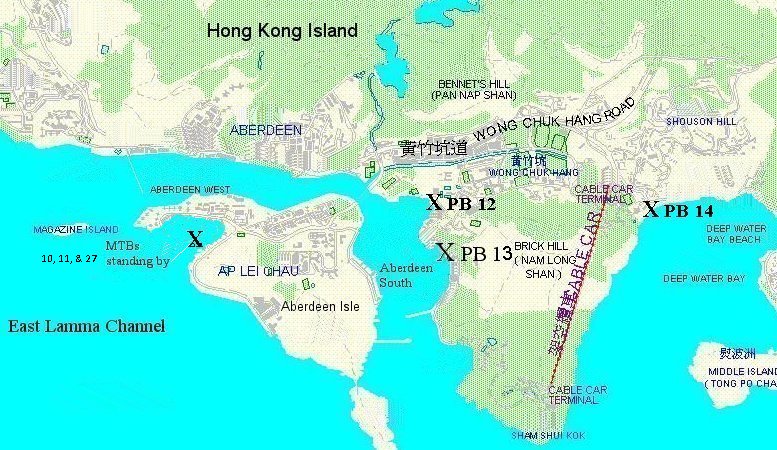
Story: Hong Kong is the land of a thousand towers, clustered most densely on the island of Ap Lei Chau just southwest of Hong Kong Island. Ap Lei Chau served as the settlement for Hong Kong Village, theorized to be the etymological source for the famous larger territory of Hong Kong. Strangely, Ap Lei Chau translates to Duck Tongue Island, said to be named for the island’s shape. It is filled with high rise residences and even a winery.

2. Migingo Island
Location: Kenya, though Uganda disputes this
Population: 400
People per square kilometer: 100,000
Size: .004 square kilometers
Story: This bantomslum in the middle of Lake Victoria is a fishing village perched precariously on half a sphere of rock. The residents take in large hauls of the Nile Perch – a poster boy for River Monsters that can grow to a comedically large size. Migingo is famous for a decades-old dispute between Kenya and Uganda over the sovereignty of the small island. There is even a facebook page where individuals can “like” declaring the island Kenyan. (The page has twice as many followers as there are residents on Migingo.) Uganda agrees with this claim, most of the time, though the tiny rock island is not the issue – the fishing rights are.

1. Santa Cruz del Islote
Location: Colombia
Population: 1,247
People per square kilometer: 124,700
Size: .01 square kilometers
Story: The most densely populated island in the world is a microslum off the coast of Colombia. This tropical island is located in the emerald waters of the idyllic Caribbean, though is packed so tight that most activities are done off island. Schooling, football, graveyards, and work all take place away from Santa Cruz del Islote. The island park is the size of a small tennis court, and fresh water must be shipped in by Colombian Navy ships. Santa Cruz del Islote also does not have electricity. What the island favela does have is people, lots of them. To visit the world’s most packed island, hop on a ferry from Tolu, Colombia. The nearby hotel of Punta Faro can arrange tours of the island.

All unattributed images from wikimedia commons

Gallery: More travel sketches from BBC’s Tim Baynes


We wrote yesterday about Tim Baynes’ delightful travel sketches from around the world on BBC and liked them so much we came back for more. You can (and should!) get lost for hours looking at his drawings on Flickr with fun anecdotes and scribbles bringing depth and humor to his slice-of-life artwork.

Check out some of our favorites in the gallery below, from a look inside the BBC Starbucks to the madness of Dubai immigration during the ash cloud to a quiet barbershop in Tripoli.

%Gallery-123931%


See more of Tim Baynes’ work on the BBC, his personal Flickr stream, or order a copy of his book Doors to Automatic and Cross Check, direct from the artist.


All photos courtesy of Tim Baynes.

Pop-up restaurants: dining for a new decade

First, it was underground supper clubs. Now, everything’s coming up pop-ups. As with food trucks, this form of guerrilla cheffing borne of economic need has become a global phenomenon. Equal parts dinner party and dinner theater, a pop-up refers to a dining establishment that is open anywhere from one to several nights, usually in an existing restaurant or other commercial food establishment.

The impermanent nature of pop-ups means no real overhead or utilities, and little food cost and labor. They’re not enough to sustain chefs financially, but are instead a great way for them to make a name for themselves and draw some income in between (or during) gigs. Pop-ups also give chefs a chance to stretch themselves, stylistically or ethnically, although some prefer to let local ingredients shine. Most pop-ups give props to sustainability by sourcing product from local farms, which is part of what gives these fly-by-night operations such a wonderful sense of place.

I first heard about pop-ups while couch-surfing in San Francisco two years ago (my own pop-up form of survival after relocating back to the West Coast from Colorado). Chef Anthony Myint, the brainchild behind SF’s Mission Street Food pop-up, which started in 2008, was serving much-lauded, locally-sourced dinners Thursday nights, each time with the help of a guest chef. The food was unpredictable with regard to cuisine or style. The location? Lung Shan, a nondescript Chinese restaurant in the city’s vibrant Mission District (FYI, my favorite place for great, usually cheap, eats). I remember thinking at the time, “More, please.”Fast-forward 24 months, and while the pop-up is no more, the venture was so successful, Myint is now co-owner of San Francisco’s popular Commonwealth, as well as newly minted (har) chef at the forthcoming Mission Bowling Club. And Joshua Skenes of Saison, one of Food & Wine magazine’s newly crowned Best New Chefs, started the restaurant as a pop-up.

San Francisco has long been an incubator for innovative ideas involving food, so it’s no surprise pop-ups are, ah, popular there (click here for a recent round-up). Meanwhile, fellow 2011 Best New Chef Jason Franey, of Seattle’s Canlis, has also been getting in on the pop-up. In February, he cooked a one-night gig at “Hearth & Home,” held at one of the city’s Macrina Bakery locations (another tip: if you’re in town, visit Macrina in its own right. Four words: chocolate-orange pound cake).

The pop-up trend–which now applies to boutiques, galleries, clubs, coffee houses, and bars–has gone national. Los Angeles, San Diego, New Orleans, Chicago, New York, Boston, Portland (Oregon), Miami: all popular for restaurant pop-ups. Oakland has seen phenomenal response to its Pop-up General Store, which features a twice-monthly gathering of food vendors held at a catering kitchen. Founded by former Chez Panisse Chef Christopher Lee and his former sous chef Saimin Nosrat (of Berkeley’s defunct Eccolo), the venue features all the deliciousness you would expect when a group of mostly former Chez Panisse cooks and food artisans get together and prepare things to eat.

Pop-ups are even crossing the pond. The New York Times reports that, starting today, Singapore is sending some of its top chefs and a pop-up kitchen on a yearlong trip around the world, with nine stops planned in Moscow, Paris, London, Tokyo, Shanghai, Hong Kong, Delhi, Sydney, and Dubai. Dubbed Singapore Takeout, the goal is to showcase the city’s eclectic, multi-ethnic cuisine. The kitchen is a converted 20-by-eight-foot shipping container. Also hitting the road is chef Thomas Keller of The French Laundry, Ad Hoc, Bouchon, and Per Se. He’ll be featured in a ten-day pop-up at Harrods, London later this summer.

Tip: Due to the nature of pop-ups, the best way to find them is to Google the words, “pop-up restaurant, ____ (city).” You can also go to Pop up Restaurants for news. Get popping!

Watch out, obnoxious passengers! Kung fu lessons for Hong Kong Airlines cabin crew

Working as part of an airline cabin crew can be a tough job, just ask Gadling’s very own Heather Poole. Passengers get drunk, passengers get rude, sometimes even passengers go on strike. Now the cabin crew of one airline are getting trained to strike back.

Hong Kong Airlines staff are taking kung fu lessons, the Guardian reports. The cabin crew is learning Wing Chun kung fu in order to deal with obnoxious passengers. According to the airline, a female cabin crew member has already used her new-found combat skills to deal with an unruly passenger, who an airline spokesman described only as “a fat guy”.

Maybe getting your add kicked at 33,000 feet should be added to our list of Top 10 Hong Kong Experiences.

[Image courtesy Wikimedia Commons]