Getting scammed by quack taxi drivers or phony tour operators is one thing, but when a group of tourists were charged 64 euros ($84) for a few ice cream cones in Rome – well, that’s just sad.
The Eternal City has quite the reputation for con artists. Cafes and bars have been known to have special menus for English-speaking customers that double or even triple their prices. But the Antica Roma bar and gelateria, which is located close to the Spanish Steps, has allegedly sunk to a new low. According to the U.K.’s The Daily Telegraph, British tourist Roger Bannister and his family were “astonished” when the shop charged them 16 euros each ($21) for a round of ice cream cones.
A manager at the cafe confirmed the tourists were charged the outrageous prices, and told the news outlet their prices are posted and the gelati was “worth the money because they were large.” Officials in Rome told the Telegraph these types of scams are “shameful” and “such practices harmed the image of Italy.” Have you ever been victim to a travel scam like this, and if so, what did you do about it?
Travel lists get a lot of grief. I’ve overheard many fellow travel writers offer the opinion that lists of various sorts are deeply inferior to any and all narrative travel writing. Others have suggested that lists are slowly crowding out real travel writing entirely.
C’mon now.
Let’s agree for a few provisional minutes that the purpose of travel writing is, very generally, to inspire people to think about travel. (Why not? This is a good goal, all things considered.) Few genres of writing are better suited to achieving this goal than travel lists – lists of destinations, hotels, beaches, restaurants and so on. A list written by an expert can feel like an extended secret, like an invitation to experience the world differently.
Lists at their best are efficient. They cover key territory and reduce unnecessary noise. They reveal their writers’ passions directly. Are they the ticket to cross-cultural understanding? Not usually, but then very few traditional travel stories, no matter how drenched they may be in self-importance, ever accomplish this end.
Let’s take this past Saturday’s print edition of Guardian Travel as an example of the value of travel lists. The section was full of inspiring ideas in list form – summer holiday recommendations, adventures in south-west England, and cool accommodations on the Isle of Wight. There’s a more bullet-point-like list of upcoming holiday festivals in the UK as well.
The summer holiday recommendations kick off with some exciting suggestions about corners of France slightly off the beaten path, written by Jacqueline Mirtelli of Atout France, the France Tourism Development Agency. Mirtelli suggests Cap Corse, the little-visited peninsula on the northern coast of Corsica, and finishes off her tip list with the inland villages of the Var, a region in Provence. Elsewhere Michael Cullen of i-escape tips the Greek island of Kastellorizo, Simon Wrench of Inntravel suggests the Danish Riviera, and Lucy Kane of Rough Guides lists Tbilisi, Palma and Montenegro as her summer travel recommendations.
In this short round-up piece the excitement of summer travel is infectious and inspiring. There is information here, and more importantly there are multiple jumping-off points for research. Could this sort of generalized excitement be achieved by one longer piece on, say, the Amalfi Coast? I’m doubtful that it could.
Like many absolutist stands that we travel writers get sidetracked into on occasion, the resistance to lists is misplaced. The wholesale replacement of narrative by lists would be a terrible development for sure; shy of that, there’s no need to attack the humble list. There is, however, as always, a need across genres for high-quality versions of all types of writing.
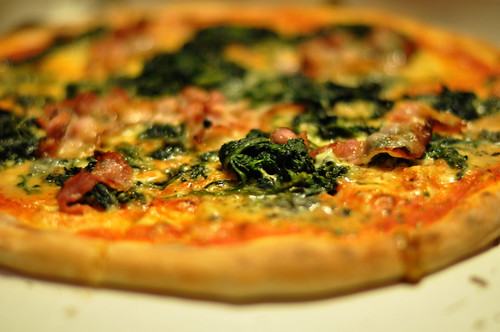
Italy is in trouble. The economic crisis has had an unforeseen consequence: it seems the country is in need of some pizza makers – 6,000 of them, to be exact.
Despite the worst unemployment rate the country has faced in decades, The Telegraph is reporting it seems the majority of Italians are too proud to take on these manual labor jobs. In fact, much of the pizza making in Italy is now done by Egyptian immigrants, who are rapidly taking over jobs as pizzaioli in Italy’s 25,000 pizzerias.
And as the country scrimps and saves during hard times, Italians have begun replacing expensive lunches with pizza. For now, visitors should get tomato-and-cheese pies while they’re hot, cause before long it’ll be near impossible to eat the world’s best pizza while it’s still being crafted by the people who invented the stuff.
Top cyclists train daily to race, often on varied terrain and through different weather conditions. Cycling enthusiasts who might dream of racing one day, prepare one step at a time. They find the right gear, become friends with others into the sport and possibly join a cycling club or just meet on Saturday mornings for a ride. Have you seen them? Cycling in packs on a weekend morning or afternoon? Ever wonder what they might be talking about among themselves?
Other than “that guy in the Honda just about hit me,” the conversation might trend in the direction of unique places they have cycled. One such place, and the stuff of dreams for cyclists, would be up and into mountains. Doing so has become so popular that tour operators are offering package deals that come with cycling experts, mountain guides and more.
In their “Train Like A Local” tour, Italiaoutdoors Food and Wine takes cyclists on a six-night bike tour into the foothills of the Dolomite Mountains in northern Italy.Climbs on their “Train Like A Local” tour range between 900 and 1700 meters and provide an ideal introduction to riding at higher elevations. Held from May 26 to June 1 and June 16-22, the tour attracts adventure travelers that share a passion for cycling. But cycling is just one focus of the all-inclusive package, which is priced at $3,695 per person.
Along for the ride are cyclist and mountain guide Vernon McClure and cooking instructor/chef/biker Kathy Bechtel. They bring cycling routes unknown to mainstream tour companies, sharing their expertise and passion for cycling. But their programming has more than other tour operators.
Participants also get an in-depth introduction to magnificent Italian regional cuisine and local wines. On a seven-day Bike and Wine tour, they cycle through wine regions in Alto Adige, Trentino and the Veneto. Starting in Bolzano, (also in the Dolomite Mountains) they travel downhill to Lake Garda and the iconic city of Verona.
Really into food? Italiaoutdoors also has cycling and cooking tours in Italy. This one, at the foot of the Dolomites, cycles through a diverse region located along the shores of the Adriatic sea and highlights another element of the Italiaoutdoors programming: history. This tour follows one of the old trade routes used to distribute spices and goods from the east throughout Western Europe.
Boasting personal service and a custom plan for every trip, Vernon McClure and Kathy Bechtel, the owners and operators of Italiaoutdoors offer a variety of ideas for biking, hiking and skiing tours via their ItaliaOutdoors Food and Wine website.
Want to know more about cooking and biking tours in Italy? Check this video:
Climate change is a topic that many of us think is something that will affect future generations, perhaps hundreds of years from now. But what if we look at it from a different viewpoint?
What if we could travel back in time 17 million years to when the Grand Canyon was just forming? Would we have believed that the national monument, now nearly a mile deep in places, would some day be a major tourist attraction? Probably not. But time and the forces of nature that come with it, along with the effect of humans on the planet, have a way of changing what we see – sometimes dramatically.
We don’t have to go back millions of years to see such changes either. A recent study indicates that the Arctic will become drastically greener in just a matter of decades. “So what?” one might say. “Who goes there anyway?” Significant to this study on climate change is that it was done in the Arctic where not much can grow or live due to the harsh environment. To see change of any kind is unusual.
The research team included scientists from AT&T Labs-Research, Woods Hole Research Center, Colgate University, Cornell University and the University of York. These are organizations that have a very global view on things that will affect our future.
My father-in-law worked for AT&T during the early days of microwave communications and sometimes told a story of how researchers in his lab used the then-new technology to cook hot dogs. That technology would later also be used for the microwave ovens we all know so well. This story has much of the same, believable flavor.”Such widespread redistribution of Arctic vegetation would have impacts that reverberate through the global ecosystem,” said Richard Pearson of the American Museum of Natural History’s Center for Biodiversity and Conservation in an RDMag article.
It will begin with something as simple as some species of birds being unable to seasonally migrate to particular polar habitats, such as open space for ground-nesting, suggests the study. But things turn worse very quickly as the sun’s radiation, normally reflected back into space when it hits snow, will have less of it to hit and will stick around, accelerating global warming.
Just one commonly accepted effect of global warming is flooding in some coastal areas and more powerful storms.
To the world of travel, that means popular beach destinations could be under water in a few hundred years. More immediate, some of today’s iconic travel destinations, already struggling with sea level issues like Venice, Italy, or the Netherlands, could be doomed much quicker.
Right now, for example, Venice, Italy, is being protected against rising tides in the Adriatic Sea by rows of mobile gates, intended to isolate the Venetian Lagoon when the tide rises above a certain level. The Netherlands, a geographically low-lying country, has a great amount of its land and people at or below sea level and will also be affected by rising ocean levels.
This new study, while not talked about much in the press, is a clear indicator of what the future holds and good food for thought.
Of even more immediate concern, and visually a clear indicator of a problem we can do something about, is today’s reality of the “floating island of plastic” in the Pacific Ocean.
Brought to the area by ocean currents that move around the planet like a slow-motion whirlpool, opposing the wind and earth’s rotational forces, tens of thousands of pounds of garbage wash ashore here every year.
“These ecosystems are very connected. If the oceans are in trouble, we humans are in trouble. We don’t realize that we are threatening our own existence,” says Dr. Gregor Hodgson, founder and executive director of Reef Check Organization in this video.