CapitalOne: Should I take the plunge?

I dropped something like $5,000 on my trip to Peru recently. The price was worth it for the experience of hiking Peru’s Incan ruins. My mistake, however, was lugging my Bank of America debit card around. After I got back, I noticed the 3% charge for use of the card overseas.

Justin has written about how most credit cards have a similar charge for use overseas, because of the currency conversion. (His posting was later picked up by the New York Times).

But there are a few cards that do away with this annoying fee, which really builds up. The most well known one is probably Capital One. I was all about to get one for my next trip when I came across this horror story.

One guy transferred $6,000 onto his Capital One card (because his credit limit was only $1,000, and so he restructured it to work as essentially a debit card). It was all fine and dandy, until he tried to use his card in Costa Rica and found out it was flagged for suspicious activity. Apparently you need to have opened the card several months in advance. And he suggests spending generously with it so that your credit limit goes up.

Makes me think twice about getting this card. Maybe the lesson here is get one early, and perhaps get several.

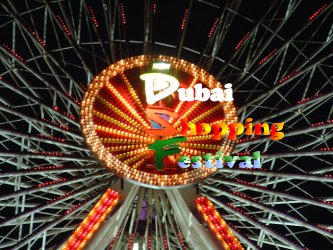
Dubai Shopping Nightmare 2008

By now, you all must be familiar with the Dubai Shopping Festival. In its 12th year running (this year January 24-February 24), for the world it is a shopping wet-dream; the height of splurge — justified because it’s “the best bargain on the planet”; a gold-lover’s paradise; unlimited opportunities to win multiple cars, money and kilos of gold. But, for people who live in Dubai, it is hell.

I lived in Dubai from 1998-2006, and I hated the festival. Everything that stands on the road is lit up: lamp-posts, trees, buildings, bridges, bushes, gas stations, restaurants, shops — all have lights twirled around them; stand still for more than 5 minutes and odds are that you will be wrapped in lights too. It’s so illuminated, you need sunglasses at night.

Dubai probably has the worst traffic in the world: it would take me 45 minutes to drive to work on a normal morning; my office was only 7km from my house. It worsens during the festival as people from neighboring cities and countries drive in. Going anywhere is self-inflicted pain. To add to the chaos, the metro is under construction and half of Dubai’s roads are dug up, already causing havoc on the roads. I don’t even want to think about the what the festival traffic mess will be like this year.
The population of Dubai is about 1.25 million; in 2005, 3.3 million people visited Dubai during the festival month. And where do all these people go? To the malls to shop. DUH!

Shopping during the festival is punishment that begins the minute you head in direction of a mall: the traffic, the lines to park (most malls have at least 10-levels of parking but it’s impossible to find a spot quickly), and once you get in, don’t be surprised if you are part of a stampede waiting to happen. As for the shops, the prices are hiked pre-event, so come festival and the offers seem like a super-bargain. Not true. Also, shops often use the festival to get rid of old stock.

There are fun fairs on some of the main streets which means Disneyland type music blaring and a gazillion people walking around. The Global Village takes the fair concept to a different level as it promises a flavor of every country in the world. Although excellently marketed, it is a total anti-climax once you get there. Very little is authentic; most of the stuff is commercial and expensive. It is a rip-off and very crowded, so in general it magnifies the annoyance value of fun fairs.

And lastly: every night, for the whole month, at 8pm there is a 20 minute, non-stop, eardrum bursting firework display. It’s just about tolerable the first week, but after that you really want to hunt down and kill the person who invented firecrackers.

I suffered a serious and extended bout of migraine when one year it was canceled and the following year they decided to make up for it by having it for two months rather than one.

In conclusion: keep in mind that only a city like Dubai can pull something off like this with such audaciously ludicrous opulence (this year you can win 2 Lexus’s and up to US$205,000 EVERYDAY). Like the city, it’s worth visiting for amusement value.

Spain to be home to Europe’s largest casino

Spain’s lottery market is one of the largest in the world; it is home to the world’s fattest Christmas draw (El Gordo) that amounts to Euro2.20 billion(!), the country has slot-machines in almost every bar, and countless mini-casinos in every city.

I don’t know what the scene is like in other European countries, but trying your luck at some sort of gambling on a daily basis can totally be considered part of Spanish culture and tradition. With the high variety and demand of national and local level daily ‘money-winning’ opportunities in the country, gambling has often, and rightly, been called a national obsession.

So, it is no surprise that Spain has just declared building what will be Europe’s largest casino resort in Zaragoza — the 5th largest Spanish metropolitan that is located about 200 miles from Madrid. Tentatively called “Gran Escala” (Grand Scale), this ‘Vegas’ will cover 5000 acres, include 32 hotels and 5 theme parks.

A few years ago, the estimated amount spent on gambling by Spaniards was Euro22.68 billion, with older figures showing that every Spaniard spent Euro435 annually on the same. The country’s gambling market is expected to grow to Euro39 billion by 2010.

I guess everyone would love to sweep the table in a game of poker or win the lottery and never have to work again; here Spaniards try day-in-day-out to make that dream into a reality.

Big in Japan: Exploding piggy bank helps you save money

Do you have problems saving money? Need a little bit of extra cash before the winter holiday season? Wish there was some way to teach the little ones about the value of money?

If you answered yes to any or all of the above questions, than I’ve got the answer that you’ve been looking for.

In a press conference last week, the famous Japanese Toy Maker TOMY Co Ltd announced the release of their new exploding piggy bank, which they hope will make saving money more of a thrill.

Seriously.

Once activated, the battery operated piggy bank shakes, shines and beeps on an hourly basis to remind the user to feed it coins. However, if the user fails to add money to the bank on a daily basis, it responds by simply exploding.

(If you want to be all technical about it, the bank actually opens its skull-marked door and scatters your change all over the floor, though I can assure you that this is really, really annoying.)

The exploding piggy bank will go on sale this week in Tokyo, with a price tag of $27 or around 3000 yen.

Since the Japanese are always keen to hype the latest fads, the introduction of the exploding piggy bank was met with a surprising amount of fanfare.

At the official press launch last week here in Tokyo, a spokeswomen for TOMY introduced the product with remarkable gusto.

“This is a piggy bank where you have no way but to save,” said the spokeswomen. “We wanted to add some thrill to an act that’s usually painstaking.”

The product is expected to fly off the shelves this holiday season, especially since piggy banks are usually a hot end-of-year item.

As the spokeswoman from TOMY was quick to point out, this is the time when people try to become diligent about adhering to their New Year’s resolutions to spend less money. And of course, children are also keen on putting away the money that they receive from their family for the holidays.

Believe it or not, the piggy bank market is actually big business in Japan. In fact, this isn’t even the first time that TOMY wowed consumers with their innovative products.

This time last year, the company launched a popular piggy bank with a screen showing comic characters that grow older according to the amount the user saved.

Remarkably, the company sold 250,000 units, though they are optimistic that the exploding piggy bank will break this previous mark.

You have to hand it to the Japanese…

I mean, I could never save any money as a kid, mainly because the best part of putting my money in a piggy bank was later bashing the thing open with a hammer.

With that said, check out the awesome photo of the Majapahit terracotta piggy bank, which was built and later smashed for loose change sometime around the 14th century in Trowulan, East Java.

Clearly, I wasn’t the only person to favor aggression over fiscal responsibilty!

** Special thanks to my dad for finding this random bit of Japanese news! **
Is the beer too cheap in Britain?

Apparently, some people in Britain are mad because stores are charging less for beer than they are for bottled water.

When I was in parts of Czech Republic and Poland last month, beer was always cheaper than water. And did it affect me? Well, yes, it did — but that’s because I had a hard time discerning which bottles of water were carbonated or not. There were times when I never did figure it out, and if I’m going to drink a bubbly beverage, it’s not going to be water. And you’d have to take out a small personal loan to pay for 7 ounces of Coke Light, so what am I supposed to do? Get the cheapest thing available: beer.

But some people in Britain feel differently. They’re afraid that lowering the cost will increase sales and therefor increase binge drinking. It’s hard, for the most part, to disagree with them — it makes economic sense. If you lower the cost of an item people are regularly buying, chances are they will purchase more of that product.

“Evidence from Finland also suggests a link between price and consumption. There, tax on alcohol was slashed by 40 per cent in 2003,” according to an article by This is London. “Since then, drink sales have soared 11 per cent.”

They are, however, failing to make a link between increased sales and binge drinking. Someone could be buying a bunch of the cheap beer and storing it in their basement for all the government knows. Can you assume that lower cost equals increased consumption? I, for one, welcome the cheap beer.

Related: