Top ten most crowded islands in the world

From an island microslum in Colombia to a haute enclave in central Paris, the ten most crowded islands in the world bear scant similarities in class or culture. In fact, every entry in the top ten comes from a different country. But being islands, each shares the common thread of scarcity – whether it be land, resources, or housing. In general, these islands are prophetical microcosms for an overcrowded earth – finite spaces where self sufficiency governs and demand pierces supply.

With the world’s population racing higher and higher, and the “megacities club” accepting new members yearly, some day the earth could bear the traits of one of these densely packed islands.

%Gallery-127866%

10. Vasilyevsky Island
Location: St. Petersburg, Russian Federation
Population: 202,650
People per square kilometer: 18,592
Size: 10.9 square kilometers
Story: This island located in St. Pete is a collection of 18th and 19th century buildings with some Soviet built apartment blocks lining the Gulf of Finland on the western shore. The communist housing ethos of the twentieth century called for rows and rows of tight apartments, and this historic island in Russia’s second city was not immune to the sprawl. This created the compact quarters of Vasilyevsky island. Famous for its old school stock exchange and giant Rostral columns, the island is popular with tourists.

9. Lilla Essingen
Location: Stockholm, Sweden
Population: 4,647
People per square kilometer: 20,204
Size: .23 square kilometers
Story: This small island in central Stockholm once served as a hub of industry for Stockholm’s industrial operations. The easy boat access allowed for ease of shipping by boat, and the island factories manufactured an array of goods, from massive lamps for lighthouses to vacuum cleaners. Eventually, as the industrial applications became outmoded, the island became home to several apartment towers. Today, the island is crammed full of smiling Swedes living in apartments with (presumably) tasteful modern furniture.

8. Île Saint-Louis
Location: Paris, France
Population: 2,465
People per square kilometer: 22,409
Size: .11 square kilometers
Story: Perhaps the most stylish island in the world, Île Saint-Louis is a marvel of 17th century urban architecture and planning. Narrow roads and some of the priciest real estate in the world have allowed the island to remain relatively calm, despite its location in central Paris. While Île Saint-Louis is off of the tourist radar for most, this island in the Seine River embodies the classic Parisian spirit, worthy of an afternoon stroll with a perfect sorbet from Berthillon. The island is named for France’s canonized King, Louis IX.

7. Manhattan
Location: New York, New York
Population: 1,585,873
People per square kilometer: 26,879
Size: 59.47 square kilometers
Story: In 1626, the Lenape Indians sold Manhattan island to the Dutch for a bag of axes, hoes, iron kettles, duffel cloths and other 17th century garb worth about $24 (roughly $1000 in modern value). It is safe to day the island has grown ambitiously from this humble transaction. The center of the financial universe is now home to many – truly a place where the world lives. The island once known as New Amsterdam, and briefly, New Orange, shadows America’s story, both tragic and triumphant.

6. Salsette Island
Location: Mumbai, India
Population: 13,175,000
People per square kilometer: 30,217
Size: 436 square kilometers
Story: Salsette, an island off the western coast of India, is home to Mumbai and its sprawling suburbs. As a poster boy for “New India,” Mumbai is as dichotomous as it gets, at once the wealthiest city in south Asia and also home to one of the world’s largest slums – the notorious Dharavi. Dharavi is an island within an island, a super-slum with roughly one million people spread out over an area less than a square mile. At the other end of the spectrum, Salsette Island is also home to extreme wealth. The house known as Antilla is a 400,000 square foot giant that towers with some of Mumbai’s tallest buildings. Truly a contrast from the squalor in Dharavi, the private residence houses six people, can accommodate 168 cars, has 9 elevators, and an ice room with snow flurries.


5. Ebeye Island
Location: Marshall Islands
Population: 15,000
People per square kilometer: 41,667
Size: .36 square kilometers
Story: When the United States decided to test nuclear weapons in the South Pacific, they chose to do so amongst the atolls of the Marshall Islands. U.S. officials uprooted many residents from Bikini Atoll and Enewetak Atoll to insure that the testing did not directly harm human life. The relocated Marshallese had to move somewhere, and most moved to Ebeye under the assistance of the United States. This forced relocation caused a huge mess, including a severe housing shortage and land owner legality issues that persist today. The combination of factors created an environment of hostility and squalor, creating the slum of the South Pacific.


4. Malé
Location: The Maldives
Population: 103,693
People per square kilometer: 53,121
Size: 1.952 square kilometers
Story: The Maldives is one of Asia’s top tourist destinations, with 26 atolls and 1,192 islands offering beach perfection. At its center is the capital city – Male. Male is a humbly sized island of just a couple square miles. It is stuffed full of people, hotels, mosques, and office towers that efficiently utilize the scare land resources. While landfills have reclaimed some land from the sea, most progress is made vertically rather than horizontally. The modern downtown island in the middle of the Indian Ocean is a stark aberration from the deserted islands that dot most of the Maldives.

3. Ap Lei Chau
Location: Hong Kong
Population: 86,782
People per square kilometer: 66,755
Size: 1.32 square kilometers
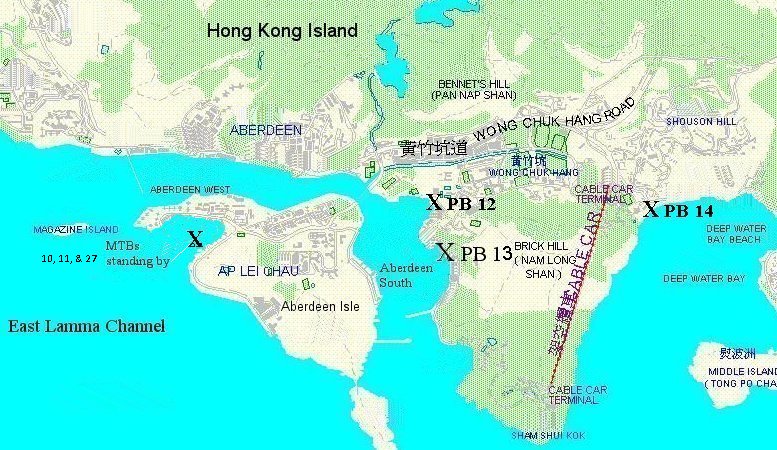
Story: Hong Kong is the land of a thousand towers, clustered most densely on the island of Ap Lei Chau just southwest of Hong Kong Island. Ap Lei Chau served as the settlement for Hong Kong Village, theorized to be the etymological source for the famous larger territory of Hong Kong. Strangely, Ap Lei Chau translates to Duck Tongue Island, said to be named for the island’s shape. It is filled with high rise residences and even a winery.
2. Migingo Island
Location: Kenya, though Uganda disputes this
Population: 400
People per square kilometer: 100,000
Size: .004 square kilometers
Story: This bantomslum in the middle of Lake Victoria is a fishing village perched precariously on half a sphere of rock. The residents take in large hauls of the Nile Perch – a poster boy for River Monsters that can grow to a comedically large size. Migingo is famous for a decades-old dispute between Kenya and Uganda over the sovereignty of the small island. There is even a facebook page where individuals can “like” declaring the island Kenyan. (The page has twice as many followers as there are residents on Migingo.) Uganda agrees with this claim, most of the time, though the tiny rock island is not the issue – the fishing rights are.

1. Santa Cruz del Islote
Location: Colombia
Population: 1,247
People per square kilometer: 124,700
Size: .01 square kilometers
Story: The most densely populated island in the world is a microslum off the coast of Colombia. This tropical island is located in the emerald waters of the idyllic Caribbean, though is packed so tight that most activities are done off island. Schooling, football, graveyards, and work all take place away from Santa Cruz del Islote. The island park is the size of a small tennis court, and fresh water must be shipped in by Colombian Navy ships. Santa Cruz del Islote also does not have electricity. What the island favela does have is people, lots of them. To visit the world’s most packed island, hop on a ferry from Tolu, Colombia. The nearby hotel of Punta Faro can arrange tours of the island.

All unattributed images from wikimedia commons

Woodlawn Cemetery named National Historic Landmark


New Yorkers have always known that Woodlawn Cemetery was someplace special. This Bronx burial ground is the final home for many of the rich and famous. It’s beautiful too, a parklike setting with 400 acres of ornate headstones and mausoleums, such as this one for Frank Winfield Woolworth. Yes, that Woolworth.

Founded in 1863 in an age when wealthy families vied with each other to have the most elaborate mausoleum, it attracts thousands of visitors a year who don’t even know anyone buried there. The public certainly knows of many of them: Harry Carey, David Farragut, Duke Ellington, Fiorello La Guardia, Frank Belknap Long, Herman Melville, Bat Masterson, and Joseph Pulitzer to name a few.

Now the cemetery has been named a national Historic Landmark, the highest honor that can be given to a U.S. historic site. Visiting Woodlawn makes a soothing and contemplative break from the high-powered vibe of New York City. If you like cemetery art, check out our picks of creepy and beautiful cemeteries around the world.

[Image courtesy Woodlawn Cemetery]

Fourth of July travel deals from Viator

Sometimes the best things come to those who wait. If you’re looking for some last minute Independence Day deals, our pals at Viator have pulled together a list of Fourth of July bargains to help travelers get the most out of their three-day weekend. From New York to Oahu, below are some suggestions that will have you seeing red, white and blue without spending a whole lot of green.

New York: Watch one of the best fireworks displays in the country with Viator’s once-in-a-lifetime July 4th VIP Exclusive: Fireworks from the Empire State Building’s Observation Deck. A limited number of tickets are available on a first-come, first-served basis to this two-hour, private evening event, guaranteed to sell out quickly.
Washington, D.C.: See 100 of the most popular monuments and points of interest in America’s capital after the sun goes down on the Washington DC Monuments by Moonlight Night Tour by Trolley, currently more than 50 percent off.
Philadelphia: There’s no better time to visit our nation’s first capital than during a weekend to celebrate America’s Independence. Travelers will save more than 45 percent on admission to six of the city’s premier attractions with a Viator Philadelphia CityPASS.
Las Vegas: Hit the highway out of Las Vegas and spend the day touring two major tourist attractions on the Grand Canyon and Hoover Dam Day Trip, currently on sale with savings more than 50 percent.
Orlando: Get two days for the price of one at Kennedy Space Center, a short drive from Orlando and the launch site for every U.S. human space flight since December 1968.
San Diego: Tour one of the largest aircraft carriers in the U.S. Navy fleet at the USS Midway Museum, San Diego’s newest visitor attraction. A visit to this historic naval aircraft carrier museum is an essential experience for patriots of all ages.
Boston: Travel north from Boston to historic Marblehead, the birthplace of the American Navy. Along the way, visit Salem, the Witch City and learn about the history of witchcraft and the reasons why the trials occurred.
Niagara Falls: Visit New York’s first state park on an overnight trip to Niagara Falls from New York City. Along the way, experience the state’s diverse ethnic heritage and the rolling hills of the Finger Lakes, one of the country’s premier wine producing areas.
Oahu: Take a sobering journey through U.S. history on a tour of the Arizona Memorial and the USS Missouri, the last battleship built by the U.S. Navy. Tickets include skip-the-line access to make the most of a day at Pearl Harbor, complete with a tour of downtown Honolulu and a drive through Punchbowl National Cemetery of the Pacific. An added bonus: receive one free child ticket for each adult ticket purchased.
Memphis: Walk in the footsteps of the King of Rock ‘n’ Roll at Elvis Presley’s home, Graceland Mansion – the number one thing to do in Memphis, Tenn. Upgrade to the Elvis Entourage VIP Package and also receive entrance to a VIP Only Exhibit, Front of the Line Access to the Mansion, and more.

[Photo by J.W. Photography, Flickr]

A Day of Rebuilding at New York’s Ground Zero

While in New York, I was thrilled to check out the High Line, a newly expanded elevated park that’s captivated city-dwellers. But there’s bigger and more meaningful construction happening downtown, at the site of the former World Trade Center-and the soon-to-be home of the new World Trade Center.

With my videographer, Stephen Greenwood, I booked a 17th-floor room at the Millenium Hilton hotel, directly across from and facing the site. With a couple of cameras, we set out to capture a day’s worth of work at the newly rising office complex and the memorial to the attacks of September 11, 2001, the latter of which is scheduled to open by the 10th anniversary of that day.

Here’s what we saw.

Traveling the American Road – A Day at Ground Zero


Knocked up abroad: baby shopping in a foreign country


Knocked up abroad has been on a bit of a hiatus as my travel schedule has slowed and the due date has sped up. Feel free to catch up with posts on pregnancy travel, Turkish superstitions, medical care, and naming children.

I’m into the final month of my pregnancy in Istanbul and that means the countdown is on to get stocked up with wee tiny baby things, garishly colored toys and furniture, and gadgets I never knew I would need. If you’ve ever been baby shopping, either for yourself or for a gift, you know it can be intimidating. Specialty boutiques and megastores are overrun with all sorts of contraptions and devices, in many varieties and brands, organized in ways that are overwhelming to all but the most seasoned of parents. Now try doing this shopping in a foreign country, in another language, with very limited space, and a semi-nomadic expat lifestyle and you’ll understand why I’ve put it off until, as the Turks say, the egg is at the door.

My “home” is in Brooklyn, New York, but I’ve spent less than a week there in the past 14 months. My current home in Istanbul is very small but fully furnished and outfitted with many storage cabinets (Turks dislike visible clutter) but little floor space. My husband and I have been heresince last April on an open-ended work assignment with no end date in sight. We may end this year back in Brooklyn, still in Istanbul, or in another city and country altogether. Given our situation, I’m trying to accumulate as little as possible and try to cut through the “must-have” baby lists to the bare essentials and stuff I won’t mind leaving behind in six months.

%Gallery-126823%In many ways, Turkey is a great place to have a baby, as Turks adore children and are happy to cater to them (someone should commission a study on the correlation between Mediterranean countries and baby-craziness, there must be something in the olive oil). Most malls have an area if not a whole floor of stores dedicated to kids, including local chains like Joker and E-Bebek (that’s e-baby), as well as many branches of UK chain Mothercare. While they all carry most of the same brands as in America and western Europe, the websites and store info is generally in Turkish, meaning a lot of time spent with a dictionary and translation site when researching products. Also unfortunate is the usual Turkish sales approach of hovering. Generally when you walk into a store in Istanbul, a sales person marches up to you, says “hoş geldiniz” (Turkish for welcome) and then proceeds to silently follow you around the store until you ask a question or flee the shop in paranoia (I usually flee in search of a shop with sales help who can’t be bothered to look up from their texting). This is the practice in nearly every store other than touristy carpet shops, and Turkish friends will tell me they are expecting me to take the lead and tell them my needs or tell them to buzz off. I found this hard to do in baby stores and instead tried to do much of my browsing online so I was prepared to purchase in stores.

The big ticket item on my list (as with many other expecting parents) is a stroller. I wanted something that could work from birth to toddlerhood, that could serve as a sleeping bassinet for the first few months (no room for a crib now) and be versatile enough to travel the world. Earlier in the pregnancy we contemplated a shopping trip to somewhere relatively nearby like Amsterdam or Barcelona where they must sell the chicest and most practical of European city strollers, but ended up deciding to buy something available in Istanbul that we could get parts and service for nearly anywhere in the world. We don’t own a car in either Istanbul or New York (in fact, I’m in possession of a soon-to-expire learner’s permit), but we got a car seat from a Turkish colleague to use on taxi rides and future road trips that can fit onto many strollers with an adapter. For Istanbul, the stroller needed to be tough enough to handle many hills, uneven sidewalks and cobblestone streets, but be light enough to tote up New York subway stairs and navigate narrow supermarket aisles. After researching dozens of strollers, spending many soul-destroying hours watching demo and review videos online, and testing a few out in person, I have determined the Perfect Stroller does not exist. Since I have no nursery to decorate and few other things to buy, I was able to splash out on a tricked-out Almost Perfect Stroller (I won’t name brands until I have a chance to test drive, but it’s one you will see in most yuppie coffee shops around the world) and will buy something cheap and lightweight when I am back in a city without metro station elevators and helpful Turks.

After the stroller was chosen, there are a few other items necessary to many new parents and designed well for travelers. As is common in many modern Istanbul apartments, we have no bathtub (Turks see them as unclean, and even the traditional hamam bath is more about the steaming than soaking) and tiny sinks in our bathroom and kitchen. I was resigned to buying a big plastic tub that I would eventually leave behind, but then found this cool device by American design company Puj. It’s essentially a glorified piece of foam that folds into a seat you can wedge into the sink, but unfolds flat and can be hung on a wall to dry. I imagine I can also pack it in the bottom of a suitcase for travel. One item on my list for my next US visit is the Nest from Phil&Teds: a rather ingenius travel carrier that can carry all the gear and then work as a bed or cot at night. Our parents would say a suitcase and pillow could serve the same purpose, but this meets more safety standards than a Samsonite and fits in the overhead bin too. Finally, we also wanted a baby carrier to go hands-free and stroller-less when traveling. There are upteen options out there, and we ended up with a Sleepy Wrap (another glorified bit of fabric with a nice label on it but several friends swear by it) purchased at a terrific speciality shop in Singapore. Fun fact: the Turkish word for baby carrier is kanguru.

The most fun things to shop for are, of course, baby clothes. Few people can resist tiny t-shirts, onesies, and dresses, and most parents can expect to receive many items as gifts. I stocked up on the basics at Mothercare and other clothing stores (we do have Baby Gap and even Baby Zara in Turkey), but discovered a treasure trove of baby shops recently in Eminönü, a crowded shopping area between the Grand Bazaar and Spice Market. In these local shops, I found a range of clothes from the adorable to the downright odd, some with Turkish phrases and many more with strange “Turk-lish.” Check out the gallery above for some of the best.

Now that my apartment is filling up with baby things, I feel just about ready for my due date on July 20 without feeling weighed down by useless gadgets. Any other expat or frequent traveler parents out there who can recommend products? Feel free to leave them in comments below.

Stay tuned for a final pre-birth Knocked up abroad (pending baby’s cooperation, but they say first babies are usually late) on Turkish vs. American attitudes toward babies and pregnant women. Until then, catch up on the other posts here.