5 best fast food chains around the world

While fast food often gets a bad rep, you can’t expect to eat all of your meals sitting in down in slow food restaurants. And, when traveling abroad, you will sometimes find that fast food doesn’t always necessarily mean greasy fries and fattening burgers. Travelers can make their quick dining experiences worthwhile by visiting these five delicious and budget-friendly fast food restaurants, located all over the world.

Giraffas
Brazil

This chain has over 350 restaurants spread across the country and over 30 years of experience. It’s no wonder then that they’re considered one of the best, even handing out steel knives and forks for guests as well as open plates instead of cardboard boxes for those not taking their food to go. And, have you ever heard of ordering Filet Mignon from a fast food joint? Now you have.

Mr.Lee
China

Unlike the greasy Chinese fast food restaurants that many Westerners are used to, Mr.Lee serves lighter options, such as California Chicken, a cold meal drizzled with red and green sauce, and Beef Noodle Soup, made with a unique recipe that can be customized with various spices and sauces according to the customer’s tastes. If you’re having your soup to stay, you can expect to be served in a ceramic bowl instead of styrofoam or plastic.

Nordsee
Germany (and other European locations)

If you look at their website, this certainly doesn’t look like a fast-food restaurant. With an emphasis on sustainable, healthy cuisine, you can expect dishes such as Alaska pollack, grilled salmon, and sushi, all with drink recommendations to accompany your meal. For example, ordering a salmon fillet should be accompanied by a glass of light red wine.

Teremok
Russia

This chain has 111 restaurants and 80 street stalls in Russia, featuring items you wouldn’t normally see on a fast-food menu. According to Sean O’Neill at BudgetTravel.com, you can get salads, soups, and porridges, as well as their most popular item, blinis. If you’ve never heard of a blini, it’s a thin pancake shaped like a triangle and wrapped around the customer’s choice of a sweet or savory filling. For example, salmon roe and red caviar are two filling favorites at this eatery. Teremok also features a low-alcoholic beverage known as kvass, which is prepared using rye flour with malt or sometimes honey beer.

Steers
South Africa

While their feature items may be burgers, these are unlike the burgers that are served at most fast food restaurants. In fact, when McDonald’s first arrived in South Africa in 1995, locals scoffed at the puny 3 ounce meat patties. In South Africa, where red meat is a food favorite, they have Steers, which offers a delicious and filling 7 ounce burger made of 100% pure beef. If you’re still hungry, you can order triple stacker burgers with fresh toppings and full racks of ribs.

It’s a band. On a motorcycle. In Russia

We all knew that Russia is the place for opulent indulgence and incredible feats, but this video might take the cake. Youtube user tigfinger posted this amazing video of an entire band playing in a motorcycle and sidecar speeding down the Russian highway, happily playing along as if nothing were amiss.

The story gets even more interesting when you translate the title of the video, Бременские музыканты. Наши дни into English: Town Musicians of Bremen: Today. It turns out, the Town Musicians of Bremen is a folktale from the Brothers Grimm in which four traveling musicians set out on a long journey to Bremen only to never make it to their destination.

How that applies to this group one can only guess — but it’s a great storyline for this video.

10 countries Americans need advance visas to visit

We live in an increasingly borderless world and we have access to many countries that were closed (or non-existent) 20 years ago. As reported earlier this week, Americans are especially lucky with access to 169 countries visa free. Still, there are still many countries that Americans need advance visas to visit. Visa applications and processing services can cost several hundreds of dollars and take a lot of time and energy to obtain, so figure in that into your travel planning but don’t let it discourage you from visiting.

Nearly all countries in Africa, the Caribbean, Central America, Western Europe, and the Middle East will give you a visa free or for a fee on arrival. See below for our guide to countries you will need to apply for advance visas, along with fees, useful information and links to consular websites.
Asia

  • China: US citizens pay $130 for tourist visas, single- or multiple-entry up to 24 months from date of application. Keep in mind a trip to Hong Kong or Macau counts as an exit from China, so plan on a multiple-entry visa if you’ll be in and out. You’ll need to send your actual passport in for processing and ideally plan 1-2 months in advance of travel.
  • India: Fees from visa contractor Travisa start at $50 and visas can be valid for up to 10 years, but note that you must have a gap of at least 2 months between entries.
  • Vietnam: Single-entry visas start at $70 and multiple-entry visas are valid for up to one year. Another option for Americans is a single-entry visa on arrival, apply online and pay another stamping fee at the airport.
  • North Korea: Not an easy one for Americans as there are no consular relations between the two countries, but it is possible if you go through a specialist travel agency such as New Korea Tours and realize you’ll be visiting only on a highly-restricted and guided group tour. Note that you’ll have to go through China, requiring another visa of course!
  • See also: Afghanistan, Bhutan, Pakistan

Eurasia

  • Russia: Russian visa rules are quite strict and complicated, so you’ll need to have a solid itinerary set up before you apply as visas are valid for specific dates and not extendable. You’ll need a sponsorship for your visa, typically provided by your hotel or tour operator for a small fee, and you’ll register your visas once in the country. Fees start at $140 and applications should now be filled out online. Tourist visas are generally only valid for two weeks and even if you are just traveling through Russia, you’ll need a transit visa.
  • Belarus: Similar to Russian rules, a letter of invitation must be provided from an official travel agency in order to get a visa. You also have to show proof of medical insurance and financial means (about $15 USD/day, can be demonstrated with credit cards or paid travel arrangements). Tourist visas start at $140 and $100 for transit visas. Gadling writer Alex Robertson Textor is currently planning a trip, stay tuned for his report next month.
  • Azerbaijan: The country changed its visa policy last year, and now Americans must obtain an advance visa. You’ll need an invitation from an Azerbaijan travel agency, then a tourist visa costs $20 and takes 10 business days to process. Transit visas don’t require an invitation letter but should still be obtained in advance of travel.
  • See also: Turkmenistan

Other

  • Australia: Getting a tourist visa is simple and cheap ($20). Apply online at any point in advance and you’ll be verified at the airport. Valid for as many entries as needed for 12 months from date of application.
  • Brazil: Tourist visas are $140 plus $20 if you apply by mail or through an agency. If you are self-employed or jobless, you’ll need to provide a bank account balance, and all applications should include a copy of your round trip tickets or other travel itinerary.
  • Iran: There’s a current travel warning from the US state department, but Rick Steves is a fan of the country and several reputable travel agencies provide tours for Americans. The US consulate notes that some Americans with visas have been turned away, so your best bet is to visit with a group.
  • See also: Nigeria, Paraguay, Saudi Arabia, Suriname

The good news for expats, students studying abroad, and other foreigners with residency is that many countries will allow you to apply in a country other than your home country for a visa. For example, I traveled to Russia from Turkey, getting my visa from a travel agency in Istanbul without sending my passport back to the US. Always check the US state department website for the latest visa information and entry requirements.

Photo courtesy Flickr user Thomas Claveirole.

Russia celebrates 450th anniversary of St. Basil’s Cathedral

It’s the most recognizable icon in Russia, reproduced on millions of postcards, books, and websites. St. Basil’s in Moscow is a colorful cathedral that’s celebrating its 450th anniversary this year. As part of the celebration, the cathedral is opening an exhibition tomorrow dedicated to the mad holy man for whom the cathedral is named.

St. Basil lived during the time of Ivan the Terrible (reigned 1533-1584) and soon became a local celebrity by going naked even in winter and speaking out against the czar. For most people this would have led to a visit to one of Ivan’s overworked executioners, but mad saints have always been respected in Russian culture and Ivan was scared of Basil.

Basil was born a serf in 1468 or 1469 and developed a habit of going naked weighed down by chains. He was a bit of a Robin Hood figure, stealing from shops and giving his loot to the poor. He criticized Ivan the Terrible for killing thousands of innocent people and not giving enough money to the church. When he died, Ivan acted as pallbearer at his funeral.

Later, Ivan the Terrible built the cathedral in 1561 to celebrate defeating the Mongols. He decided to build it atop the grave of the Basil, in order to honor the man in death who had mocked him in life.

The cathedral has just finished a $14 million restoration in anticipation of the anniversary.

[Photo © by James G. Howes, 2009.]

Top ten most crowded islands in the world

From an island microslum in Colombia to a haute enclave in central Paris, the ten most crowded islands in the world bear scant similarities in class or culture. In fact, every entry in the top ten comes from a different country. But being islands, each shares the common thread of scarcity – whether it be land, resources, or housing. In general, these islands are prophetical microcosms for an overcrowded earth – finite spaces where self sufficiency governs and demand pierces supply.

With the world’s population racing higher and higher, and the “megacities club” accepting new members yearly, some day the earth could bear the traits of one of these densely packed islands.

%Gallery-127866%

10. Vasilyevsky Island
Location: St. Petersburg, Russian Federation
Population: 202,650
People per square kilometer: 18,592
Size: 10.9 square kilometers
Story: This island located in St. Pete is a collection of 18th and 19th century buildings with some Soviet built apartment blocks lining the Gulf of Finland on the western shore. The communist housing ethos of the twentieth century called for rows and rows of tight apartments, and this historic island in Russia’s second city was not immune to the sprawl. This created the compact quarters of Vasilyevsky island. Famous for its old school stock exchange and giant Rostral columns, the island is popular with tourists.

9. Lilla Essingen
Location: Stockholm, Sweden
Population: 4,647
People per square kilometer: 20,204
Size: .23 square kilometers
Story: This small island in central Stockholm once served as a hub of industry for Stockholm’s industrial operations. The easy boat access allowed for ease of shipping by boat, and the island factories manufactured an array of goods, from massive lamps for lighthouses to vacuum cleaners. Eventually, as the industrial applications became outmoded, the island became home to several apartment towers. Today, the island is crammed full of smiling Swedes living in apartments with (presumably) tasteful modern furniture.

8. Île Saint-Louis
Location: Paris, France
Population: 2,465
People per square kilometer: 22,409
Size: .11 square kilometers
Story: Perhaps the most stylish island in the world, Île Saint-Louis is a marvel of 17th century urban architecture and planning. Narrow roads and some of the priciest real estate in the world have allowed the island to remain relatively calm, despite its location in central Paris. While Île Saint-Louis is off of the tourist radar for most, this island in the Seine River embodies the classic Parisian spirit, worthy of an afternoon stroll with a perfect sorbet from Berthillon. The island is named for France’s canonized King, Louis IX.

7. Manhattan
Location: New York, New York
Population: 1,585,873
People per square kilometer: 26,879
Size: 59.47 square kilometers
Story: In 1626, the Lenape Indians sold Manhattan island to the Dutch for a bag of axes, hoes, iron kettles, duffel cloths and other 17th century garb worth about $24 (roughly $1000 in modern value). It is safe to day the island has grown ambitiously from this humble transaction. The center of the financial universe is now home to many – truly a place where the world lives. The island once known as New Amsterdam, and briefly, New Orange, shadows America’s story, both tragic and triumphant.

6. Salsette Island
Location: Mumbai, India
Population: 13,175,000
People per square kilometer: 30,217
Size: 436 square kilometers
Story: Salsette, an island off the western coast of India, is home to Mumbai and its sprawling suburbs. As a poster boy for “New India,” Mumbai is as dichotomous as it gets, at once the wealthiest city in south Asia and also home to one of the world’s largest slums – the notorious Dharavi. Dharavi is an island within an island, a super-slum with roughly one million people spread out over an area less than a square mile. At the other end of the spectrum, Salsette Island is also home to extreme wealth. The house known as Antilla is a 400,000 square foot giant that towers with some of Mumbai’s tallest buildings. Truly a contrast from the squalor in Dharavi, the private residence houses six people, can accommodate 168 cars, has 9 elevators, and an ice room with snow flurries.


5. Ebeye Island
Location: Marshall Islands
Population: 15,000
People per square kilometer: 41,667
Size: .36 square kilometers
Story: When the United States decided to test nuclear weapons in the South Pacific, they chose to do so amongst the atolls of the Marshall Islands. U.S. officials uprooted many residents from Bikini Atoll and Enewetak Atoll to insure that the testing did not directly harm human life. The relocated Marshallese had to move somewhere, and most moved to Ebeye under the assistance of the United States. This forced relocation caused a huge mess, including a severe housing shortage and land owner legality issues that persist today. The combination of factors created an environment of hostility and squalor, creating the slum of the South Pacific.


4. Malé
Location: The Maldives
Population: 103,693
People per square kilometer: 53,121
Size: 1.952 square kilometers
Story: The Maldives is one of Asia’s top tourist destinations, with 26 atolls and 1,192 islands offering beach perfection. At its center is the capital city – Male. Male is a humbly sized island of just a couple square miles. It is stuffed full of people, hotels, mosques, and office towers that efficiently utilize the scare land resources. While landfills have reclaimed some land from the sea, most progress is made vertically rather than horizontally. The modern downtown island in the middle of the Indian Ocean is a stark aberration from the deserted islands that dot most of the Maldives.

3. Ap Lei Chau
Location: Hong Kong
Population: 86,782
People per square kilometer: 66,755
Size: 1.32 square kilometers
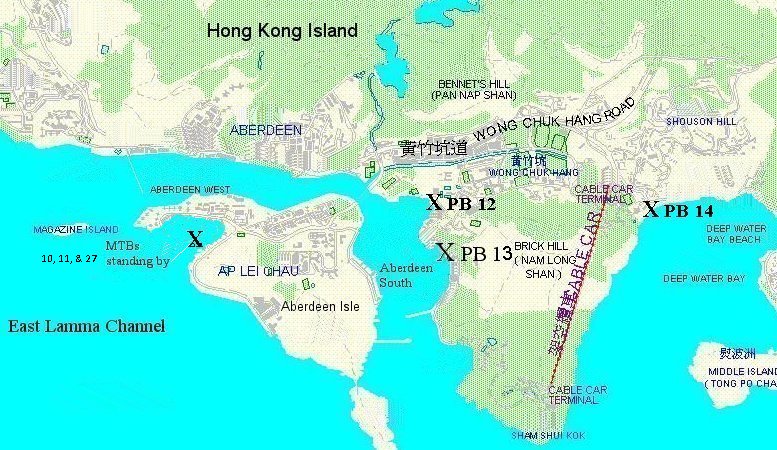
Story: Hong Kong is the land of a thousand towers, clustered most densely on the island of Ap Lei Chau just southwest of Hong Kong Island. Ap Lei Chau served as the settlement for Hong Kong Village, theorized to be the etymological source for the famous larger territory of Hong Kong. Strangely, Ap Lei Chau translates to Duck Tongue Island, said to be named for the island’s shape. It is filled with high rise residences and even a winery.

2. Migingo Island
Location: Kenya, though Uganda disputes this
Population: 400
People per square kilometer: 100,000
Size: .004 square kilometers
Story: This bantomslum in the middle of Lake Victoria is a fishing village perched precariously on half a sphere of rock. The residents take in large hauls of the Nile Perch – a poster boy for River Monsters that can grow to a comedically large size. Migingo is famous for a decades-old dispute between Kenya and Uganda over the sovereignty of the small island. There is even a facebook page where individuals can “like” declaring the island Kenyan. (The page has twice as many followers as there are residents on Migingo.) Uganda agrees with this claim, most of the time, though the tiny rock island is not the issue – the fishing rights are.

1. Santa Cruz del Islote
Location: Colombia
Population: 1,247
People per square kilometer: 124,700
Size: .01 square kilometers
Story: The most densely populated island in the world is a microslum off the coast of Colombia. This tropical island is located in the emerald waters of the idyllic Caribbean, though is packed so tight that most activities are done off island. Schooling, football, graveyards, and work all take place away from Santa Cruz del Islote. The island park is the size of a small tennis court, and fresh water must be shipped in by Colombian Navy ships. Santa Cruz del Islote also does not have electricity. What the island favela does have is people, lots of them. To visit the world’s most packed island, hop on a ferry from Tolu, Colombia. The nearby hotel of Punta Faro can arrange tours of the island.

All unattributed images from wikimedia commons