How to choose a reputable adventure travel company or guide

Adventure travel” is a nebulous term these days. But whether your idea of a thrill is a Class-III rapid or climbing Everest, there’s one thing that’s ubiquitous when choosing an outfitter: safety. There are hundreds of adventure travel companies worldwide; not all are created equal. There are key things you should look for when choosing a company or independent guide, whether you’re booking a three-week luxury trip, or a one-day backpacker’s special.

I’m not implying adventure travel in general is risky, or that most operators and guides don’t know what they’re doing. There are numerous certifications in place (they vary according to country) to ensure companies adhere to national and industry safety standards.

The following are tips on what to look for or avoid when choosing a company or guide, based on personal experience and what I’ve gleaned from the owners of several highly regarded adventure companies. I’ve done trips with each company, but I have no personal gain in endorsing them: I’ve just found them to be, among the dozens of outfitters I’ve used, the best of the best.

My sources include Mark Gunlogson, president/guide of Seattle’s Mountain Madness, a mountain adventure guide service and mountaineering school; Marc Goddard, co-owner/guide of Bio Bio Expeditions, a whitewater/adventure travel company in Truckee, California, and Britt Lewis, co-owner/guide of Austral Adventures, a custom travel company on the island of Chiloe, in Chile.

I’m also including a few horror stories based on guide negligence. That’s why, the first thing you should do when planning any kind of adventure activity or trip is…

Do your research
Even a brief online search will bring to light any serious breaches in safety or conduct. Safety doesn’t just apply to those who plan to scale the Andes or kayak the Zambezi. Even the tamest “adventures” require guides who are knowledgeable about the area and activity, and are currently certified in emergency first aid and rescue procedures.

[Photo credit: Flickr user Luis Fabres]

Lest you think I exaggerate the importance of guide knowledge and research, the idea for this article germinated in 2003, when I was visiting Australia’s Kakadu National Park during the “Wet,” or monsoon, season. That time of year brings potential problems such as floods, but it was a widely publicized trial that made an indelible impression.

A negligent guide was charged in the accidental death of a 24-year-old German tourist who’d been killed by a croc, after the guide assured her group a swimming hole was safe. My own guide informed me that just weeks earlier, another company had tried to gun their small tour bus over a flooded waterway, only to have it overtaken and swept downstream. The passengers were eventually airlifted to safety (don’t let these things scare you off of Kakadu in the Wet; it’s absolutely spectacular, and free of crowds).

Australia of course, isn’t the problem. It’s just that crocs and corpses make compelling headlines. Sometimes accidents aren’t publicized, lest they impact tourism (In New Zealand, an operator confessed to me a rival company’s fatal bungee-jumping miscalculation a month prior, which put them out of business), and of course there have been dozens of mountaineering and whitewater-related tragedies on commercial trips on various continents over the years. Again, participating in these activities doesn’t make you likely to suffer a mishap. Are they inherently dangerous? Yes, but so is crossing the street, driving a car, or hiking solo.

What certifications to look for
This depends upon type of activity and country. Says Lewis, “If there aren’t national qualifications or certs, a combination of information is required for form an opinion about an outfitter. How clear and accurate is their literature or website, their answers to your questions, etc.?” I would also add, how long does it take them to respond to your emails or phone calls? A few days is standard, but if you find yourself having to follow-up repeatedly, move on.

Marc Goddard: Ask about the qualifications of each guide. If you’re doing a river trip, find out how many years the guides have been guiding rafts, and on which rivers. Don’t be shy about asking some serious questions: you will, after all, be entrusting them with your life!

Mark Gunlogson: The adventure travel industry has matured, and most activities now have some sort of industry standard. In the case of mountain guiding, there’s the American Mountain Guides Association certification for guide services. Level of first-aid training for guides is also essential to look for, and industry standards apply here, as well.

Signs you’re dealing with a good company or guide
Whether you’re planning a high-end holiday or making a walk-in query in a backpacker ghetto, there are questions to ask and things to look for that signify a solid company. Be aware that hostels and other backpacker-oriented locales are magnets for sketchy outfits. If it sounds too cheap or good to be true, it probably is. If the activity involves something potentially dangerous, don’t bite.

Gunlogson suggests asking the company what’s included and what’s not, so all services are clearly spelled out, including guide qualifications. But, he says, “In the end, sometimes it just comes down to how comfortable a person feels with the company and their interactions with them.”

Adds Lewis, “Ask a few simple questions about first-aid and emergency procedures. Do they appear to have a plan for unforeseen events? If you’re a walk-in, does their office have a fire extinguisher? Are their vehicles legal for tourist transport? Are the guides certified for the activities for which they’re assigned?”

I learned just how deadly budget guides can be while climbing Cotopaxi in Ecuador with a Mountain Madness guide. We were forced to turn back at 17,000 feet due to extreme avalanche danger. My guide was fully accredited, and his experience includes some of the toughest technical climbs in the world (For my part, I’d been conditioning for this trip for months, at high altitude, upon the advice of Mountain Madness).

We had returned to the refugio, an overnight acclimatization hut located at 15,000 feet. We saw a young, rowdy group of backpackers being shepherded out the door by their equally youthful guides; it was obvious from their attire they were attempting a summit. My guide, concerned, went and had a word with the other guides: They totally blew him off. I didn’t hear about a group of backpackers getting creamed in an avalanche that day, but that experience really clarified for me the potential for disaster posed by cheapie trips targeted at inexperienced backpackers. It’s not worth it.

On a related note:

Look for red flags
“If they’re farming you out to a local outfitter, it could be a red flag,” says Goddard. “But the big warning is if they don’t know who their guides are, or what their qualifications are.” Some companies do “outsource” to local guides or outfitters, It’s not always a bad thing, and in fact can be positive, because you get someone with insider knowledge and you support the local economy. It comes down to their qualifications and relationship with the parent company.

Gunlogson adds, “Ask about guide qualifications, number of years in business, and hidden costs regarding services.” A reputable company willingly discloses information.

Ask for referrals
Lewis suggests asking for past client’s emails, and contacting them about their experience. You can also look at reviews on sites like TripAdvisor.com, or search travel blogs.

Listen to your gut
If you have a bad feeling about a guide, it’s best to pay heed. On my same Australia trip, a certain American guide led us on an overnight bushwalk in Litchfield National Park. Amongst his many other transgressions, he endangered our lives by having us pitch camp on a narrow sandbar at the base of a waterfall-fed swimming hole (I actually voiced my concern, only to receive a withering look from him). Sure enough, a monsoonal downpour made the water level swiftly rise, leaving us backed into a rock wall. Fortunately, we were able to rescue our tents and gear, and the water receded before we had to swim for it. That’s when I learned to listen to my instincts regarding guides. My sensor went off immediately after meeting this guy due to his arrogance, but I felt obligated to do the trip.

Whether it’s a negative reaction to a guide, concern over the poor/worn quality of the gear, or the activity itself, always listen to your gut.

What to do if you have a bad experience
You have several courses of action. You can go to sites like TripAdvisor.com and travel blogs and write the company up (letting them know about it before taking any action). Says Lewis, “It depends on the country in terms of informing authorities. However, the power of the Internet is a huge reward to a good company and an effective way to punish an unsafe one.”

Adds Gunlogson, “Unless there’s injury and an obvious case of negligence, there’s not too much you can do unless you really want to spend the time and money to pursue it. In the end, word-of-mouth has a cathartic effect for clients if their complaints are ignored. Those companies that understand the power of a former client taking to the Internet do their best to mitigate any potential bad-mouthing, whether justified or not. It lets the client know that their dissatisfaction was acknowledged.”

I say: Playing devil’s advocate, I’ve found there’s usually one client on every trip who seems determined to have a bad time and find fault, even where none exists. DON’T BE THAT PERSON. No one likes a whiner or a complainer, and guides work long hours, under considerable stress. Don’t just sit on your butt: ask what you can do to help, be it chopping vegetables, loading gear, or finding firewood. If you have a legitimate complaint, by all means follow the advice provided above, but don’t go trolling for a refund or discount just to be an a-hole.


What are the refund policies?
Because shit happens.

Consider climate and seasonal factors
If you want to avoid a monsoon, snow, or inhumanly hot, humid weather, be sure to voice those concerns and do some research on your destination. It also pays to ask about or check on things like growing, spawning, or breeding season of pesky or harmful flora or fauna. Someone I know (her name is Laurel) paid through the nose for a snorkeling trip off a remote island in Southern Thailand. Imagine her surprise when she hit the water and discovered it was peak jellyfish spawn. She spent the remainder of the trip covered in painful, head-to-toe welts that made her the object of much mockery. Far more painful was the knowledge that the scam artists/snorkeling guides knew full well swimming was inadvisable.

Are they a green company?
It matters, and this philosophy also includes hiring locals whenever possible. Don’t let yourself get “greenwashed.”

Honestly assess your own capabilities
You don’t just put yourself at risk (of a bad trip, potential injury, illness, or worse); you jepordize the safety and well-being of other clients. If nothing else, you make your guide’s life hell. Please don’t if you can help it.

Do you trust your guide’s capabilities and judgement?
When you literally trust a guide with your life (and I can only say this about three of them), it’s a sign that that company is doing something right. Never have I been more impressed with guides than the two trips I’ve taken with Bio Bio; Mountain Madness follows a close second.


Consider travel insurance
If you’re doing some really hard-core stuff, will be in very remote areas, or have some existing health or physical conditions, it may be worth the extra expense.

Don’t forget to tip
Says Goddard, “I don’t feel tipping is mandatory; it’s done if you feel the guides did a good job. An average tip is 10% of the trip price, a great tip is 20%.” Adds Lewis, “The amount may also depend upon what country you’re in, but it’s always appreciated. Few, if any, guides do their job solely for the money [FYI, it’s not a high-paying job]–there’s a love of people, nature, or the activity that comes with it. But tips are welcome, as they’re a tangible “thank you,” and acknowledge a job well done.”

If you made it this far, consider yourself schooled. Here’s to safe adventures!

[Photo credits: crocodile, Flickr user jean-louis zimmerman; first aid kit, Flickr user 8lettersuk; warning, Flickr user psd; cash, Flickr user Todd Kravos; caving, Laurel Miller]
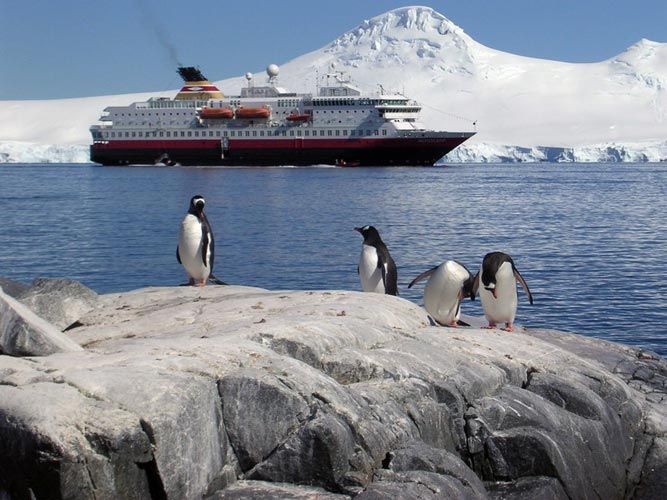
Antarctica updates, July 2011

The fact that today’s high was -67 degrees at the South Pole is not news. Especially for the 49 hardy souls overwintering; they knew what they signed on for. Nor is it a shock that it was -97 at Vostok one day last week, since the Russian base holds the record for the coldest temperature ever recorded (-128).

But there are some surprises being reported from the deep-deep south during the continent’s long, cold winter (which lasts eight months, roughly March through October). Like that alien species are invading and that declining penguin numbers may have less to do with warming temps than previously thought. And that the ozone hole over the continent increasingly influences the southern hemisphere’s weather and that the ice around the continent’s edges is melting faster than predicted. And that for the first time in a decade tourist visits to Antarctica are expected to dip dramatically in the coming summer season.

1. The aliens worrying Antarctic observers are not of the cellophane-skin and pumpkin-head variety, but rather more garden variety: Insects, slugs, worms, plant seeds and fungi that sneak in with the fruits and vegetables consumed by the 4,000 scientists who call Antarctica home during the summer season. Tourists are contributing too, carrying plant seeds in on their shoes and clothing. The invasion is encouraging calls for new levels of “biosecurity” to protect the otherwise pristine continent from being further infiltrated. For the moment, simple fungi and mold are the greatest concern because they often carry plant diseases: On the 11,250 fruit and vegetables sent to nine research stations researchers found soil on 12 percent of the food as well as 56 alien invertebrates and 19 different species of mold. On Antarctica’s near islands, rats, mice and cats are already devastating bird populations, a risk the mainland doesn’t have to worry about … for now … since warm-blooded creatures have a hard time surviving sub-sub freezing temps. For now.

2. Everything from burning fossil fuels and rain forests to cow farts are blamed for the planet’s changing climate. Now a team from Columbia University suggests the ozone hole growing over Antarctica is linked to warmer, wetter weather reaching all the way north to the equator. Initially discovered in the 1980s and blamed on the use of chlorofluorocarbons (CFCs) in refrigerators and aerosols, since their banning it’s expected the hole will largely close up by the middle of the century. In 2000, NASA satellites measured it at 11.5 million square miles; a decade later it had been reduced to 8.5 million square miles. Despite the shrinkage, the study blames the high-altitude ozone hole for contributing to higher wind speeds, leading to more intense storms and for heavy summer rains across eastern Australia, the southwestern Indian Ocean and the South Pacific.

3. It has been widely reported (including by me) that the Adelie penguin population in Antarctica has dropped by as much as 50 percent in recent years. The blame has been placed largely on the fast-disappearing ice along the edge of the Antarctic Peninsula, which had long been home to thriving penguin populations. The reasoning has been that as the average winter temperatures along the Peninsula have risen by 9 to 11 degrees since the mid-20th century, compared to 2 degrees everywhere else on the planet, the habitat change was chasing the ice-loving Adelie’s further south, or killing them off. But new studies by NOAA and the Scripps Institute of Oceanography suggest that might not be their numbers are declining, but rather because their main food source – krill – is diminishing thanks to warming seas, a recovering whale populations and overfishing. The two-inch long, shrimp-like crustaceans are the basis of Antarctica’s food chain but along the Peninsula it’s estimated krill density has declined by 80 percent. Warming temps, of both air and sea, will continue to take a toll as will man’s growing demand for krill: In 2009-2010 more than 202,000 tons of krill were taken, a four-fold increase over 2002-2003.

4. It looks like penguins and krill alike will have to adapt to even warmer temps and less ice far sooner than expected. A new report out of the California Institute for Technology and NASA’s Jet Propulsion Laboratory suggests that the big ice sheets in Antarctica and Greenland are melting faster than previously predicted. If nothing changes – i.e. dramatically less-burning of fossil fuels and far fewer cow farts – that will make melting ice the biggest contributor to sea level rise, outstripping the melting of mountain glaciers and polar ice caps. The report suggests a 6 inch rise in sea levels around the world by 2050, sounding even more worrying alarm bells than the 2007 study by the International Panel on Climate Change, the last international body to fully assess the future of the ice sheets. The new numbers are based on a new technique that combines satellite radar readings of ice movement and soundings of ice thickness with new satellite information that measures differences in gravity planet-wide. Between Antarctica and Greenland, the two ice sheets dump 475 gigatonnes of ice (one gigatonne is one billion metric tons) into the ocean each year. They report estimates that the melting of polar ice caps and glaciers is about three times slower.

5. According to the International Association of Antarctic Tour Operators (IAATO) the numbers of people visiting the 7th continent during the most recent summer season has dropped way off its high of 46,265 people in 2007-2008. Last season – 2010-2011 – the number was less than 34,000. This coming summer, thanks largely to a new ban on heavy fuels which will prohibit most big cruise ships from visiting the Peninsula, the industry monitoring group anticipates a 25 percent drop, to just over 25,000 visitors. The ban on heavy fuels, imposed by the International Maritime Organization (IMO), goes into effect next month; it is purposely aimed at reducing the number of big ships visiting the Peninsula, the kind that carry thousands of passengers. Big ships + heavy fuel = big trouble in case of an accident, which could be disastrous on many fronts in this most-remote, most-pristine region. Visitor numbers are also down simply due to a still-sour global economy. Even the smaller ships that carry fewer than 500 passengers and make a dozen or more trips to the Peninsula each season are expecting fewer customers in the season, which begins in November.


[Flickr image via Christian Revival Network]

Heavy snow strands 250 skiers in New Zealand lodge

Heavy snow, and the threat of avalanches, left more than 250 skiers and snowboarders stranded in a ski lodge in New Zealand earlier this week, as that country struggles with one of the harshest winters in recent memory.

Nearly 16 inches of snow fell on the Mt Lyford ski resort last Monday, making travel extremely dangerous. As the fear of avalanches grew, authorities were forced to close access roads, which left many of the resort’s guests to spend the night in the lodge.

It turned out to be an extremely long night for those stranded at the resort, as the lodge is not equipped for overnight guests and there was little food for them to share. Worse yet, high winds and blowing snow caused power outages, which meant there was no heat inside the building either. The stranded skiers made the best of the situation however, getting comfortable for the night in any way they could.

The next morning, a specially equipped snow vehicle delivered extra food, and emergency crews used controlled explosions to clear the road. Eventually the stranded travelers were cleared to leave the resort, although only ten cars were allowed to drive down the mountain at a time.

Late in the week, the resort was still closed and access remained limited.

Early in the Austral winter it looked like it was going to be a poor ski season for the New Zealand resorts, as the only snow on the slopes was the man made variety. That has all changed now however, as a cold front out of Antarctica has reduced temperatures dramatically and brought plenty of snow along with it. There are even reports of snow at sea level, with some Kiwi beaches even getting a dusting of the white stuff. Now, it appears the resorts could be in for a banner year, and skiers are flocking to the mountains.

[Photo courtesy Mt. Lyford]

Chasing leopard seals in Antarctica


Though everyone would agree that ice is king in Antarctica, the most powerful of natural elements, when it comes to the animal world the Leopard seal – 1,000 pounds of lightning fast muscle armed with a mouthful of sharp incisors – is the top of the food chain. While confident due to their size and position, they have been known to drag the occasional diver to the bottom of the ocean and not playfully.

So anyone who dives in the Southern Ocean is constantly attuned for who, or what, is swimming nearby. When my friend Kelvin Murray, who splits his underwater time between two cold water destinations (the North Atlantic and Antarctica), sent this photo of himself being followed/observed/stalked by a big Leopard seal I had to know what he was thinking:

“Let’s face it; diving in Antarctica is not for everyone. Many people ask me what is it like to roll out of the boat into zero-degree water. First question is always, Doesn’t your face freeze? Well yes, but it goes numb so quickly I don’t feel anything. Is the equipment heavy? Yes, but I’m ‘weightless’ in the water. Is there anything to see?
Yes, lots… “It’s when I tell them about the Leopard seals that they truly believe me to be mad. With a head three times the size a man’s, equipped with large canine and tricuspid teeth, powered by 1000 pounds of muscle and flesh in a twelve-foot long frame, this is a creature that demands respect.

“It was while I was guiding a group of underwater photographers on a recent trip along the Antarctic Peninsula that I had my closest encounter.

“We were reaching the end of the dive when the seal appeared. It immediately swam around and amongst us, using its long foreflippers to manuever with precise grace. Straight away it began to gape at the various camera dome ports, flashing its teeth in time with the flashing of the strobes.

“My dive partner took this particular shot as the Leopard circled us. Seconds later I turned around and found myself eyeball to huge, black eyeball with the mighty seal, literally, physically and metaphorically in my face. It hung in the water, slowly twisting and gazing at me with what looked to b a huge crooked smile. I was careful not to blow bubbles – this is sometimes regarded a sign of aggression or frustration in marine mammals – and slowly turned my face away, reminding myself a stare-down might be seen as a challenge. The seal continued to stamp its authority on the area as we returned to our boat, giving us ample opportunity to express a mix of admiration, joy and well…relief. Later in the day we returned to the site and watched with macabre enthusiasm as the seal chased down, drowned and dismembered a penguin, with our snorkelers mere feet away.

“This was a very special encounter. There are few places in the world where you can get so close to an apex carnivore to observe while it stalks, hunts, kills and eats. With iconic top predators under intense pressure the world over, mostly due to some kind of human impact – whether wolves and dogs, bears or big cats – the much-maligned Great White shark is more endangered in the wild than the tiger. All of these majestic animals deserve respect and probably a small portion of appropriate fear but despite our inherent misgivings, the reality is they have more to fear from us than we have of them.”
Photograph by and courtesy of Chris Sterritt

New website promises Epic Thrills for adventure travelers

Travelers looking for great deals on their next journey have a new tool at their disposal today, as a website has just launched that promises to be the Jetsetter of adventure travel. The new site, fittingly called Epic Thrills, will offer members substantial discounts on adventure travel opportunities from some of the top companies in the world.

For now, the site is members-only and requires an invite to join, but once you’re in the club, you’ll receive exclusive access to some excellent travel bargains. The creators of Epic Thrills have worked closely with top adventure travel companies to offer fantastic deals to ET members, and each week they’ll put another amazing trip on sale. That trip will be available for 7-14 days at a discount of up to 30% off the regular price.

And what exactly can members expect out of Epic Thrills? Their very first deal, which goes on sale later today, offers some insights. The first trip available is an 11-day mountain biking excursion through the Himalaya hosted by Pedlars Pub & Grille, one of the absolute best adventure cycling companies in the world. While on this two-wheeled journey through Nepal, travelers will stay in rustic tea houses while riding more than 200 miles of trail with the stunning backdrop of Annapurna to spur them on. According to the Epic Thrills website, future trips could include heli-skiing in Alaska, surfing in Costa Rica, rafting in Patagonia, and a whole lost more.

Epic Thrills is the brainchild of founder Allen Burt, who came up with the idea when he was left frustrated by the inability to find good, compelling adventure opportunities online. An avid adventure traveler himself, Burt has launched the site to not only offer great deals on adventure options to others, but to also create an online destination to help them discover new opportunities that they didn’t even know existed.

Checkout the site yourself at EpicThrills.com