New hybrid buses being tested for Denali National Park tours in Alaska

Tourism in Denali National Park, home to 20,320-foot Mount McKinley, could get a lot greener before we know it.

If you’ve been to Denali you know that the park forbids personal cars for the 92-mile length of the park road. Instead, visitors catch a diesel bus near the park entrance. The road is the only way to get into and out of the park.

Park officials are now testing out a hybrid tour bus to eventually replace the fleet of 110 diesel buses that take thousands each year to view North America’s highest mountain and the wildlife that surrounds it.

Officials tell the Associated Press that these hybrids reduce the amount carbon dioxide emissions by 40 percent, nitrogen oxide emissions by another 20 percent and particulate emissions by 30 percent.

That translates into a much more environmentally friendly vehicle for one of the country’s most beautiful…environments.

Officials are also touting the gas efficiency of the hybrids, since diesel fuel in the area is topping out at around $5 a gallon. The hybrid bus requires around 70 percent less fuel as the park’s current diesel buses.

The hybrid system combines a diesel engine with an 80-kilowatt powertrain that incorporates a transmission, batteries and an electric motor, the AP reports.

Right now the park is looking to slowly phase out its diesel fleet, and officials tell the AP it could replace anywhere from two to 12 buses each year with the hybrid models.

But this will come with a significant price tag: Each hybrid bus costs $200,000 — twice as much as the buses currently in use.

Belize it or not: Living in harmony with M&Ms (monkeys and mosquitoes)

You can’t visit Central America and not make at least some effort to see the monkeys. That’s just wrong. Monkeys are way too cute to be missed.

Like Costa Rica, and other countries in this region, Belize is also trying to brand itself as an ecotourism destination.

The Community Baboon Sanctuary, a conservation project in which over 200 private landowners in Belize have voluntarily pledged to conserve their land for the protection of the Black Howler Monkey (called ‘baboon’ in the local Creole dialect) habitat, is well-worth the trip inland. It’s only about an hour drive from Belize City.

But, there is a but.

Mosquitoes. Mosquitoes. Mosquitoes.
Before I begin talking about how cute the monkeys are, I am going to say this: I had never, ever before, seen so many mosquitoes before visiting the Community Baboon Sanctuary (CBS). Anywhere.

The closest I had ever come to this kind of mosquito infestation was in Venice. (Camping outside a city built on a swamp is not a good idea, note to self.)

I was covered in insect-proof gear from head to toe. Still, I had mosquito bites on my face and hands: the only two areas not protected, even though they were sprayed with high-percentage DEET repellent.

The thing is, these mosquitoes are not only tough, but completely DEET-resistant. My watch, on the other hand, wasn’t. DEET killed it (or its surface and band) right away.

What I particularly dislike about mosquitoes is how selective and discriminating they are in the people they attack. Our guide, Shane (see the first picture), was barefoot, wearing shorts and a T-shirt and did not get a single mosquito bite. How is that possible? Are the locals immune?

Clearly, it’s jealousy speaking. I am always the person with the record-breaking number of bites, no matter how much Vitamin B and gin’n’tonic I consume.

What? Gin and tonic doesn’t work, you say? Sure it does. It makes you more at peace with the unfair world of mosquitoes and their poor victims. In extreme conditions such as this, that’s all you can ask for.

I go on about mosquitoes, but don’t let me discourage you from visiting the CBS. But be prepared. Wear long pants (and stuff them into your socks), long-sleeve high-thread shirt and boots. A head-cover of some sort wouldn’t be a bad idea.

Chances are the mosquitoes might not be as bad when you go. We went during the rainy season, which generally means more mosquitoes in the jungle. The guides will give you a mosquito whip-type-thing, made from a certain type of palm tree, that you can use “as a tail” to repel insects (see picture). It works pretty well. At the very least, you’ll get an idea what it’s like to be a horse.

Enough about mosquitoes.

Baboons aka Black Howler Monkeys
CBS is truly a special place. The goal is to sustain the habitat of the Black Howler Monkey, which–hence the name–is the second loudest animal in the world, after the lion. The result has been an innovative project which offers promotes the economic development of the participating communities and provides a unique opportunity for visitors to experience the rainforest and witness baboons in the wild.

The landowners, all 200+ of them, benefit directly from the Sanctuary thanks to ecotourism, aka you. Many more benefit indirectly through the educational programs. The population of the Black Howler Monkey in the Sanctuary has risen to over 2,000 monkeys. And, you’ll get to see them up close, and — if you are lucky like us — feed them a banana.

The Sanctuary was founded by Dr. Robert Horwich, an American primatologist and Fallet Young, a landowner in the village of Bermudian Landing, in 1985 with the initial participation of 12 landowners. In 1998, the Women’s Conservation Group was formed, which currently manages the CBS.

The entrance fee is $7US. It includes a walk with a guide and lots of quality time with the M&Ms.

World’s first ecological nightclub opens in London

Just opened in Pentonville Road, Islington (Greater London) is Surya (Hindi for “Sun” and Sanskrit for “Sun God”), the world’s first green nightclub.

It will generate its own electricity when people move on its floors, will operate on solar and wind energy, has air-flush waterless urinals and low-flush toilets, and free entry for cyclists and walkers. Otherwise club entry is £10 and customers must sign a pledge towards helping combat climate change.

Brainchild of Mr.Charalambous, head of Club4Climate, the club’s dance floor is made of crystal and ceramic, which when trodden on generates electricity under the concept of “piezoelectricity”. This current is fed into nearby batteries, which in turn fuel the club. It is estimated that if a large group of clubbers danced vigorously, they could generate 60% of the club’s energy needs.

With aim of inspiring the youth to get involved in tackling the issue of global warming, Charalambous said in the Times of India: “Unless we stop preaching to people and use an inclusive philosophy we’re never going to create the revolution to combat climate change.” I couldn’t agree more.

Belize it or not: The shark petting zoo

Hello from Belize! What a beautiful little country this is.

I have wanted to come here forever, being a diver and all. As you probably know, the Belize Barrier Reef (stretching from Yucatan all the way to the coast of Guatemala) is the second largest reef in the world, after the Great Barrier Reef.

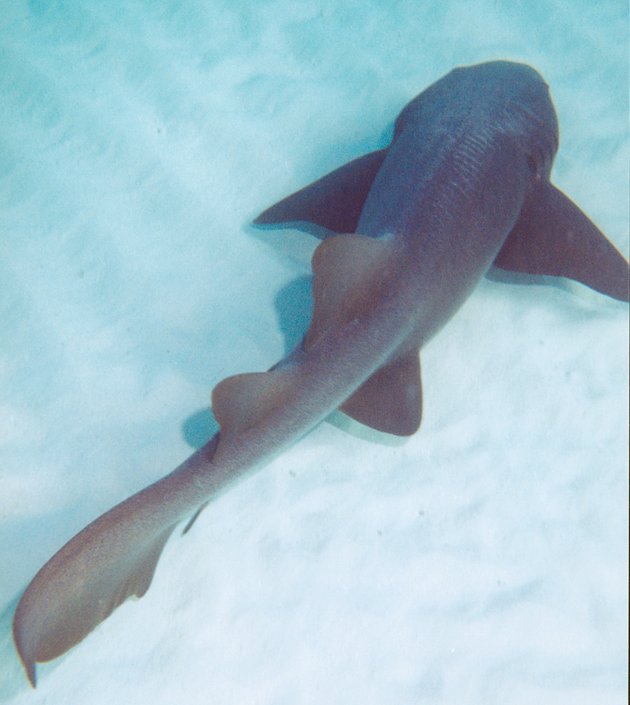
We took our first dive trip today, right off the Ambergris Caye island. It was just a shallow dive with a bunch of snorkelers who desperately wanted to “see some sharks.” This part of the reef is know for its abundance of nurse sharks, pretty harmless types of sharks who eat by suction (hence the name). Still, they are sharks, aka beautiful creatures.

The dive instructor threw in some bait (an enormous fish head) and a few minutes later, a bunch of sharks (I saw five, the largest at least two meters long) and sting rays (the largest was over a meter across) came by for the feast. It was an incredible sight.

I don’t know how I feel about the whole “petting the shark and sting ray” aspect of the whole thing. The instructors caught a couple of the sharks by the fin and let everyone in the group touch them. Same with the sting rays. I felt a little bad for them. I can’t be good for them to have a hundred people a day touch them, right?

Exactly how green is your vacation? Take this quiz!

Even if you manage to do more than a staycation this summer, vacations just aren’t what they used to be. Along with paying to check baggage and incredibly high gas prices comes a whole new level of social responsibility; seems like we can’t even take a simple American road trip without considering all the environmental costs involved.

For those of you that are concerned with just how green your summer travels are, the Sierra Club has two easy quizzes to figure out where your vacation ranks on the green scale. The How Green is My Destination quiz looks at the environmental impact of where you are going and the How Green is my Getaway quiz analyzes just how your mode of travel — bike, bus, airplane, etc. — changes the greeness of your upcoming vacay.

To take the quizzes click here.