Straight-up Scandinavia: Fika, the quintessential Swedish word

Any trip to Sweden, be it for business, personal reasons or just because you want to stay in the Ice Hotel, is going to necessitate knowing the word fika.

In a grammatical sense it is a verb meaning “to take a coffee break.” But fika is so much more than a word; it is a Swedish way of life. Swedes love their coffee breaks (and I am not stereotyping). Fikas are happy afternoon gatherings between friends, study breaks for university students, and beyond that, absolutely necessary in the workplace. I dare you to try and find a Swedish company that doesn’t encourage a mid-morning fika for its employees; it is practically written into the contracts, although sometimes that fika time can turn into a casual business meeting.

The word can be used as a verb or a noun. Ska vi fika? (Should we take a coffee break?) or vilken trevlig fika! (what a nice coffee break). Originally the word was really only used for coffee, but nowadays there is often an implied consumption of an accompanying pastry, bun or small sandwich. And fika isn’t just about what beverage and food items are consumed, it is also about the social gathering that takes place. This is a time when Swedes gather and relax in a casual setting. A fika is therefore great option, and very standard, for a first Swedish date. Or for catching up on office gossip.

Fika is such an integral part of Swedish culture that MSN Sweden recently ran an article called Fika dig friskare (Fika yourself healthy) about the benefits of getting together with friends and being in a relaxing and enjoyable place like a cafe, or an outdoor terrace in the summer sun. But, as the article clearly noted, to really “fika yourself healthy,” the delicious Swedish baked goods that go along with the cup of coffee need to be switched out for a sandwich made with crisp bread. Not as glamorous as a kanelbulle (cinnamon roll) but tasty all the same.

If you happen to read Swedish and want to check out the article, you can do so here.
Walking from the UK to India with no money

You think walking from Bristol to Gandhi’s birthplace in India–through the war-torn Afghanistan–is bad enough? Try doing it with no money in your pocket. A 28-year-old British man, Mark Boyle, started his 9000-mile journey on Wednesday with just a few T-shirts, a bandage, sunscreen, a knife and spare pair of sandals.

Boyle is an ex-dotcom businessman who is planning to walk 15-45 miles a day and not touch any money, credit cards or travelers’ cheques the entire time. Why, you ask? To show his faith in humanity and get back to a more communal way of living.

You can follow his journey here.

Will fingerprinting replace need for a passport?

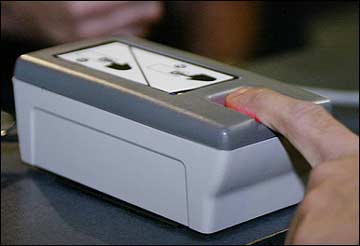
Scandinavian airline SAS has introduced finger-print check-in on a domestic flight from Stockholm to Gotenburg in Sweden. Its purpose at the moment is to make sure that the person who checks-in luggage is the same as the person boarding the flight, a sure advantage for airport /on-flight security.

On a domestic level, this makes sense as check-in procedures are relatively lax when traveling within the country, and even within the EU for that matter; but they plan to eventually make it an international check-in system.

Fingerprinting at airports is not new. The US introduced it a while ago as an added security check for visitors to the country; the UK has a similar system, but not restricted to visitors; and Dubai has had a retina scan system for a while now. This makes it impossible for people to travel with fraudulent documents.

Dubai went beyond finger-printing for security purposes when they introduced the eGate card — a check-in option for Dubai-based frequent travelers who don’t want to stand in line to get their passport stamped. If you have this card, you swipe it to enter/exit the airport, match your finger-print on a screen and you are through.

So the question is: will we eventually be able to travel without any printed form of identification? If you are finger-printing and retina-scanning anyway, other than to have a stamp, what do we need passports for?

Getting divorced European style

Thanks to the Schengen zone, Europeans can move around their beloved continent pretty much as freely as they want; they don’t even need to have their passports with them when traveling in the EU as long as they have a state-issued ID.

With all of this free movement, there is a lot of cross cultural contact, and most certainly in the form of romance. One thing leads to another and all of a sudden a variety of couples — a Swede and an Spaniard, a Brit and a German, or a Hungarian and an Italian — find themselves engaged. They decide on a wedding location somewhere between their two homelands, tie the knot and live happily ever after in their European melting pot. Yet for those couples who have an unhappy ending, the story plays out a little differently.

Divorces between couples from different EU countries make up about 20 percent, over 170,000 marriages, of all divorces in the geographical bloc. How do you know what divorce court to go to in this situation? Currently, the first member of the couple to file for the divorce can choose which court will take over the ordeal.

Sound complicated? It is, and the EU is currently trying to change the laws so that couples don’t engage in a little something called “foreign shopping;” if you want a bigger alimony, better choose the right country to hear your case. But not all EU countries are for the change. Earlier this week, Sweden blocked the EU move to establish a more coherent policy, stating that the decision could raise questions of gender equality.

The bottom line? Try not to get involved in a messy European divorce, but if you absolutely need to have one, don’t go to Malta; the Mediterranean island nation does not recognize the right to end a sacred marriage.

Sarkozy sues Ryanair over (cheesy) ad

There is never a dull moment with the current French president, is there. While the ex-French president Francois Mitterrand liked to keep his affairs private, Nicolas Sarkozy likes the spotlight. The only thing stopping him from becoming a total French stud, “le stud”, is a supermodel wrapped around him. Oh wait, he has managed to find one of those, too.

The drama of the week is this. Sarkozy and his ex-supermodel girlfriend Carla Bruni are suing the low-cost carrier Ryanair over a picture of the two of them used in a Ryanair ad in Le Parisien. Bruni is demanding 500,000 Euro (Which is apparently how much she normally charges for a photo. Isn’t she an EX-supermodel?) The modest Sarkozy is willing to settle for 1 Euro. I mean, the president can’t seem greedy. He is, after all, a man of principles.

Ryanair has apologized and offered to donate 5,000 Euro to a charity of Sarkozy’s choice. Let’s see, how about donating some to the Midlife Crisis Helpline?

(Per Reuters, the cartoon bubble above Bruni, the scion of a rich Italian industrial dynasty, says: “With Ryanair, my whole family can come to my wedding.”)