Bud vs. Bud: Travel and the Great Beer War of the Last Century

There’s not enough beer in Bohemia to ever help you pronounce Ceske Budejovice, a Czech town located in southern Bohemia, about 100 miles from Prague. But there is at least one reason why you should go there.

Why? Let’s go back to the early 1870s, when soon-to-be major beer magnate Adolphus Busch and his friend/business partner Carl Conrad decided to do a European beer crawl, hitting the great centers of all things beer in Central Europe. Bohemians have long been known for their prowess in brewing (just go to the town of Pilsen, or Plzen in Czech, if you’re in doubt). Busch and Conrad made a special point to go to Ceske Budejovice because the town had a reputation for producing exceptionally good beer and the hops that grew in the fields around the it were (and still are) world renowned. Busch and Conrad sampled the local brew and were duly impressed.


So impressed, in fact, that Conrad bought the trademark for the name of one of the town’s famed beers, which was named after the town. Not Ceske Budejovice, but its German name. Before World War II many towns in Bohemia boasted a sizeable German population and thus, each town had a Czech and German name. Ceske Budejovice’s German name was–wait for it–Budweis.
By now, you can probably see where this is going. But with that trademark for the name of the town’s beer not only was an American beer named Budweiser born, but a century-long legal battle as well. The Czechs argued that they’d been brewing a beer called Budweiser (and, in Czech, Budvar) for centuries. Even though the actual Czech Budweiser/Budvar was founded after the trademark, they argued they had a geographical right to the name. Anheuser-Busch, though, would simply wave the trademark document at the Czechs and say–and I’m summarizing–sorry suckers!

After the Velvet Revolution in 1989, Czech breweries were slowly privatized and then bought up by one of the three major multinational brewing corporations. Pilsner Urquell, Radegast, Velkopopovicky Kozel and Gambrinus were sold to SABMiller; Starobrno and Krusovice to Heineken; and the Prague-based Staropramen to InBev (which now owns Anheuser-Busch, by the way), and so on. But the Czech government never privatized Budweiser/Budvar, fearing Anheuser Busch would buy the brewery and dismantle it, paving the way for complete European domination.


But all that came to an end in 2007 when the two companies formed a loose partnership. In an unpredictable turn of events Anheuser-Busch now distributes the Czech Budwieser in the United States. You’ll never find it under that name, though. An earlier ruling stated that Czech Budweiser could never be sold in the United States because of the possible trademark infringement. So the Czechs did something quite brilliant. For the beer sold in the United States, they changed the name from Budvar to Czechvar (not a brilliant name, if you ask me, though).

So while beer drinkers of America can finally sit back and actually drink the original Budweiser, I say make a pilgrimage to the town formerly known as Budweis. Brewery tours, in my opinion, are dull, but nothing beats sitting in a big beer hall like Masne Kramy, located in a former meat shop hall from the 16th century in the center of Ceske Budejovice, a huge chunk of pork in front of you and a mug of golden, fresh-from-the-brewery Budweiser–Czech Budweiser, that is.

Oh, and if anyone asks, it’s pronounced Ches-kay Boo-day-yo-vit-say.

Hiker killed by grizzly bear in Yellowstone

A 57-year old man out for a hike along a popular trail in Yellowstone National Park was attacked, and killed by a grizzly bear on Wednesday. It was the first fatal bear attack within the park in 25 years.

The man, who has yet to be named, and his wife set out to hike the Wapiti Lake Trail, located inside Yellowstone’s Grand Canyon. They reportedly had only walked a mile and half when they came upon a female grizzly bear with her cubs. The bear reacted to the surprise encounter by attacking the couple, fatally injuring the husband, while his wife looked on. Other hikers, hearing her cries for help, rushed to the scene and dialed 911, but the man passed away before park rangers could reach his location.

Summer is a very busy time in Yellowstone, and the trails are often crowded with hikers. Despite that, rangers say that there were no reported bears sightings in the area prior to the attack. As a precaution however, they’ve closed several campsites and hiking trails close to where the encounter took place, and have posted warning signs as well. A search was also underway to locate the bear, and if found, she and the cubs would most likely be relocated to a more remote location. Because the attack was in defense of her young, rangers say that the bear would not be put down. So far, the search has turned up no sign of the bears.

Despite the fact that both black bear and grizzly bear call Yellowstone home, there has not been a fatal encounter with those creatures in the park since 1986. However, last year a bear wandered into a campsite not far from the park and killed a camper in his tent. It was a grim reminder of how dangerous these animals can be when encountered in the wild.

If you are planning a trip to Yellowstone, or some other backcountry destination this year, officials from the park offered up some helpful hints to keep you safe. They recommend traveling in groups of three or more and making plenty of noise while walking. That will give animals advanced warning of your approach and time to get out of your way, making it a safer environment for you and them.

It is also highly advisable that hikers carry bear spray, which is a bit like Mace for animals. Bear spray can be purchased in most outdoor gear stores in states inhabited by the creatures, although you’ll wan to buy it once you’ve reached your destination. The TSA frowns on a giant can of extra-powerful pepper spray in your carry-on. The spray is a good investment for anyone planning a wilderness hike however.

Exploring the Baltimore Beyond the Inner Harbor


To me, a huge fan of Baltimore but still a tourist, it seemed like a random Saturday in the early summer. But in Charles Village, a neighborhood between Johns Hopkins and the harbor, it was the weekend of the “Pile of Craft” fair at St. John’s church. I found out about it by chance, leafing through a copy of City Paper while doing laundry. (One accumulates lots of laundry on long road trips!)

Dozens of tables filled the sanctuary, selling prints, jewelry, art, fashion, toys, gizmos, and all manner of decorative doodads. A food truck was parked on 26th Street, selling fancy grilled cheese sandwiches, as neighbors bumped into each other outside, catching up-and probably discussing the day’s haul from the nearby farmer’s market.

This was Baltimore, alive and fun and quirky. I’d found Charm City a couple miles north of the Inner Harbor.

%Gallery-127697%

I wasn’t staying there either. I’d found a hotel built on the site of a brewery in what real estate people and Baltimore boosters are calling Harbor East, a little east of the National Aquarium and a little west of Fells Point, the historic district that’s one of the city’s busy nightlife districts. The Fairfield Inn & Suites Downtown caught me eye for more than just the free wifi, free breakfast and free bikes to borrow: It’s a newly built, LEED-certified hotel that’s embraced the architectural vernacular of its city.

The general manager, Roberta Wittes, explained as she took me on a tour, pointing out the row home that’s been integrated into the building and now serves as a presidential suite. The hotel is built on the site where the original Star Spangled Banner was sewn: Mary Young Pickersgill finished the flag that would fly over Fort McHenry during the War of 1812 at 101 President Street, when it was Claggett’s brewery.

While the Fairfield was built to echo the look of an old brewery, Woodberry Kitchen, the city’s hottest restaurant, is set in a foundry built around 1870. The menu lists the farms and fishermen of the Chesapeake Bay region who provide the night’s ingredients, making it as of-the-moment as a restaurant can be, with handsome waiters parading around in plaid button-ups. The night I had dinner, Duff Goldman was sitting at a two-top and got up to say hey to the guys working the wood burning oven.

There are, of course, still problems in Baltimore, starting with blocks and blocks and blocks of abandoned housing that are both symptom and cause of urban decay. With a talented local photographer named Patrick Joust, who happens to have a day job as a research librarian, I toured some of the more depressed corners of the city. An understatement: It’s not all new hotels and fancy restaurants.

But among the boarded up row homes are signs of civic pride, like Roots Fest 2011, an event held in West Baltimore the Sunday after the craft fair. The idea is to reunify a neighborhood that was rent in two by the construction of a highway that’s now been partially abandoned. (Traffic still flows in one direction.) Attendance was light, but that the festival would happen at all is a sign of progress, Patrick said.

I found more good news at Lexington Market, the home of Faidley’s, the restaurant that’s been praised so many times it shouldn’t need to make lump crab cakes that taste this good. But they do. The line still snakes around the space, all the way to the lobster tank, as fish mongers banter in thick Baltimore accents. Who needs the Inner Harbor anyway?

Is that an iPad in their pants or is the TSA just happy to see us?

It happens every day. You amble up to the TSA security checkpoint, and with the customer service touch of gulag overlords, the TSA officers slowly herd you through to freedom on the other side. They stare you down with steely eyes, inspect your ID with hawkish intensity, berate you for forgetting the hand sanitizer in the deepest recesses of your backpack, and apparently, occasionally stuff your electronics into their pants.

That is what one Florida TSA agent is guilty of – stuffing items of material worth into his TSA-issued pants. Nelson Santiago had all but perfected the art of the security checkpoint heist. He would pilfer items out of screened luggage such as GPS units, tablets, laptops, video cameras and more. He would take pictures of his loot (probably with a stolen camera) and immediately post the stolen goods online to sell. The goods would be turned around and sold before his shift even ended, making him a nimble bastard of the highest order.

And then one day, while casually stuffing a gleaming iPad into his pants, he was caught red-handed.According to the Broward Palm Beach New Times, a Continental Airlines employee witnessed Santiago (left) as he pulled an iPad out of some poor sap’s luggage and slid the tablet computing device into his pants. The authorities were alerted, and Nelson Santiago’s reign as the “Thief of Fort Lauderdale-Hollywood International Airport” was over. Charged with two counts of grand theft, Santiago was finally apprehended and taken into custody.

While his overall take is an estimated $50,000 in electronics, most of the goods will never be recovered. Santiago has worked at Terminal 1 of Fort Lauderdale-Hollywood International Airport since 2009. I don’t think he will be making it back to work any time soon.

Top ten most crowded islands in the world

From an island microslum in Colombia to a haute enclave in central Paris, the ten most crowded islands in the world bear scant similarities in class or culture. In fact, every entry in the top ten comes from a different country. But being islands, each shares the common thread of scarcity – whether it be land, resources, or housing. In general, these islands are prophetical microcosms for an overcrowded earth – finite spaces where self sufficiency governs and demand pierces supply.

With the world’s population racing higher and higher, and the “megacities club” accepting new members yearly, some day the earth could bear the traits of one of these densely packed islands.

%Gallery-127866%

10. Vasilyevsky Island
Location: St. Petersburg, Russian Federation
Population: 202,650
People per square kilometer: 18,592
Size: 10.9 square kilometers
Story: This island located in St. Pete is a collection of 18th and 19th century buildings with some Soviet built apartment blocks lining the Gulf of Finland on the western shore. The communist housing ethos of the twentieth century called for rows and rows of tight apartments, and this historic island in Russia’s second city was not immune to the sprawl. This created the compact quarters of Vasilyevsky island. Famous for its old school stock exchange and giant Rostral columns, the island is popular with tourists.

9. Lilla Essingen
Location: Stockholm, Sweden
Population: 4,647
People per square kilometer: 20,204
Size: .23 square kilometers
Story: This small island in central Stockholm once served as a hub of industry for Stockholm’s industrial operations. The easy boat access allowed for ease of shipping by boat, and the island factories manufactured an array of goods, from massive lamps for lighthouses to vacuum cleaners. Eventually, as the industrial applications became outmoded, the island became home to several apartment towers. Today, the island is crammed full of smiling Swedes living in apartments with (presumably) tasteful modern furniture.

8. Île Saint-Louis
Location: Paris, France
Population: 2,465
People per square kilometer: 22,409
Size: .11 square kilometers
Story: Perhaps the most stylish island in the world, Île Saint-Louis is a marvel of 17th century urban architecture and planning. Narrow roads and some of the priciest real estate in the world have allowed the island to remain relatively calm, despite its location in central Paris. While Île Saint-Louis is off of the tourist radar for most, this island in the Seine River embodies the classic Parisian spirit, worthy of an afternoon stroll with a perfect sorbet from Berthillon. The island is named for France’s canonized King, Louis IX.

7. Manhattan
Location: New York, New York
Population: 1,585,873
People per square kilometer: 26,879
Size: 59.47 square kilometers
Story: In 1626, the Lenape Indians sold Manhattan island to the Dutch for a bag of axes, hoes, iron kettles, duffel cloths and other 17th century garb worth about $24 (roughly $1000 in modern value). It is safe to day the island has grown ambitiously from this humble transaction. The center of the financial universe is now home to many – truly a place where the world lives. The island once known as New Amsterdam, and briefly, New Orange, shadows America’s story, both tragic and triumphant.

6. Salsette Island
Location: Mumbai, India
Population: 13,175,000
People per square kilometer: 30,217
Size: 436 square kilometers
Story: Salsette, an island off the western coast of India, is home to Mumbai and its sprawling suburbs. As a poster boy for “New India,” Mumbai is as dichotomous as it gets, at once the wealthiest city in south Asia and also home to one of the world’s largest slums – the notorious Dharavi. Dharavi is an island within an island, a super-slum with roughly one million people spread out over an area less than a square mile. At the other end of the spectrum, Salsette Island is also home to extreme wealth. The house known as Antilla is a 400,000 square foot giant that towers with some of Mumbai’s tallest buildings. Truly a contrast from the squalor in Dharavi, the private residence houses six people, can accommodate 168 cars, has 9 elevators, and an ice room with snow flurries.


5. Ebeye Island
Location: Marshall Islands
Population: 15,000
People per square kilometer: 41,667
Size: .36 square kilometers
Story: When the United States decided to test nuclear weapons in the South Pacific, they chose to do so amongst the atolls of the Marshall Islands. U.S. officials uprooted many residents from Bikini Atoll and Enewetak Atoll to insure that the testing did not directly harm human life. The relocated Marshallese had to move somewhere, and most moved to Ebeye under the assistance of the United States. This forced relocation caused a huge mess, including a severe housing shortage and land owner legality issues that persist today. The combination of factors created an environment of hostility and squalor, creating the slum of the South Pacific.


4. Malé
Location: The Maldives
Population: 103,693
People per square kilometer: 53,121
Size: 1.952 square kilometers
Story: The Maldives is one of Asia’s top tourist destinations, with 26 atolls and 1,192 islands offering beach perfection. At its center is the capital city – Male. Male is a humbly sized island of just a couple square miles. It is stuffed full of people, hotels, mosques, and office towers that efficiently utilize the scare land resources. While landfills have reclaimed some land from the sea, most progress is made vertically rather than horizontally. The modern downtown island in the middle of the Indian Ocean is a stark aberration from the deserted islands that dot most of the Maldives.

3. Ap Lei Chau
Location: Hong Kong
Population: 86,782
People per square kilometer: 66,755
Size: 1.32 square kilometers
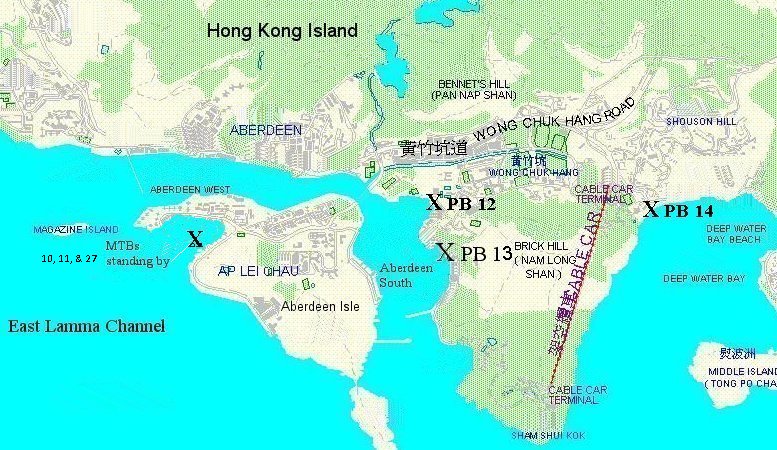
Story: Hong Kong is the land of a thousand towers, clustered most densely on the island of Ap Lei Chau just southwest of Hong Kong Island. Ap Lei Chau served as the settlement for Hong Kong Village, theorized to be the etymological source for the famous larger territory of Hong Kong. Strangely, Ap Lei Chau translates to Duck Tongue Island, said to be named for the island’s shape. It is filled with high rise residences and even a winery.

2. Migingo Island
Location: Kenya, though Uganda disputes this
Population: 400
People per square kilometer: 100,000
Size: .004 square kilometers
Story: This bantomslum in the middle of Lake Victoria is a fishing village perched precariously on half a sphere of rock. The residents take in large hauls of the Nile Perch – a poster boy for River Monsters that can grow to a comedically large size. Migingo is famous for a decades-old dispute between Kenya and Uganda over the sovereignty of the small island. There is even a facebook page where individuals can “like” declaring the island Kenyan. (The page has twice as many followers as there are residents on Migingo.) Uganda agrees with this claim, most of the time, though the tiny rock island is not the issue – the fishing rights are.

1. Santa Cruz del Islote
Location: Colombia
Population: 1,247
People per square kilometer: 124,700
Size: .01 square kilometers
Story: The most densely populated island in the world is a microslum off the coast of Colombia. This tropical island is located in the emerald waters of the idyllic Caribbean, though is packed so tight that most activities are done off island. Schooling, football, graveyards, and work all take place away from Santa Cruz del Islote. The island park is the size of a small tennis court, and fresh water must be shipped in by Colombian Navy ships. Santa Cruz del Islote also does not have electricity. What the island favela does have is people, lots of them. To visit the world’s most packed island, hop on a ferry from Tolu, Colombia. The nearby hotel of Punta Faro can arrange tours of the island.

All unattributed images from wikimedia commons