Red Corner: Mongolia to the Pacific Ocean by Canoe

Chalk up another one for great canoe journeys.

With the opening up of Siberia and Central Asia, water hobbyists are discovering great swaths of waterways that few Westerners know anything about, much less considered navigating in canoes or kayaks.

British adventurer Paul Grogan, however, did his homework and plotted out a course along the Amur River (the world’s 6th longest) that started in Mongolia and then headed northeast, crossing into Siberia and straddling the border between Russia and China until eventually reaching the Pacific Ocean-a journey of over 1200 miles.

Like any good adventurer, Grogan chronicles this journey in his well-received book, Barbed Wire and Babushkas. An excerpt reprinted in The Sunday Times, paints a wonderful picture of what to expect from the rest of the book-gun-toting border guards, surly tanker drivers, $1 a night accommodations, friendly natives, and beautiful scenery. It is a great, alluring read that leaves me wanting more. I’m not sure about actually following in his canoe strokes, but I at least want to read about it.
Red Corner: UN Chimes in about Chernobyl Tours

We’ve posted a couple of times about tour groups visiting the Dead Zone at Chernobyl and in doing so have commented about the sickness of those who profit off of other people’s misfortune and misery. Well, I was surprised to find a counterpoint to this argument that has been offered up by none other than the UN.

A 2002 report issued by the United Nations Development Programme (UNDP) and the United Nations Children’s Fund (Unicef) concluded that ecotourism of the Chernobyl Zone would not only help to raise awareness about the problems plaguing the area, but would inject much needed currency into the region and help it to become more self-sufficient during its healing process-instead of relying so heavily upon quickly depleting foreign aid.

Knowing that such tours are UN sanctioned, however, really doesn’t make me want to go anymore than before.

Red Corner: The Iron Curtain Bike Trail

It was Winston Churchill who first coined the term Iron Curtain to refer to the heavily fortified border region between Western Europe and the communist Warsaw Pact nations. For years, the very term conjured up images of barbed wire, snarling guard dogs, and Kalashnikov toting Slavic thugs. If the EU has its way, such visions will be replaced by ultra-fit cyclists in little black pants and brightly colored helmets.

The EU is considering a proposal to create the world’s longest heritage trail along the former Iron Curtain. The 4,250-mile bicycle and walking route would begin at the Arctic Ocean where Russia and Norway share a border and then continue south, crossing through the Baltics, Poland, the former East Germany, Czech Republic, Slovakia, Hungary, Romania and then skirt along the southern border of Bulgaria all the way to the Black Sea.

Whoa, that’s a long way. It was easier to escape from the Soviet Union than it will be to conquer this trail.

Red Corner: Driving Across Siberia

Looking for the mother of all road trips? The opportunity to point your car east and continue driving for an incredible 6,200 miles before finally hitting the end of the road?

Well then, Siberia is calling your name.

With the completion last year of the Chita-Khabarovsk Highway, a road now stretches from Moscow all the way to Vladivostok on the Sea of Japan. Unfortunately, the Trans-Siberian Highway, as people are starting to call it, is not entirely paved yet and will require plenty of patience and skill to navigate. Adventurous motorists can expect to spend about a month making the journey. The Trans-Siberian railway, on the other hand, can get you across the same expanse in just five days.

Until Russia has its own AAA Automobile Club, I’m sticking to the train.

Red Corner: Baikal Winter Games

As if I didn’t provide enough reasons in yesterday’s post to visit Siberian Lake Baikal in the wintertime, here’s another: Winteriada.

Winteriada, the International Baikal Nordic Games Festival now in its fourth consecutive year, attracts 3,000 athletes to the frozen shores of Lake Baikal to compete in over 30 sports. This year it kicked off on Thursday, February 23rd with a soccer and volleyball tournament. Keep in mind that daytime temperatures average about 20 degrees Fahrenheit and games are played outside on the snow, or atop the ice-covered lake.

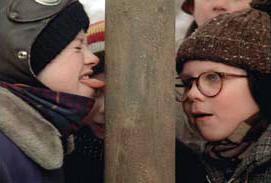
Athletes compete in such traditional winter events as skiing, dog sledding, ice fishing, ice climbing, ice skating, and a 4-wheel drive race. Not-so-traditional events for the middle of the Siberian winter include golfing, lake swimming, diving, ice-cart racing, and mountain biking atop the frozen lake. Apparently, there is no lick-the-flag-pole competition this year.

Perhaps the most unexpected event is a full length marathon, also on top of the ice. Last year’s leader, renowned German runner Udo Meller, lost his way and was eventually chased down and eaten by wolves. Well, not exactly eaten, but he did wander far enough off course to lose the race to local Irkutsk scientist Arkadi Kalikhman, a 57 year-old doctor of Physics and Mathematics who completed the course in just under three hours and nine minutes. Having crossed the finish line with all ten toes, he is a double-winner in my book.