So is Steve Fossett dead or alive?

A few days ago, $1000, a sweater, an ID card and a pilot’s license — both with Steve Fossett’s name on them — were found in a bush west of Mammoth lakes, in eastern California’s Inyo national forest. Authorities are investigating the items as well as the entire area in a 10-mile radius.

Millionaire adventurer and world-record breaker Steve Fossett disappeared on the 3rd of September 2007. On this date, he took off in a single-engine plane from Nevada to head to California, but has not been seen, or heard from ever since. On his disappearance, a 20,000 mile area was searched in aim to find Fossett — probably one of the most intensive hunts in US history. Although his body has not been found, nor has any plane wreckage, in February of 2008, his wife had him declared dead. I don’t know how the law works here, but surely there must be a minimum time before which you cannot declare someone dead if missing, no? In this case, he wasn’t even given 6 months.

So what if he’s alive? Well, that hasn’t been ruled out. Fossett’s story resulted in the concoction of many conspiracy theories saying that he might have faked his own death. News reports concluded that Fossett was leading a double life before he vanished and rumors were that he had a few mistresses and that he had made some horrendous investment decisions — enough to keep the theories alive. Oh how boring life would be without juicy rumors and conspiracy theories!

Other than some snippets of negative publicity, Fossett’s adventurous feats have been an inspiration to many; we at Gadling have often covered his challenges. He was the first person to fly around the world solo in a balloon, and the first person to fly around the world in a plane without refueling it. He has a total of 115 records in aviation, gliding, ballooning, sailing, boating, mountaineering, skiing, triathlon, and even dog-sledding.

Perhaps this new evidence will help get some closure to this case. Or perhaps it will stir up an entire new trail of investigation.
NOT pre-boarding people with young ones saves time

In an article in the St. Petersburg Times, writer Bridget Hall Grumet tells about her experience waiting with her pre-toddler to pre-board, only to not pre-board after all. The unnamed airline had dropped the practice unbeknown to her. (She later mentions an American Airlines and United flight, but they are not the ones Grumet initially described.)

We’ve posted in the past about airlines who have stopped pre-boarding families with infants and small children. Southwest, American, Delta and United no longer have pre-boarding, although Grumet says that if you ask gate attendants with American and Delta, they may let you board early if you have a small child. Grumet personally found that to be true on an American flight.

Although Grumet misses the perk of boarding early with a kid because it makes settling in on a plane that much easier, she does understand the airlines’ latest practice. The idea behind not making allowances for people with small children and infants, and others who need assistance, is that when they get on the plane in one group, it creates a bottleneck.

If people who need extra help are randomly spread out during the boarding process, it saves 10 to 12 minutes. That may not sound like much, but as airlines struggle to get people to their destinations on time, 10 to12 minutes can jam up arrivals and departures for more than that one airplane.

My thought is that if I were traveling with a small child, I’d not be in any hurry to board. Spend less time on the airplane. The problem with that strategy is that with overhead bins becoming more packed as people avoid the cost of checking a bag, there won’t be space in the bins. Then you’d be stuck searching out a bin rows from your seat. See Heather’s post on how the trying to find bin space can look to a flight attendant.

Here’s one of my solutions for combating the headache of traveling on a plane with a small child. When at all possible, take the train. Stay tuned tomorrow for my post on how train travel worked out for me. My six year-old got us on the train first.

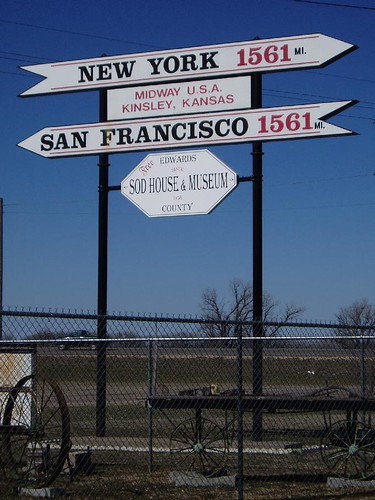
Booking a Flight from New York to San Francisco Online. But Where Online?

I used to be a big fan of buying tickets on travel websites such as Expedia.com, Travelocity.com, Orbitz.com but lately, I found that it is often cheaper to buy them directly through the airlines’s websites. Have we come a full circle?

I picked a random date–a long weekend Sept.13-17 from New York to San Francisco–to see what rates would come back.

A sample of a few direct flights:

  • United: $303 on Expedia, $298 on United.com
  • Continental: $357 on Expedia, $352 on Continental.com
  • Delta: $303 on Expedia, $358 on Delta.com
  • Alaska: $343 on Expedia, $498 on Alaskaair.com (hello!)

OK, so it’s a mixed bag. I have to say though that I have yet to find a flight that is cheaper on Expedia or Travelocity than it is on Continental.com. Their website is really good, I think. It is comforting to know that airlines are starting to understand how to use the Internet to their–and our–advantage.

I now use kayak.com to see the best rates and then book directly on the airlines’ sites. Plus, I get extra miles for booking online. Expedia, be worried!

Stereotypes of Tourists, from a British Perspective

Travel stereotypes always make good writing topics. On one hand, we hate stereotyping because we are told that “cultured people don’t use stereotypes”. On the other hand, there is no question that observations become stereotypes because they are based on accurate reality. And isn’t travel supposed to be about observing reality?

I came across a funny piece, entitled “The Worst Tourists in the World” by Rolf Potts talking about the British obsession with stereotypes of national character, roughly outlined below:

  1. Americans: Ignorant. Loud. Oblivious to surroundings. Insincere.
  2. French: Rude. Bigoted. A trifle out of touch with reality.
  3. Germans: Humorless. Rule-obsessed. Unfriendly. Stubborn.
  4. Israelis: Rude. Cheap. Arrogant. Cliquish.
  5. Canadians: Exactly like Americans, but more soft-spoken, more polite, less ignorant, and twenty times more boring.

Well, there you have it. Of course, you are all different!

I think stereotypes are actually really helpful, if used wisely. For example, if every American/French/German…could look above and try to NOT be all those things, the world would be a better place. Although, arguably, not as funny.