Summer travel: best U.S. cities for localized food lovers

What’s that you say? Summer’s half over? Those of us living here in the Pacific Northwest had no idea, given the lack of sun in these parts. But even if you’re getting slapped by the mother of all heat waves, it’s still early in the season for the best produce summer has to offer. As for where to get great food featuring locally-sourced ingredients? Allow me.

Some cities are inextricably linked with food; they’re destinations unto themselves if you’re the type who plans trips around meals. I do. Museums are great and all, but personally, I’d rather eat.

As a longtime proponent of sustainable agriculture, I want to support local growers as well as get a sense of place when I take a trip (that the food be good is still number one). That’s why a city like Santa Fe is so intriguing to me. The cuisine is rooted in the state’s history, indigenous peoples, and native foods, and there’s a fantastic farmers market. The fact that Santa Fe is beautiful in its own right seals the deal.

If you also let your appetite guide your vacation-planning, I’ve listed my favorite U.S. cities in which to stuff my face, based upon repeat visits or previous/present residency. It’s like choosing a favorite child, but someone had to do it.

Seattle
I currently reside in Seattle, and work at a cheese shop in the 14-month-old Melrose Market in Capitol Hill. So perhaps I’m a bit biased when I say that Melrose rocks. But really, I don’t think I am. It’s the best thing to happen to Seattle since Pike Place opened in 1907 and became the model for public markets nationwide. But Melrose isn’t a tourist trap, and you won’t find anyone hawking crappy t-shirts. It’s housed in two adjacent, restored historic automotive shops built entirely of reclaimed materials; there’s a soaring cathedral ceiling, and lots of exposed brick.

[Photo credit: Flickr user La Grande Farmers’ Market]

Although home to just four dedicated retail spaces and a wine bar, sandwich shop, and restaurant, Melrose has garnered lots of national media attention. The Calf & Kid (aka My Day Job) is a European-style fromagerie, while Marigold & Mint is a lovely little nook full of antique apothecary jars and cut flowers and produce from the owner’s organic farm. At Rainshadow Meats, without question one of the finest local/sustainable butcher shops in the nation, there are hard-to-find cuts like pork cheeks, and excellent housemade charcuterie.

There’s also Bar Ferd’nand, a miniscule wine and tapas bar, Homegrown Sustainable Sandwich Shop, and the jewel in the crown, Sitka & Spruce. Chef/owner Matt Dillon’s farmhouse mod space features an open hearth, room-length communal farm table, and rustic but refined, hyper-localized cuisine–this time of year look for foraged mushrooms, local goat cheeses, halibut, and Juan de Fuca spot prawns. Do.not.miss. Next door, Taylor Shellfish Farms–one of Washington State’s most beloved growers of oysters and Manila and geoduck clams–just opened a retail shop where you can scoop live shellfish from tanks, or puchase live Dungeness crab or housemade geoduck chowder.

Should you make it over to the Scandinavian-flavored Ballard neighborhood, be sure to dine at La Carta de Oaxaca (get there early or be prepared for a very long wait). Seattle can’t do Mexican food to save its life (I speak as a native Californian), with the exception of this Oaxacan treasure, where everything is made the slow, traditional way. Best of all, two of you can fill up–including beers–for under 30 dollars. For a more upscale treat, hit Bastille, a truly beautiful bistro featuring produce and honey from its rooftop garden.

Portland, Oregon
Portland has a vastly different vibe from easy-going Seattle. And while the attitude may be a bit much at times (do not raise the ire of a barista), it’s also got a phenomenal food and mixology scene (and yes, better coffee than Seattle). There’s no one neighborhood with all the great eats; they’re scatted throughout the city: Southeast, Pearl District, Alberta Arts District

Carnivores won’t want to miss Beast or Olympic Provisions (which also makes its own charcuterie for retail). There’s Cheese Bar, which specializes in beer parings, six glorious farmers markets, distilleries, artisan ice cream, and new favorites Lovely’s Fifty-Fifty (wood-fired pizza in the former–and much-missed–Lovely Hula Hands space) and Little Bird Bistro, the sister restaurant from former Food & Wine Best New Chef Gabriel Rucker of Le Pigeon.

If street food is your thing, Portland is swarming with food trucks, carts, and stands: Mississippi Avenue and downtown are both hot spots; check out Food Carts Portland for the inside scoop. If you feel the need to work off some calories in between food cart visits, (this is one of the best cities for outdoorsy types, after all), sign up for the Grub on the Go bike tour with Portland Urban Adventures.

Santa Barbara
I grew up near Santa Barbara, and have lived there a couple of times. It’s truly one of the most picturesque cities in the world, and over the course of 30-plus years, I’ve watched it evolve from sleepy small town to L.A. North. Spendy boutiques aside, Santa Barbara really didn’t start turning into a sophisticated dining destination until about five years ago.

The original hidden gems focused on locality–Bouchon, and the venerable Wine Cask (which recently changed hands and is now co-owned by the very genial owner of Bouchon) are still going strong. The executive chefs at both restaurants now lead farmers market tours, which I highly recommend. Both the Saturday and Tuesday farmers markets are major community events, and the sheer breadth of offerings–dozens of varieties of citrus, tropical fruit, olive and walnut oil, goat meat–is dazzling. Seafood lovers won’t want to miss the Saturday Fisherman’s Market, held at the Harbor.

The Hungry Cat
is my favorite restaurant in town (it also has a raw bar), followed by the superbly fresh Arigato sushi. Milk & Honey makes fantastic cocktails (and the small bites aren’t bad, either), as does Blue Agave. My true addictions, however, are Lilly’s Taqueria–a downtown hole-in-the-wall where for under five dollars, you can stuff yourself senseless on the best street tacos this side of the border. I also never fail to get an adovado or carnitas burrito at Taqueria Rincon Alteño. The same guys have been running the place for at least ten years, and it always feels like coming home.

Oakland, California
Nearly a decade of living in Berkeley, on the Oakland border, has enabled me to see this much-maligned city grow up, both aesthetically and culinarily (it’s always had a great Chinatown and taco trucks). In the gentrified Temescal neighborhood, you can literally hit a different restaurant every night of the week on the block between 51st St. and 49th St. on Telegraph Avenue. There’s Asmara for Ethiopian, Chez Panisse alum eateries Bakesale Betty and Pizzaiolo; Doña Tomas, and the new outpost of San Francisco’s wildly popular Burma Superstar (delicious). On 44th, late night chef’s haunt Koryo has great, cheap Korean bbq. Just around the corner: the wonderful Sunday Temescal Farmers Market.

Nearby, on 51st and Shattuck is the new Scared Wheel Cheese Shop, while down on Grand Avenue, by Lake Merritt, is Boot and Shoe Service (sister to Pizzaiolo), Camino (chef/owner is longtime former Chez Panisse chef Russ Moore). Don’t miss Market Hall Foods in nearby trendy Rockridge.

Brooklyn
I admittedly don’t know Brooklyn well; I couldn’t tell you how to get from Point A to Point B. But I know that some of the best food in New York lies within this dynamic borough. In Williamsburg, keep an eye out for Leeuwen Ice Cream’s roving, butter-colored truck–after you enjoy the heavenly pizza at Fornino. I also love the Brook Farm General Store, which has all manner of lovely vintage and vintage-inspired items for the kitchen and dining room. Bedford Cheese Shop and Stinky Bklyn (in Cobble Hill) are two of the country’s finest cheese shops, full of esoteric domestic and imported selections.

Over in Bushwick at Roberta’s, chef Carlo Mirachi, a 2011 Food & Wine Best New Chef winner, fires up pizza and other treats in his wood-burning oven, and utilizes produce from his rooftop garden. If you’re still hungry, other tasty stops: Fatty Cue or Fette Sau (both in Williamsburg) for barbecue, Saltie for crazy-good sandwiches, (Williamsburg), and the oddest ice cream flavors ever at Sky Ice (Park Slope). Be sure not to miss the various weekend Brooklyn Flea markets, where you’ll find all manner of good-to-eat treats, artisan beverages from Brooklyn Soda, and retro kitchen equipment. Note: every Saturday is the Flea’s new dedicated food market, Smorgasburg, in Williamsburg.

My other top picks for great food, made with local ingredients:
Chicago
Denver/Boulder
Santa Fe
Portland, ME
Drop me a line and I’ll be happy to give you some tips on where to get your feed on!

[Photo credits: Portland, Flickr user qousqous; courthouse, Flickr user Silverslr; Vietnamese food, Laurel Miller; pizza, Flickr user h-bomb]

September 11 Memorial distributes more than 24,000 passes in first day

As we mentioned yesterday, the National September 11 Memorial & Museum started handing out free passes on Monday in anticipation of their opening to the public on September 12. Everyone anticipated a huge response, and there certainly was one. In just the first few hours that tickets were available, 24,000 were been handed out. Figures for the whole day are not yet available.

The memorial in New York City will open for a private ceremony for the victims’ families this September 11, the tenth anniversary of the attacks.

While the 9/11 memorial is free, because of high demand and limited space within the grounds, tickets must be reserved in advance for a particular entry date and time. Once inside, visitors may stay as long as they like, so this could mean slow lines. You can reserve your tickets online.

[Photo courtesy National Park Service]

9/11 Memorial advance tickets on sale today


After many years of construction, the 9/11 Memorial at the site of the World Trade Center in New York City will open on September 12. Advance tickets go on sale today.

It’s officially called the National September 11 Memorial & Museum, and entrance is free but reservations must be made over the Internet in advance from the memorial’s website. A phone line will also open to handle group requests of ten or more people. Entry is carefully timed and all visitors must go through security. Once inside, however, visitors can stay as long as they like.

The museum’s opening ceremony will take place on September 11, but entry is reserved for officials and relatives of the victims.

Advance tickets are necessary because the memorial can only hold about 1,500 people at a time.

[9/11 Memorial photo courtesy Wikimedia Commons]

Top ten most crowded islands in the world

From an island microslum in Colombia to a haute enclave in central Paris, the ten most crowded islands in the world bear scant similarities in class or culture. In fact, every entry in the top ten comes from a different country. But being islands, each shares the common thread of scarcity – whether it be land, resources, or housing. In general, these islands are prophetical microcosms for an overcrowded earth – finite spaces where self sufficiency governs and demand pierces supply.

With the world’s population racing higher and higher, and the “megacities club” accepting new members yearly, some day the earth could bear the traits of one of these densely packed islands.

%Gallery-127866%

10. Vasilyevsky Island
Location: St. Petersburg, Russian Federation
Population: 202,650
People per square kilometer: 18,592
Size: 10.9 square kilometers
Story: This island located in St. Pete is a collection of 18th and 19th century buildings with some Soviet built apartment blocks lining the Gulf of Finland on the western shore. The communist housing ethos of the twentieth century called for rows and rows of tight apartments, and this historic island in Russia’s second city was not immune to the sprawl. This created the compact quarters of Vasilyevsky island. Famous for its old school stock exchange and giant Rostral columns, the island is popular with tourists.

9. Lilla Essingen
Location: Stockholm, Sweden
Population: 4,647
People per square kilometer: 20,204
Size: .23 square kilometers
Story: This small island in central Stockholm once served as a hub of industry for Stockholm’s industrial operations. The easy boat access allowed for ease of shipping by boat, and the island factories manufactured an array of goods, from massive lamps for lighthouses to vacuum cleaners. Eventually, as the industrial applications became outmoded, the island became home to several apartment towers. Today, the island is crammed full of smiling Swedes living in apartments with (presumably) tasteful modern furniture.

8. Île Saint-Louis
Location: Paris, France
Population: 2,465
People per square kilometer: 22,409
Size: .11 square kilometers
Story: Perhaps the most stylish island in the world, Île Saint-Louis is a marvel of 17th century urban architecture and planning. Narrow roads and some of the priciest real estate in the world have allowed the island to remain relatively calm, despite its location in central Paris. While Île Saint-Louis is off of the tourist radar for most, this island in the Seine River embodies the classic Parisian spirit, worthy of an afternoon stroll with a perfect sorbet from Berthillon. The island is named for France’s canonized King, Louis IX.

7. Manhattan
Location: New York, New York
Population: 1,585,873
People per square kilometer: 26,879
Size: 59.47 square kilometers
Story: In 1626, the Lenape Indians sold Manhattan island to the Dutch for a bag of axes, hoes, iron kettles, duffel cloths and other 17th century garb worth about $24 (roughly $1000 in modern value). It is safe to day the island has grown ambitiously from this humble transaction. The center of the financial universe is now home to many – truly a place where the world lives. The island once known as New Amsterdam, and briefly, New Orange, shadows America’s story, both tragic and triumphant.

6. Salsette Island
Location: Mumbai, India
Population: 13,175,000
People per square kilometer: 30,217
Size: 436 square kilometers
Story: Salsette, an island off the western coast of India, is home to Mumbai and its sprawling suburbs. As a poster boy for “New India,” Mumbai is as dichotomous as it gets, at once the wealthiest city in south Asia and also home to one of the world’s largest slums – the notorious Dharavi. Dharavi is an island within an island, a super-slum with roughly one million people spread out over an area less than a square mile. At the other end of the spectrum, Salsette Island is also home to extreme wealth. The house known as Antilla is a 400,000 square foot giant that towers with some of Mumbai’s tallest buildings. Truly a contrast from the squalor in Dharavi, the private residence houses six people, can accommodate 168 cars, has 9 elevators, and an ice room with snow flurries.


5. Ebeye Island
Location: Marshall Islands
Population: 15,000
People per square kilometer: 41,667
Size: .36 square kilometers
Story: When the United States decided to test nuclear weapons in the South Pacific, they chose to do so amongst the atolls of the Marshall Islands. U.S. officials uprooted many residents from Bikini Atoll and Enewetak Atoll to insure that the testing did not directly harm human life. The relocated Marshallese had to move somewhere, and most moved to Ebeye under the assistance of the United States. This forced relocation caused a huge mess, including a severe housing shortage and land owner legality issues that persist today. The combination of factors created an environment of hostility and squalor, creating the slum of the South Pacific.


4. Malé
Location: The Maldives
Population: 103,693
People per square kilometer: 53,121
Size: 1.952 square kilometers
Story: The Maldives is one of Asia’s top tourist destinations, with 26 atolls and 1,192 islands offering beach perfection. At its center is the capital city – Male. Male is a humbly sized island of just a couple square miles. It is stuffed full of people, hotels, mosques, and office towers that efficiently utilize the scare land resources. While landfills have reclaimed some land from the sea, most progress is made vertically rather than horizontally. The modern downtown island in the middle of the Indian Ocean is a stark aberration from the deserted islands that dot most of the Maldives.

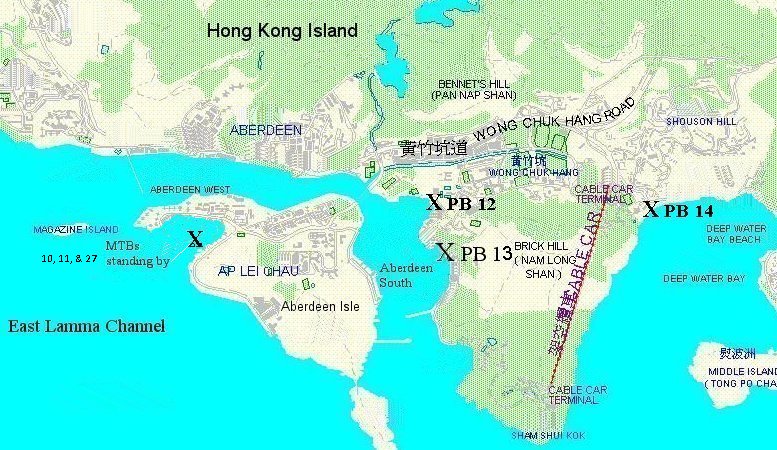
3. Ap Lei Chau
Location: Hong Kong
Population: 86,782
People per square kilometer: 66,755
Size: 1.32 square kilometers
Story: Hong Kong is the land of a thousand towers, clustered most densely on the island of Ap Lei Chau just southwest of Hong Kong Island. Ap Lei Chau served as the settlement for Hong Kong Village, theorized to be the etymological source for the famous larger territory of Hong Kong. Strangely, Ap Lei Chau translates to Duck Tongue Island, said to be named for the island’s shape. It is filled with high rise residences and even a winery.

2. Migingo Island
Location: Kenya, though Uganda disputes this
Population: 400
People per square kilometer: 100,000
Size: .004 square kilometers
Story: This bantomslum in the middle of Lake Victoria is a fishing village perched precariously on half a sphere of rock. The residents take in large hauls of the Nile Perch – a poster boy for River Monsters that can grow to a comedically large size. Migingo is famous for a decades-old dispute between Kenya and Uganda over the sovereignty of the small island. There is even a facebook page where individuals can “like” declaring the island Kenyan. (The page has twice as many followers as there are residents on Migingo.) Uganda agrees with this claim, most of the time, though the tiny rock island is not the issue – the fishing rights are.

1. Santa Cruz del Islote
Location: Colombia
Population: 1,247
People per square kilometer: 124,700
Size: .01 square kilometers
Story: The most densely populated island in the world is a microslum off the coast of Colombia. This tropical island is located in the emerald waters of the idyllic Caribbean, though is packed so tight that most activities are done off island. Schooling, football, graveyards, and work all take place away from Santa Cruz del Islote. The island park is the size of a small tennis court, and fresh water must be shipped in by Colombian Navy ships. Santa Cruz del Islote also does not have electricity. What the island favela does have is people, lots of them. To visit the world’s most packed island, hop on a ferry from Tolu, Colombia. The nearby hotel of Punta Faro can arrange tours of the island.

All unattributed images from wikimedia commons

Woodlawn Cemetery named National Historic Landmark


New Yorkers have always known that Woodlawn Cemetery was someplace special. This Bronx burial ground is the final home for many of the rich and famous. It’s beautiful too, a parklike setting with 400 acres of ornate headstones and mausoleums, such as this one for Frank Winfield Woolworth. Yes, that Woolworth.

Founded in 1863 in an age when wealthy families vied with each other to have the most elaborate mausoleum, it attracts thousands of visitors a year who don’t even know anyone buried there. The public certainly knows of many of them: Harry Carey, David Farragut, Duke Ellington, Fiorello La Guardia, Frank Belknap Long, Herman Melville, Bat Masterson, and Joseph Pulitzer to name a few.

Now the cemetery has been named a national Historic Landmark, the highest honor that can be given to a U.S. historic site. Visiting Woodlawn makes a soothing and contemplative break from the high-powered vibe of New York City. If you like cemetery art, check out our picks of creepy and beautiful cemeteries around the world.

[Image courtesy Woodlawn Cemetery]