Naked rock climbing: Anyone can do it–maybe

Two months ago I went rappelling in the Hocking Hills State Forest with Earth, Water, Rock Adventures Ltd.

I was pretty proud of myself that all I ended up with was a scrape on my calf when I slipped on some moss on my first time down the rock face.I could have scrapped a lot more if I had followed the thrill of nude rock climbing.

There is a trend where people cast off their clothes to experience nature from high places in the buff. The trend seems to have started in California, but has been transported to Great Britain as well.

The friend who sent me the article to the naked Barbie on the dash board story sent me this article about nude rock climbing. All I could think of when I read this story was that Jerry Seinfeld episode where he had a girl friend who insisted on being nude as much as possible. Jerry wasn’t too thrilled, particularly when she attempted to open a pickle jar.

Nude rock climbing would probably really set Jerry on edge. It certainly brings being naked to a higher level.

Dean Fidelman, a rock-climber and the guy who took this picture has made a calendar dedicated to this endeavor. The project is called Stone Nudes.

His work reminds me a bit of Spencer Tunick’s, another artist who sees the human form as one that lends itself well to being photographed sans clothes in nature. There is a simplicity that is very alluring.
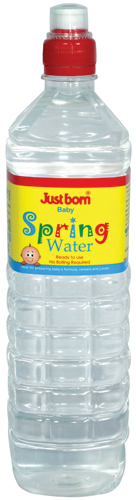
Water for $42 per bottle. What is wrong with people!?

I’ve never understood people’s fuss over the water they drink when they go to hotels, let alone their willingness to pay for what is otherwise free in most western countries. When I’m out in cities where you can drink tap water, that’s what I ask for; when I have to buy mineral water, I ask for the cheapest.

Water is water is water. Having said that, I agree that sometimes the taste is distinct. For example, here in Madrid, mineral water Bezoya and Aquafina taste strange to me; I will drink them if I have to, but I avoid buying those brands — I don’t like water that tastes like something (it’s not supposed to taste like anything!), but otherwise I’m not fussed. The whole “tap water isn’t good for you” conundrum doesn’t phase me in any way.

It totally ruffles my feathers when I go to a posh hotel and people I go with actually have a preference of mineral water, so I would go absolutely bonkers if I went to Claridge’s Luxury Hotel in London and was given a water menu with 30 international brands to choose from. 30!

According to a recent article in the BBC: For the most refined palette there is fine artesian water from Japan at $30 a bottle and $40 a bottle, or Mahaolo from Hawaii, described on the menu as “rare deep sea water” that is “very old.” And Just Born Spring Drops from India is apparently “light and not aggressive,” at $42 per bottle.

WHAT!? THAT’S MORE EXPENSIVE THAN A GOOD BOTTLE OF WINE! And this stuff sells?

“We wouldn’t do this if there wasn’t a demand for it,” says the hotel’s public relations manager. Apparently guests not only ask for berg or glacial water, but water with no sodium content or water fortified with calcium and magnesium; they even specify the region from where they want the water! “People are so very, very careful about what they eat these days that it’s moved into water.”

Have I completely lost perspective here or do you find this as absurd as I do?

More about bottles – stainless wins over aluminum

I found out more information about reusable water bottles since there seem to be more questions than answers regarding that issue. They would make such good holiday presents…if only one knew which one to get!

I asked a biologist (who just happens to be related to me) about the bottles and he essentially discouraged me from getting one with aluminum or one without a wide mouth. Sorry, SIGG. He doesn’t seem to be as skeptical about Nalgene, as some people are.

Here are some points he made about water bottles and water in general:

  • Why use aluminum when they make bottles out of titanium even lighter and stronger than aluminum and, perhaps, could be better choice.
  • As far as the sport bottles buy only wide-mouth stainless or Nalgene, which can be washed in a dishwasher with high temperature water or hot tap water with a detergent and bristle brush every day. This will prevent contamination with bacteria and viruses. Soap and water is a marvelous way of keeping healthy without sanitizers (sort of like brushing your teeth to prevent tooth decay).
  • There is NO good answer as to the safety of the water bottles. The plastic used in bottled water is basically the same as used in any food and also in hospital materials.
  • The purchased water is usually slightly more pure than tap water, if it originates from distilled tap water as is used in the soft drink industry (Coca Cola and Pepsi Cola make their own purified tap waters).
  • It contains no chlorine as in tap water, thus will not leech any plastic chemicals into the water. However, if you refill with tap water, you are introducing any materials found in your municipal water supply into the bottles and could, perhaps, maybe leech some plasticizers into the water.
  • More concerning is bacterial contamination from your initial use and an inability to properly clean the bottles after the use. So reuse more than a couple of times is not a good idea, some folks reuse bottles once and never let them dry out or leave open for a period without the cap on.
  • If you want to refill the bottles, use distilled water, not tap, and refill only once or twice.
  • The amount of dangerous chemicals (eg. carcinogens) is probably less than you intake breathing the air in New York or other big cities. The biologist I talked to said he was more worried about the junk in food (preservatives and hormones and pesticides) than in a little contamination from a plastic bottle of water.

NY Air Travelers Have Rights. Well, Some Anyway …

I’m sure we’ve all heard of, seen or experienced first hand the horrors of flight delays. Aside from long in-airport delays, I’ve been pretty lucky in that I’ve never had to wait inside a plane for hours without food or water. But others haven’t been so fortunate, like the people on this flight or this one.

But don’t think that the powers that be haven’t noticed how much it can suck being a lowly coach passenger. Governor Eliot Spitzer has signed a ‘passenger’s bill of rights’ which is meant to protect air travellers in New York in case of such delays. According to the bill, New York airlines must provide passengers with food, water, fresh air, power and working bathrooms on any flights that have been sitting on the Tarmac for 3 hours.

Wait a second …. 3 hours? That seems like a bit much … I wonder how Eliot Spitzer would feel about waiting 3 hours to go to the bathroom. An hour sitting in the tarmac is enough to warrant fresh water, food and bathrooms if you ask me.

A Canadian in Beijing: Floating Billboards on The Bund

Since I’m on vacation here in Shanghai, it stands to reason that I ought to act like a tourist once in awhile. I have been snapping photos like one since I arrived, to be sure, but besides visiting The Great Wall, I haven’t yet taken in many historically significant sites. For once, I read a guide book and took the advice of the pages therein. They advised me to take in the waterfront in Shanghai, particularly on a beautiful Saturday afternoon.

The Bund, also known as Zhongshan road, is an historical section of waterfront that stretches a little less than one mile on the western front of the “Pu Xi” (West City) and looks out to the eastern part of Shanghai known as “Pu Dong.” It is raised and separate from the roadway and proved to be a popular tourist destination on this sunny day. I was among them and I got the requisite photo taken across from the famous Oriental Pearl TV Tower as well as one of the tallest in the world, the Jin Mao Tower. (Hard to believe that, coming from Toronto and knowing the scale of the CN Tower!)

The Bund is part of the Huangpu River, an essential shipping route and regarded as the symbol of Shanghai for many years. There are lots of cruises available in these waterways that are flanked by huge corporate modern structures intermingled with a diversity of architecture from many different cultures across many centuries. It’s clear that this port has long been an international one, and not just because of the wide diversity of faces we can see walking along and snapping pictures just like us.

I thought it would be a great place for a romantic stroll on a warm evening and this thought warmed me into stalling and going to the edge of the walkway to peer over. I stared out into the river to see muddy waters below. My gaze followed the river’s current out and north-westward where the waters were guarded by Nikon and Nestle and other multinationals.

Between their buildings and my perch, there was a boat cruising slowly across the harbour with a giant screen and constant television advertisements flashing brightly for all to see. I could think of nothing more I’d rather NOT see than commercials at that moment. Talk about muddying the waters… A floating billboard on the Bund?!

I took that as a sign that I had seen enough. I turned and left, having walked only about halfway.

Still, I am happy and grateful to have seen an historical section of an ancient port, and this moment of its development is no less valid. It, too, will eventually become part of history.

Pic of me by Sarah Keenan